One thing I often like to do on roadtrips is estimate the modeling potential of different areas. Scarcely a trip goes by where I come up short in finding something railroad related that is interesting, unique, and highly modelable! On this latest summer road trip, we visited several places known for their railroad history and we ran across a few gems which will be the focus of their own articles. Fort Collins, Colorado isn’t often considered to be a railroad town. To be sure, Colorado is the capital of narrow gauge railroads in the western US and the state boasts rail lines that run through some of the most scenic areas in the United States. A local group in Colorado is reviving a bit of railroad history that’s unique in the 21st Century, streetcars!
History
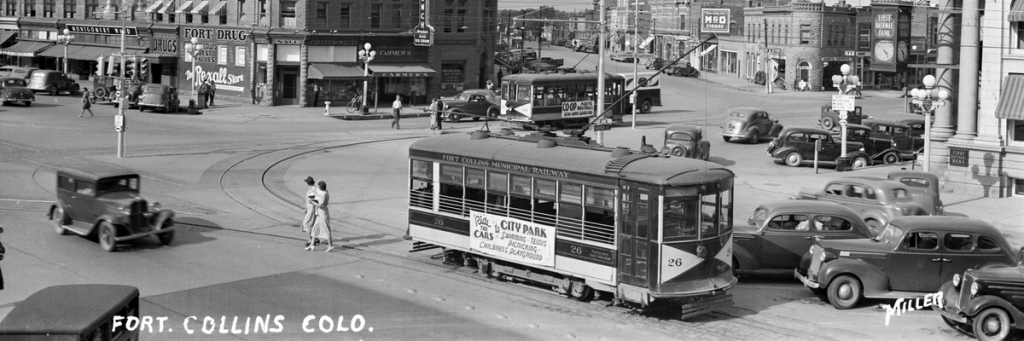
Fort Collins, like many small cities in the western US, had a streetcar system at one point. From the late 1890s until the Great Depression, cities such as Gillette, Wyoming and Missoula, Montana had small streetcar systems that made public transit fast and easy. Electrification was perhaps the biggest sign that the old west full of cowboys and outlaws was giving way to a more “civilized” age of industry. Fort Collins was no different in that respect. Founded originally as a military outpost in 1864, the old fort was constructed to protect the Overland Trail mail route in the area from bandits and natives. What followed was typical of western cities. The population grew and settlers brought agriculture and industry to the area, tearing up the high-plains and river valleys at the foot of the Rockies. By 1900, Fort Collins had a population of 3,000 people.
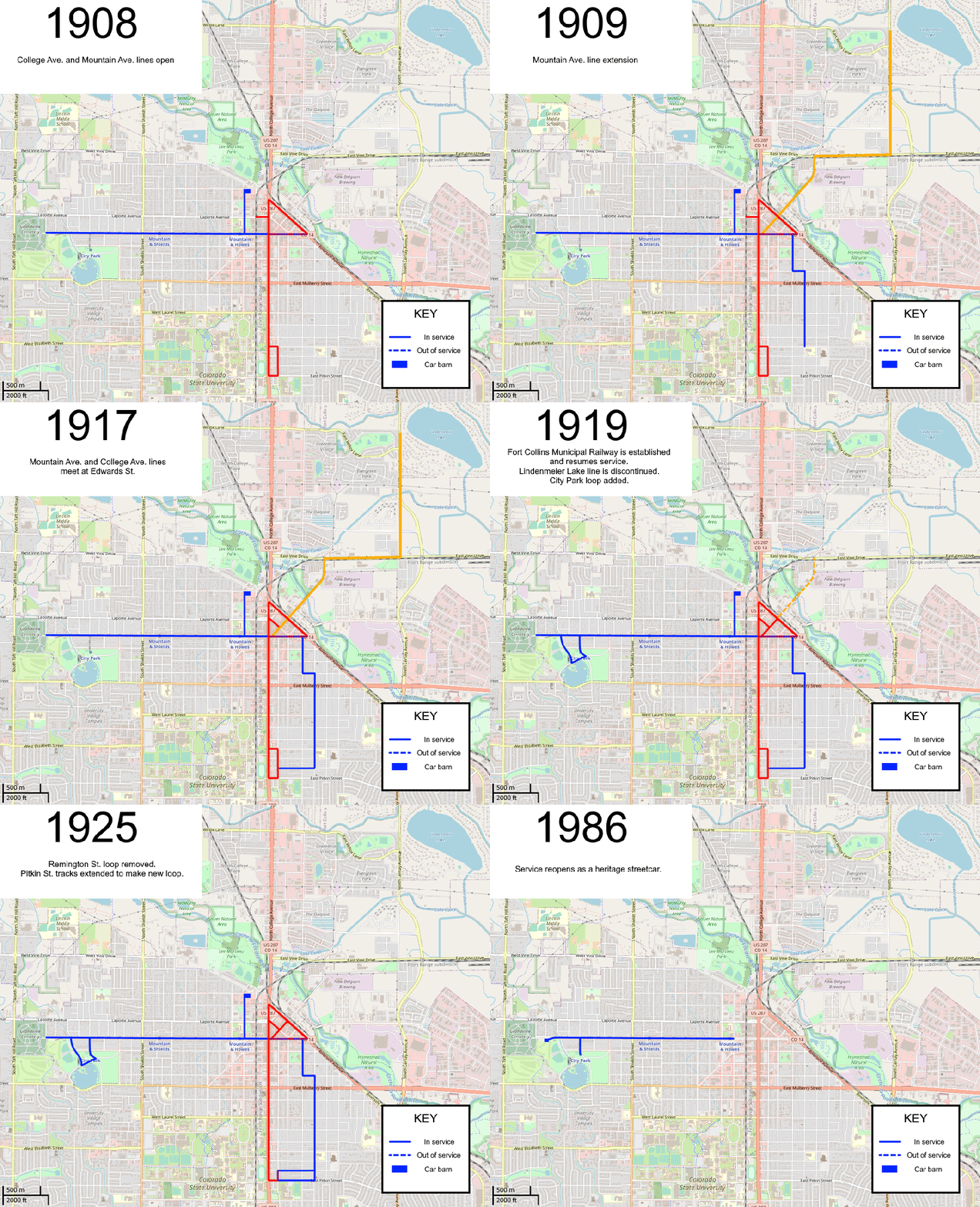
In 1907, the Denver and Interurban Railroad, which itself was a subsidiary of the Colorado and Southern Railroad out of Golden, built the initial trolley system in Fort Collins as the railroad attempted to expand operations along the front range of the Rocky Mountains. From 1907 until 1918, the Fort Collins system operated well but the automobile was eating into profits and the system closed at the end of 1918.
In 1919, the city of Fort Collins purchased the streetcar system and revitalized it with some track upgrades and by purchasing small Birney streetcars which could be operated by a single person. The system eventually expanded to include a total of nine Birney streetcars running on 6 miles of track that sprawled out in a 3-legged wye. The backbone of the system was Mountain Ave, part of which is now reconstructed and in regular use. The streetcar system would operate until 1951. Here there is a small error on the organization’s website. Fort Collins may well have been the last city to operate single truck Birney trolleys, but I happen to know that Minneapolis-St. Paul ran a streetcar system until 1954. It’s a small detail, but an important one to consider for anyone wishing to model a streetcar system instead of the typical railroad.
In any case, the Fort Collins streetcar network ceased operations in 1951. In 1977 a small group of volunteers began restoring Car No. 21 which had been put on static display at a local museum. These volunteers would go on to form the Fort Collins Municipal Railway Society in 1980. The organization continued to grow and gain support before relaying track down a section of Mountain Ave in 1984. This operation was met with resistance by citizens concerned about hazards, noise, and tearing down trees which had grown up in the street median over the years. The line, which runs down part of West Mountain Avenue and has a short leg down South Roosevelt Avenue into the City Park, has been turned over to the city while the FCMR Society focuses its efforts on restoring streetcars and other pieces of equipment. For a more comprehensive description of the streetcar system’s history, please visit the FCMR Society’s website.
Riding the Fort Collins Trolley
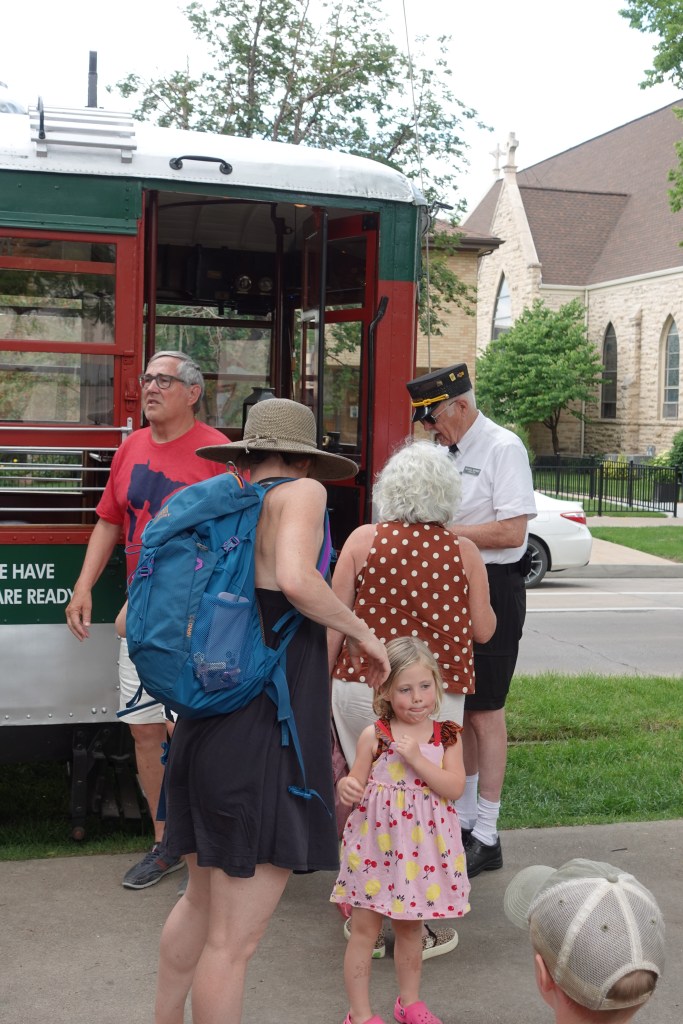
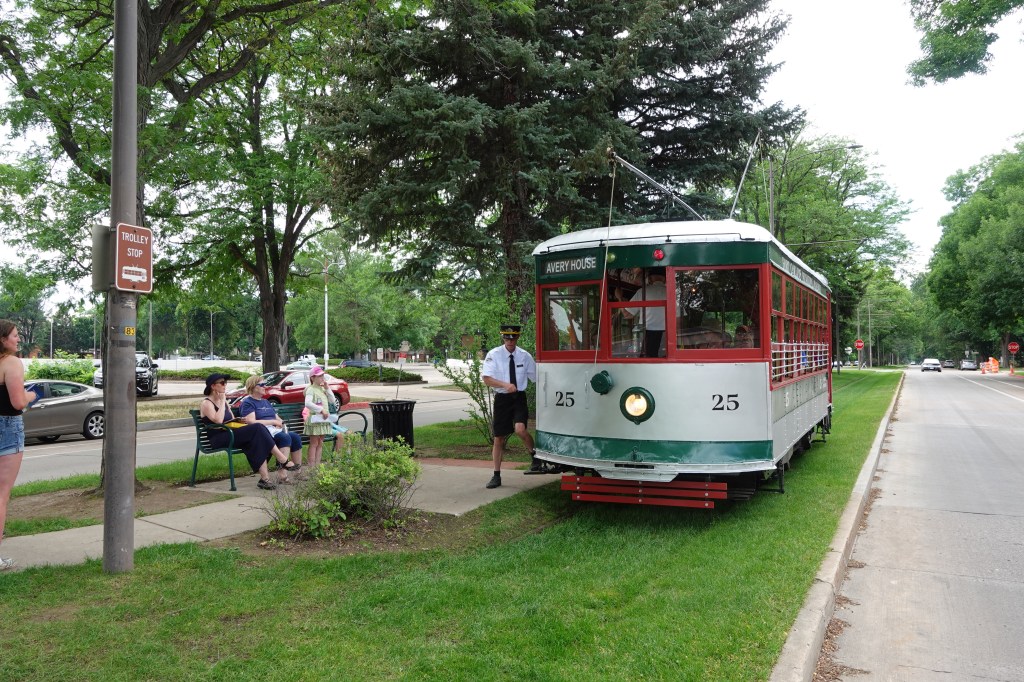
There are many heritage railways in Colorado and many more across the United States. Each one offers its own unique experience, but I think the Fort Collins Trolley is truly a one-of-a-kind. Since the 1950s, American public transit has shifted to a model that focuses around buses, carpool lanes, and larger cities boast light rail systems. It is rare to find a heritage railway that has managed to relay track down the middle of a busy suburban street flanked on each side by houses that were built in the 1900s, 1910s, and 1920s. That is precisely what the Fort Collins Trolley offers visitors.
As of this season, the trolley operates from May 3rd to September 28th every half hour from noon to 5pm on Saturdays, Sundays, and Holidays. The fare is all of $2 with reduced rates for seniors and children. Toddlers are free to ride with an adult.
Just like the original line, riding the modern rails is an odd experience. When people think of railroads they usually picture machines that weigh hundreds of tons effortlessly gliding over glass-smooth track. Trolleys are nothing like that, however. The streetcars are about as big and heavy as a small transit bus and the rails follow the path of a paved roadway. That means the streetcars bob and weave as they roll down the track. The streetcars also stop at every intersection and slow down for curves but manage to maintain about a 12mph average.
The sounds are unique as well. Trolley poles maintain contact with overhead wire using small electrically-conductive wheels. The pole itself is spring-loaded, which puts tension on the overhead wire. As the trolley moves down the track, the sound of stretching metal can be heard up and down the line. The closest I can liken the sound to is that of someone plucking a strand of barbed wire on a fence. The vibration and noise travels down the wire rather than making a single percussive wave. Besides the wire, the trolleys themselves are nearly as quiet as a car. All that is heard is the hum of two electric motors which sound similar to modern electric cars. The trolleys are equipped with a bell too.
The streetcar system also operates a very unique railfanning experience. Since the trolley runs on a predictable schedule along a route that for all intents and purposes is a paved street, there is no need to hurry or break traffic laws. I found it very easy to leapfrog the trolley about three times per run, the biggest hazard being the potential of being hit by a car while exiting my vehicle. The grassy median and the sidewalks on each side of the street provided ample opportunities for photographs. Indeed, this is one of the few times where I could go grab refreshments from a street vendor while waiting for the trolley to come back around!
I found West Mountain Avenue to be the perfect backdrop for the trolley. Large, mature trees lined the street, a steady mix of vehicles, bicyclists, skateboarders, and pedestrians kept things interesting. Houses on each side of the street were all historic with some renovated in ways which compliments their history. The corner of West Mountain Avenue and South Roosevelt Avenue was probably the best place to sit and wait. The trolleys there have to slow down for the curve which brings with it yet another unique sound of wheels rubbing against rail. Admittedly, that sound is less pleasant that some of the others one can hear trackside. I happily spent three hours photographing and filming the streetcar as it rolled up and down the line.
Modeling Potential
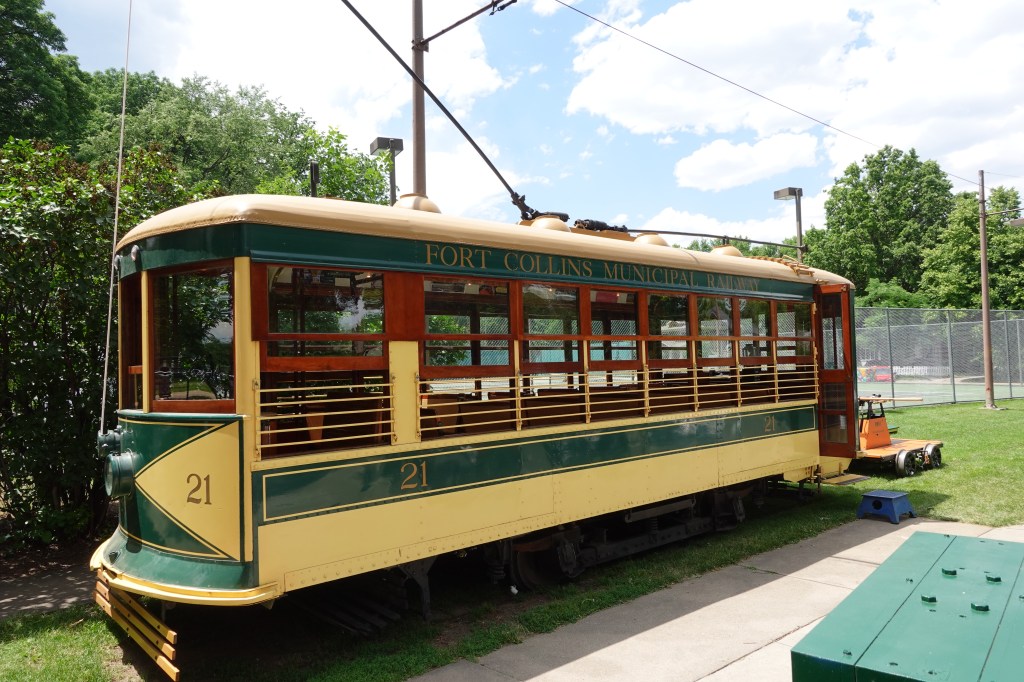
While I am a fan of traction railroads, the fact is streetcars appeal to a small minority of model railroaders. It is understandable why this is. First, old streetcar networks are close to falling out of living memory. Streetcars are no longer culturally relevant in a modern, car-reliant society. Most Americans also do not have much experience with any sort of rail-based public transit, so there isn’t much of a personal connection with streetcars for most people. Operators may find streetcars to be boring as well if they enjoy picking up and setting out cars or moving whole trains over a main line. Trolleys run the same routes on predictable schedules and usually do not handle freight or mail. Some systems did have those services, but they were secondary to transporting people.
Nonetheless, there are a couple of reasons why someone would consider modeling a traction line. The first is that trolleys are unique pieces of railroad equipment. To most people, diesel locomotives all look similar and the same can be said with steam locomotives. The general population simply isn’t that familiar with trains. However, streetcars have very unique designs and paint schemes that make each stand out. People who watch a traction layout in action are easily able to pick up on the fact that there are different cars on the route.
Another reason someone might want to model a traction railway is that it is possible, and perhaps even preferred, to automate such a model railroad. Streetcars frequently stopped at random locations by being flagged down by riders and they made scheduled stops at the end-points and mid-points of their routes wherever two or more cars would cross paths. With DCC, JMRI, solid state electronics, and all the modern technology we have today in the hobby it is possible to build a model railroad that essentially runs itself.
Some streetcars are easy to purchase ready-to-run, especially the Birney streetcar. What is convenient about Birney streetcars is that they were mostly all the same design, meaning a paint job is all that’s required to customize the model. Bachmann made a Birney model up until about 2020 and they can be found used on auction sites and train shows frequently. TSG Multimedia did an excellent product review back in 2017 of this model and you can check it out below. I also recommend subscribing to the channel!
Operators aren’t left out though because an operating session on a streetcar line would be a very unique experience. Instead of picking up and setting out cars, streetcar operations revolve around keeping to specific schedules and adapting to things like traffic, pedestrians, and riders wanting to get picked up or dropped off in different locations. Operators on the same track must also be aware of each other and communicate clearly to avoid accidents or making each other late. If a typical freight railroad operating session is like a big game of chess, then I imagine an operating session on a traction layout would look like a choreographed dance.
I think the biggest advantage of modeling a traction railway is that much of the focus is on modeling realistic city scenes that are often left out of layouts modeling freight railroads. The modeling potential is less focused on trains and more focused on structures, figures, vehicles, and small scenes that make train layout feel realistic. The trolleys themselves are unique pieces that often require kitbashing or scratchbuilding, but there are commercial products available as well.
One advantage I see in modeling a traction railway is that a person doesn’t need a lot of space, even, in large scales. O scale (1:48) is traditionally the size modelers gravitate towards for building traction layouts, but in HO scale a layout can be very small indeed! Most streetcars were designed to navigate 50 foot turns with Birney trolleys able to navigate even tighter radii. In HO scale that works out to 6.875 inches (175mm)! A 16 inch deep shelf can easily accommodate a full turn back loop while a 12 inch shelf offers ample depth for structures and streets.
Conclusion
I suppose the conclusion of this article are two separate thoughts. The first is that if you are in the Fort Collins area in the summer on a weekend afternoon, stop by the Fort Collins trolley and spend a couple bucks for a ride. They have a little depot as well which is used as a ticket booth and gift shop. Every little bit helps! The second concluding thought is that if you are short on space and prioritize model building over switching operations, a traction layout is an awesome concept worth exploring!