Tag: Contrast

  • Beating a Dead Horse: NCE or Digitrax?

    One of the most frequently asked model railroad questions on the web is “Should I buy NCE or Digitrax?” I have a question in return, why? This has been a topic that has been had since the mid-2000’s when both companies first released their respective starter DCC systems. Comparing the two companies has resulted in many arguments and ended friendships, yet people still want to know which system they should invest in. Well, Jordan and I put together a video to sort it out. We thought it would only be about ten or fifteen minutes, but it turned into a forty-eight minute long discussion comparing the two systems. I highly encourage people to go watch the video, but for those of you who don’t have that much time, this article is a summary of our thoughts.

    What is DCC?

    Before going into the systems themselves, we ought to clarify what DCC is. Digital Command Control (DCC) is a technology that is now in its fourth decade of existence and it has become the control system of choice for most model railroaders. DCC uses electrical signals mixed with DC current to communicate between a command station and locomotives on the track. Each locomotive is assigned its own number, usually the locomotive number on the cab, and signals which are not meant for a certain locomotive do not trigger a response from any engine except for one with that decoder number.

    DCC is also a one-way communication system. Signals are sent to decoders which respond to commands, but they don’t talk back like how components communicate within a computer. Radio Control works in a similar way, except that model railroaders have the advantage of always running their trains on metal rails which can carry electrical signals more efficiently than radio waves. The end result is that DCC systems allow model railroaders to run multiple trains at once on the same track without interfering with each other. DCC not only saves on wiring and the complexity of block control, but also offers model railroaders more features than hobbyists in the past could ever dream of!

    NCE Power Cab vs Digitrax Zephyr Express

    Convinced you want to invest in DCC? I don’t just throw the word “invest” out there to sound smart (okay, maybe sometimes), getting into DCC is indeed an investment. Every locomotive will need a decoder and the upfront costs are at least double that of buying an analog DC controller. Looking at the market, there are a lot of options available, but the two most common are offerings from NCE and Digitrax and hobby shops will stock at least one of these two systems.

    The NCE corporation produces a basic DCC starter system called the “Power Cab” which has been in production since 2006. Retailing with an MSRP of $249, this system can typically found for just under $200 if you know where to look. The handheld throttle doubles as a command station which differs from the more advanced DCC systems out there which has a command station located somewhere on the train layout. This means that you cannot unplug the Power Cab and move to another phone jack without also losing power to the train layout. The good news though is that with the addition of more throttles or a WiFi system, its possible to use throttles with the Power Cab and walk around with trains as they run instead of being limited to the length of the cable tether.

    Digitrax came out with its original Zephyr at about the same time as NCE’s Power Cab, but in 2019 the system got a much-needed update. The Zephyr Express came out in January of 2019 and features soft-touch buttons and a backlit LCD screen along with a throttle similar to that of an old power pack all in a single device that can be mounted somewhere on the train layout. The issue with this system is that more throttles are needed to move outside of arms’ reach of the command station / master throttle. The good news though is that since the Zephyr Express doesn’t need to fit in the palm of one’s hand like a TV remote there is room inside to boost the amperage all the way to 3 Amps, which in this day and age is going to be five or six DCC-equipped HO scale locomotives.

    The two systems are very comparable to each other outside the obvious differences in design philosophy, but here’s a breakdown as to where one system outshines the other:

    Price

    Both the Power Cab and Zephyr Express can be found at right around the $200 mark and their MSRP is only about $10 apart, which these days isn’t a whole lot. That’s what, three candy bars? A large iced coffee? So the two starters systems are in a dead heat with each other in terms of price and it shows just how far a little competition goes in a small industry like model railroading. Due to each other’s presence, the price stays low enough that someone can easily get started with either DCC system.

    Where the two companies diverge in price is in the higher-end products. Digitrax takes a clear win here with a fully modular approach that allows a customer to build the system which suits their needs. NCE also has a modular system of components but they don’t always play together seamlessly. More importantly, the price of NCE components tends to be more than that of Digitrax. The point then must go to Digitrax for its better value for money.

    User Interface

    Jordan and I agree that NCE really shines in terms of how easy it is to pick up and understand the basics of the system. People from all ages can easily learn how the Power Cab works and many of the functions translate directly to the bigger Pro Cab systems. In fact, I can take my Power Cab and use it as a regular throttle on a bigger NCE system. That is something which is more difficult to do with the Zephyr Express which might lead some people to conclude that they should just bite the bullet on a bigger system and skip the Zephyr completely.

    The shape of the throttle and the button layout on the Power Cab is also very well done and hasn’t changed in a significant way since the system’s introduction nearly twenty years ago. To be fair to Digitrax, in 2019 and 2020 the company did an overhaul on many of its products and now Digitrax throttles have integrated some features found on NCE throttles including better ergonomics and soft touch keys in a simple layout that is more intuitive. Even so, NCE is still the better of the two systems in this category.

    Capabilities

    Just how much can you do with DCC? That’s what this category is all about and Digitrax takes this one without much debate. NCE can do a lot of things, but when it comes to more complicated tasks like designing routes with JMRI or putting in a fully automated signaling system, we’ve found that Digitrax is simply the better system.

    Expansion

    Jordan may disagree on this and I will concede that it is situation dependent, but between the two systems NCE just feels like the better system when it comes to expansion. Digitrax is more customizable, but if you are starting with the Zephyr Express you are going to always have one throttle (the Zephyr) which is at a fixed location on the train layout. Sometimes that isn’t a big deal, but other times it is a problem, and that situation specifically is when you want to go play with other people on a larger train layout. The Power Cab’s ability to also act as a mobile throttle gives it an edge here, though I will admit that it is a small edge. When it comes to building a large DCC system, Digitrax’s larger variety of products gives it more options for expansion, but a caveat there is that Digitrax throttles have undergone about three major overhauls whereas NCE throttles have remained pretty much the same. If you have an older Digitrax system and want to update your throttles, you’ll either need to run two radio systems in parallel or you will have to retire all your throttles at once and then purchase new ones.

    External Capabilities

    To put it simply, if you are wanting to supplement your DCC system with third party options, then Digitrax has more products on the market which play well with its system. NCE has its own corner of the market too. For instance, WiFi-Trax out of Australia makes a WiFi throttle board that can communicate with phone apps, giving users the ability to easily control their trains with a smartphone instead of a dedicated throttle. Digitrax though has all that and more.

    Which one should I buy?

    That is the question we asked ourselves and to be honest, if we were both operating completely independently of a club, then we both would likely have Digitrax systems. I personally would opt for the more advanced system options with walkaround capabilities, but Jordan is quite happy with his Zephyr Express. The reason why I own an NCE system is because my local train club, the Black Hills Railway Society, uses the NCE system for its club layout. You can check out the organization on their Facebook Page: https://www.facebook.com/BlackHillsRailwaySociety

    Jordan’s local club operates Digitrax and so that just makes that company more attractive to what he needs. That club is the James Valley Model Railroad Association: https://www.facebook.com/JVMRRA/

    The two systems are indeed quite comparable to each other beyond these differences so really it is a matter of personal preference or what other people are using in your local area if that matters to you. I know for my Black Hills and Fort Pierre railroad I won’t be using either system since that will be an island unto itself. But then again, perhaps a Zephyr would be more user-friendly down the road when that layout is inherited by a museum or gallery? Well, that’s a whole different can of worms and I’ll leave it at that for now.
  • What is HOn3 and How Do I Get Started?

    Introducing Narrow Gauge!

    Of all the different modeling scales that hobbyists can invest in, HO scale (1:87th) is by far the most popular.  An aggregate of different polls conducted over the years shows that while HO scale isn’t quite as dominant as it was twenty years ago, today 60-70% of model railroaders still choose HO scale as their primary modeling scale.  However, an increasing number of hobbyists are choosing N scale (1:160) to model in for a few reasons.  If you are having trouble choosing, I recently made such a post discussing the issue which you can find here.  But one thing I omitted from that article is that there is a third option available to hobbyists who prefer larger trains but don’t have a ton of room for a train layout.

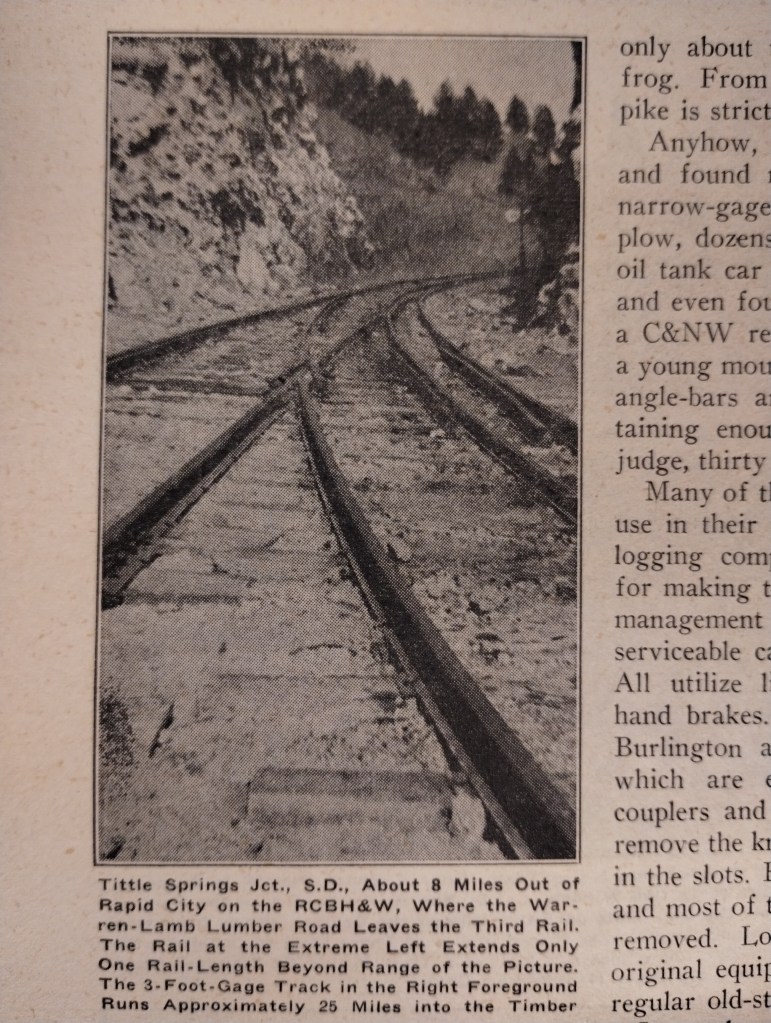
    “Three rail” track with both 3ft narrow gauge and 4ft 8.5in standard gauge.
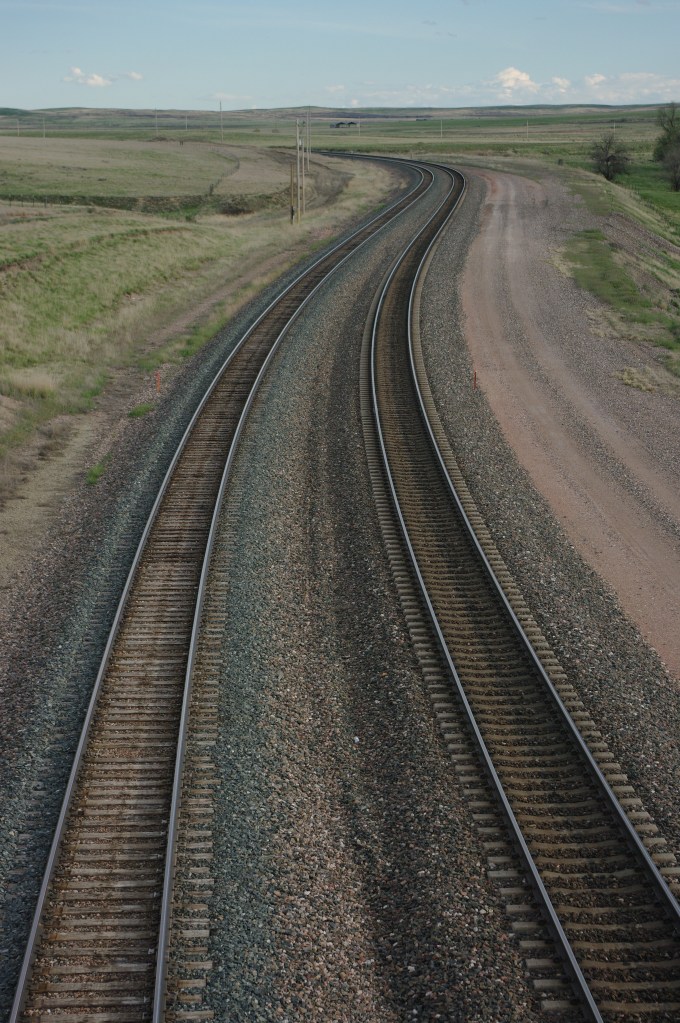
    Modern standard gauge mainline near Edgemont, South Dakota.

    That option is called “HOn3” or HO scale trains running on tracks that are narrower than standard gauge.  In HO scale, standard gauge is 16.5mm, but HOn3 trains run on tracks that are a scale 3ft (914mm) apart at 10.5mm gauge. I left out this option because there are some caveats with modeling HOn3.  For one thing, modeling narrow gauge railroads is a niche market within the hobby.  Unless you are modeling Colorado narrow gauge, finding prototype information is more difficult, finding prototypical rolling stock and locomotives are harder still.  Most narrow-gauge railroads also ran in the 1880-1910 era which isn’t as popular as modeling the 1950s, 1970s, or even present day.  The learning curve is higher as well since many models are only available in kit-form or there may not be a commercially available product at all for certain locomotives or rollingstock.  This requires a high degree of model-building skill that a novice is unlikely to possess.  Nonetheless, HOn3 does have a few advantages.

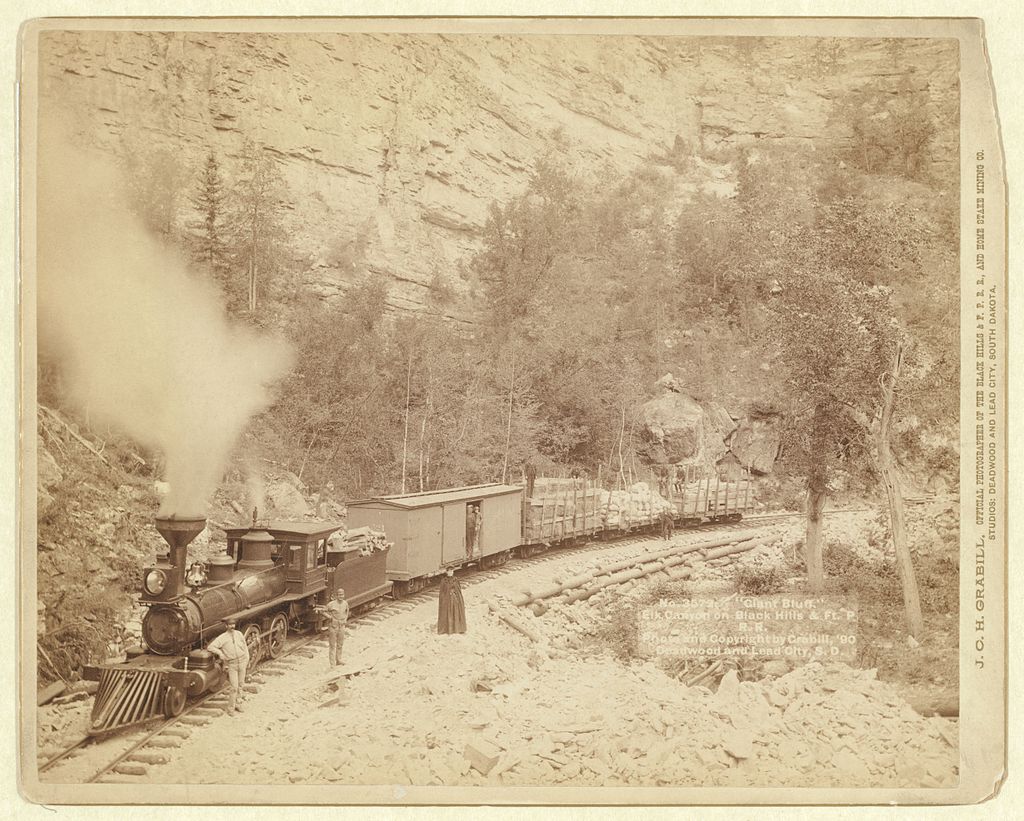
    Narrow gauge railroads were most common from the 1880s to the 1910s.

    Benefits of HOn3

    1. Saving Space

    HO scale is great for the high potential of detail fidelity found on model trains. Even budget-minded rolling stock and locomotives have a good amount of detail included which a lot of models in larger scales lack.  Not to mention that the latest generation of HO scale models have separately applied details that rival or exceed what scratch builders were doing two decades ago.  However, the size of the trains gets to be an issue when it comes to building train layouts.  Americans in particular have always been fond of building circuitous train layouts where the train can travel endlessly on a loop of some kind.  Only recently has there been a movement in the states to build train layouts that run point-to-point using as few turnouts as possible to serve all the industries along the route.  Authors such as Lance Mindheim have been promoting this design philosophy for years now and it has now begun to manifest itself in new layouts being built.

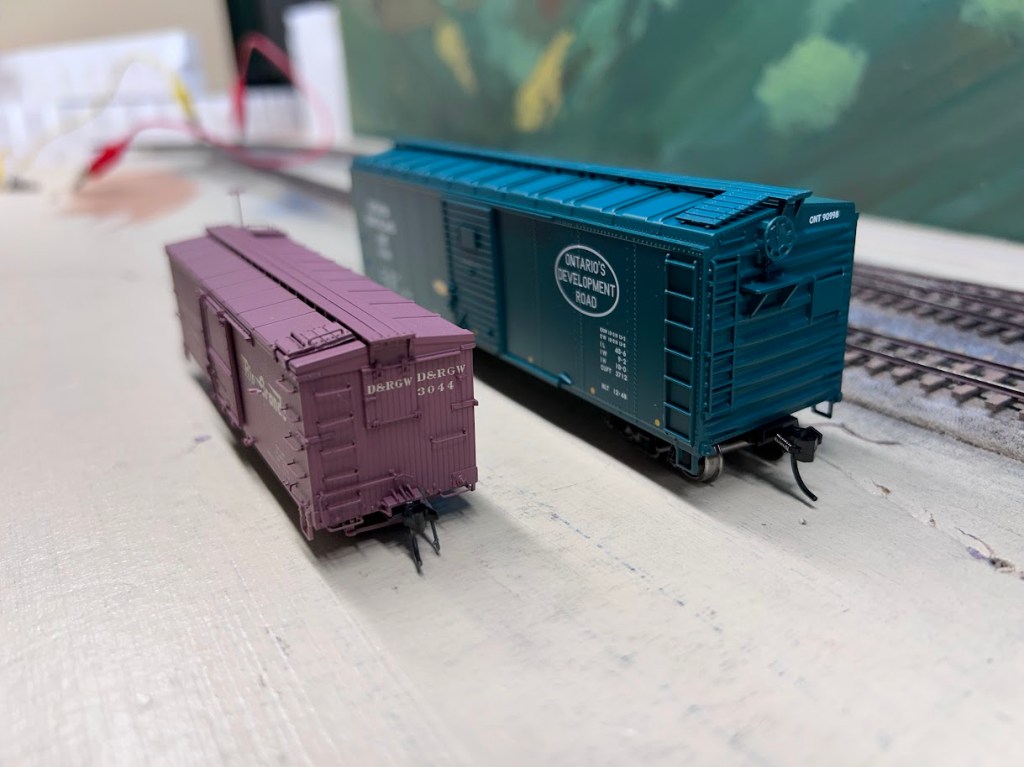
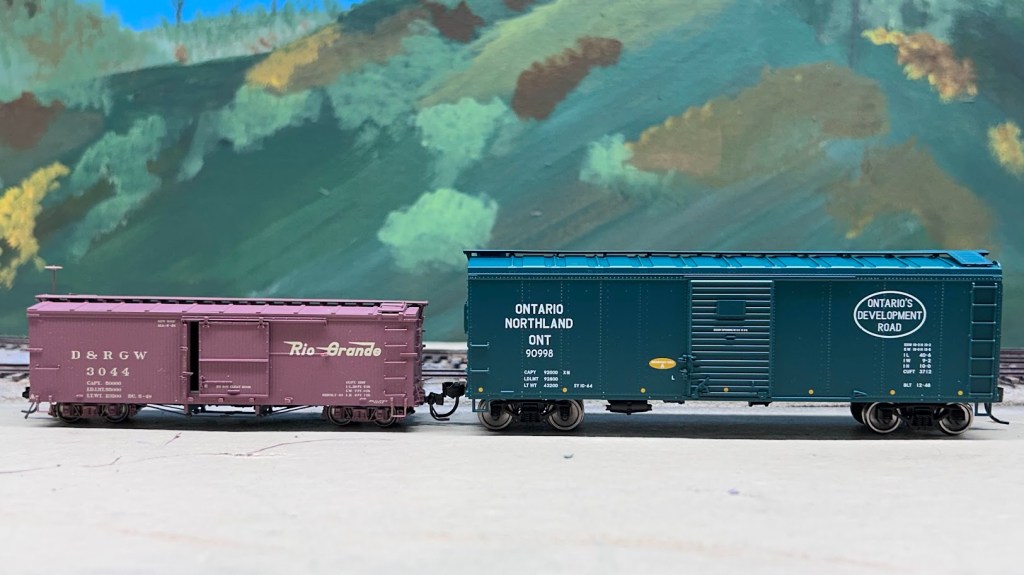
    Same scale, very different sizes! Above: On the left is a typical 3ft gauge boxcar while on the right is a standard gauge 40ft boxcar. The 40ft boxcar can hold approximately twice the volume of the narrow gauge car. Left: Narrow gauge tends to have narrower and shorter equipment that rides on smaller wheels that are 24-28 inches in diameter.

    Even so, turn radius is a problem.  Realistic curves in HO scale would be tens of feet in radius and the practical curves people end up using typically fall in a range of 20-30 inch radius.  Train length is also a problem. A cut of twenty 50-foot boxcars in HO scale takes up about twelve feet of space!  HOn3 on the other hand can comfortably use 18-20 inch radius curves and require much shorter sidings due to the shorter train lengths involved.  A long narrow-gauge train (DRGW not withstanding) might only be a dozen cars or so.  The Black Hills and Fort Pierre, which I model, had locomotives that could only pull about ten cars.  Obviously, structures are going to take up the same amount of space as will roads, but narrow-gauge railroads often operated in hilly or mountainous terrain that was decidedly rural.   That means fewer structures, fewer roads, and as much green scenery as you have room for!

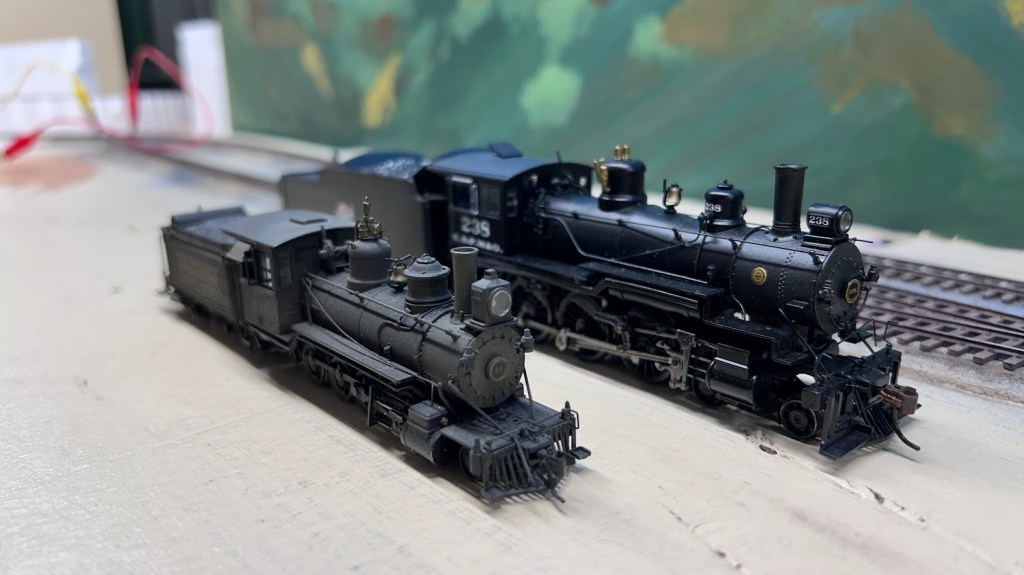
    Locomotives have the same effect as the rolling stock. The narrow gauge engine on the left is a 2-8-0 while the one on the right is a 4-6-0 “ten wheeler”. Both are considered mid-sized locomotives on 3ft gauge and standard gauge track, respectively.

    2. Unique Prototypes

    Perhaps it’s just a personal problem, but I’ve never had much interest in modeling railroads everyone else is already familiar with.  Modern class I’s like BNSF and Union Pacific as well as fallen flags like the New York Central or the Pennsylvania railroad just don’t appeal to me beyond a generic historical context.  You know what is fun?  Taking the path less-worn or even forging a new trail completely!  HOn3 has a lot of opportunities to explore prototypes that few people have ever even heard of.  Montana Southern?  Burlington and Northwestern? Oahu Railway and Land Company?  All three were narrow gauge railroads operating in the Pioneer Mountains of Montana, the cornfields of Iowa, and the Big Island of Hawaii respectively.  There are literally hundreds of narrow-gauge prototypes in North America and most of them were 3ft gauge.  Even the more popular railroads on the narrow-gauge scene like the Denver and Rio Grande Western or Westside Lumber Company have a much smaller fanbase than the standard gauge class I’s from the last sixty years or so.

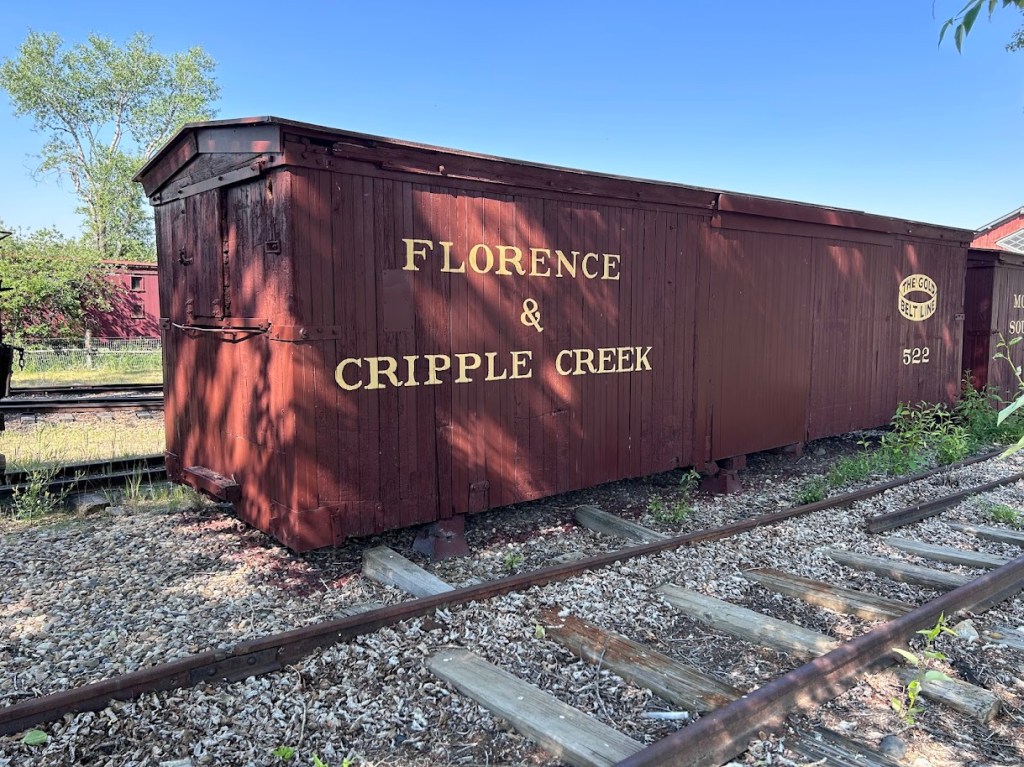
    F&CC boxcar that was once used on the Montana Southern Railway.
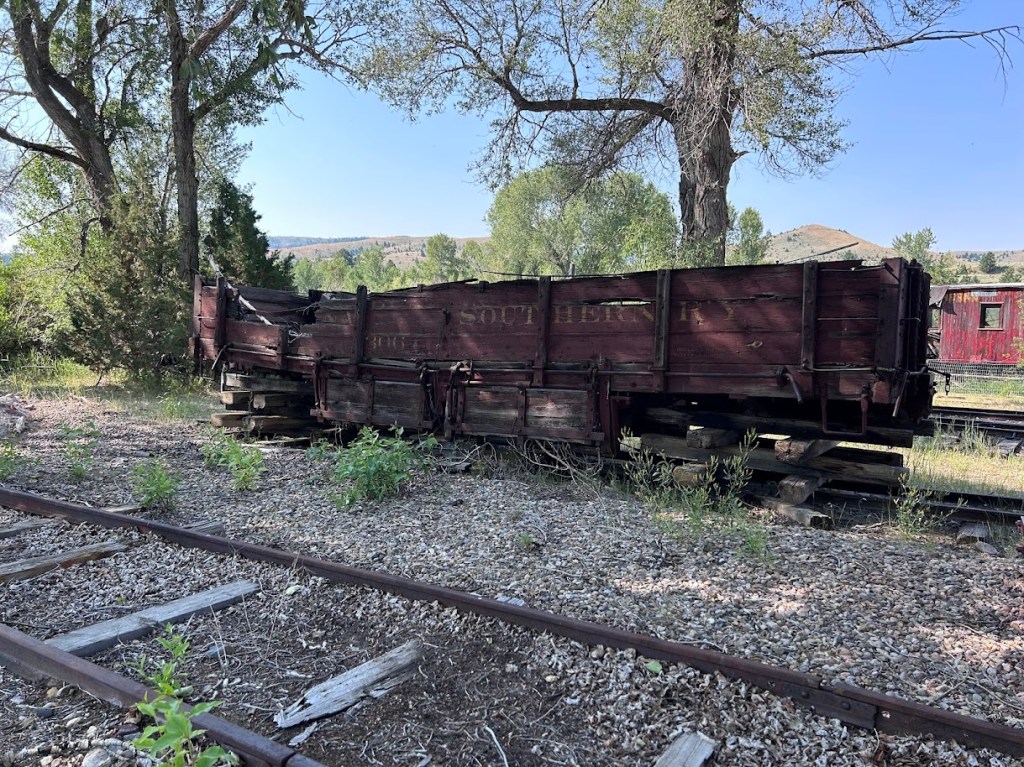
    Drop-bottom gondola still in Montana Southern lettering in Virginia City, MT.

    3. Art of Model Railroading

    Okay, now while it is possible to view standard gauge model railroads as being works of art (looking at you, George Sellios!), there is something about narrow gauge which challenges hobbyists to get more creative with the scenery and detailing.  Perhaps it’s the higher learning curve or maybe a side-effect of attracting people who want to physically make the most on their layout, but some of the finest model railroads to ever be created are HOn3.  A prime example is Harry Brunk’s famous Colorado & Southern model railroad that now sits on display in Cheyenne, Wyoming.  The layout was constructed over several decades by a master modeler and the end result is a model railroad like no other.  These days it is easy to purchase ready-to-run models right off the shelf and run diesel locomotives that perfectly match the prototype.  Heck, even recently Athearn admitted to making the egregious error of having the wrong light arrangement on one of their diesel models!  Fifty years ago people were happy just to have a model of a locomotive at all but now this is grounds for a recall.  That’s not a complaint, by the way.  I think it’s amazing that a company admits to such a mistake and does whatever it can to correct it, but I digress.  With HOn3, you have to make most things yourself or modify commercially available products.  Outside of a couple of manufacturers, you aren’t buying ready-to-run models.  Most people see that as a huge negative, in which case HO standard gauge is waiting with open arms.  But for those who want to create, HOn3 provides a lot of opportunity out of necessity.

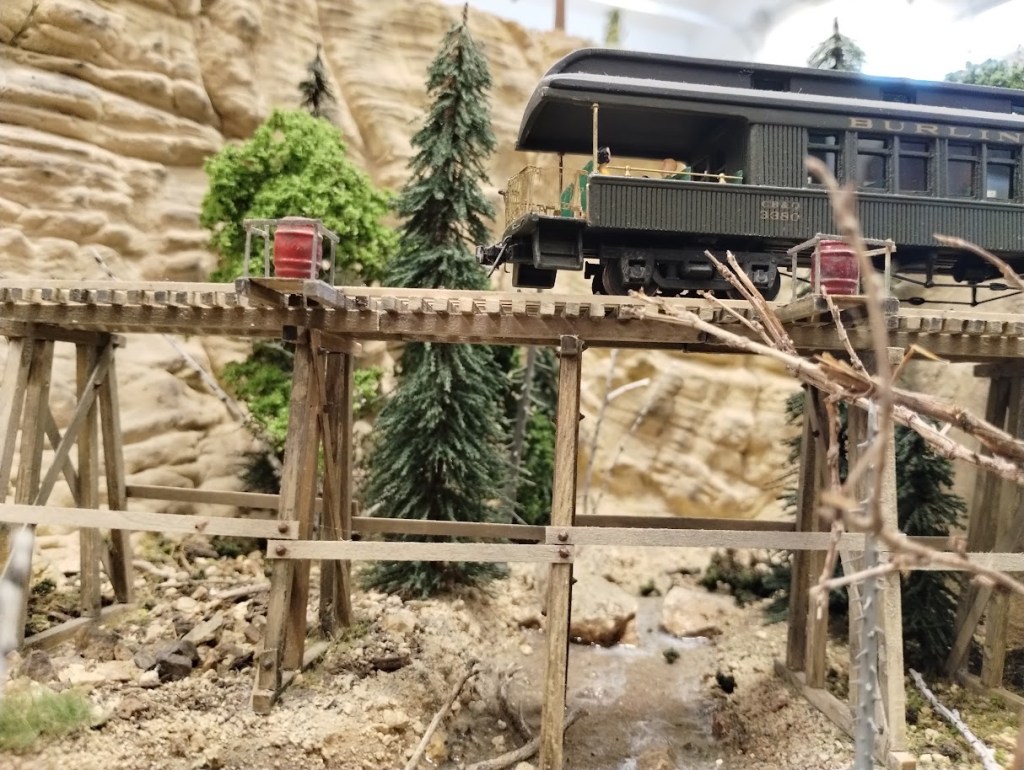
    Local model railroader, Jack Afinson, is an avid HOn3 modeler. This particular diorama is three-railed with both standard and narrow gauge track, but it also shows the work that Jack puts into his work. This diorama isn’t just a window to the past, it is a work of art on display at the South Dakota State Railroad Museum in Hill City, SD.

    So, how do I get started in HOn3?

    Now ain’t that the million-dollar question?  And yeah, that number isn’t as far off as you might think!  Getting started in HOn3 is no doubt more difficult than HO standard.  For one thing, the only ready-to-run locomotives out there with DCC and Sound are made by Blackstone.  Problem is that this company hasn’t really been making any new runs in the last several years and their product line is almost exclusively Colorado-based.  Ther companies like Micro Engineering make track and turnouts, but that too is sometimes hard to locate.  Micro Trains even did some rolling stock runs but haven’t made anything recently.  Are you noticing a theme yet?  If you want to get started in HOn3 model trains, you can’t just pop on over to the local hobby shop and get a train set.

    Unlike with HO standard gauge, the best place to get started with HOn3 is to begin reading about prototype railroads.  Train shows are a great place to find old books nice and cheap but Ebay, Amazon, and other digital marketplaces will have books about narrow gauge railroads as well. You can supplement your reading with videos on Youtube or from production companies like Green Frog videos.  Regardless of your medium of information, the goal is simply to find what you like.  The next step then is to figure out what products are available for your chosen prototype or for what matches the aesthetic you want to go for.  You’ll be able to quickly put together a list of models to be on the lookout for.

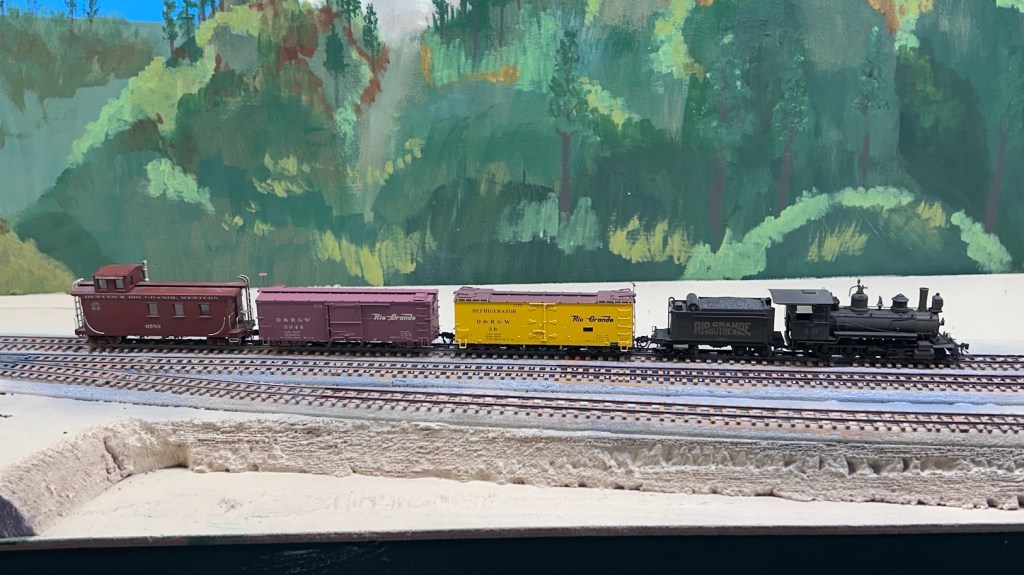
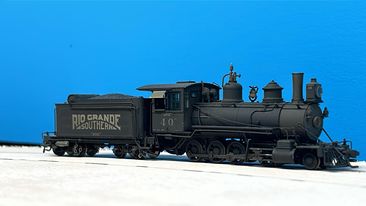
    This particular train cost… drum roll please… $800! Expensive, right? Except that’s about the same price as a BLI Big Boy direct from the factory. This consist is more useful in my opinion because now I have a smooth-running test train that is also quite photogenic. Included in the image are, from Blackstone; an RGS #40 C-16, a Rio Grande 28ft reefer, and a D&RGW 30ft boxcar, and a brass Westside Models D&RGW long caboose.

    After that, my next suggestion is to save a bit of money to purchase a bit of track plus a Blackstone locomotive and a few cars that are either commercially made or have been built for you already.  Throw in a DCC system as well. Why?  Because at least this way you’ll have a nice-looking and smooth-running train to run while you accelerate up that learning curve!  Now, the price tag for such a thing isn’t going to be cheap.  In today’s dollars, expect to spend somewhere between $1200 and $2000.  Yes, that’s quite the entry fee!  The good news is that relative to other scales, you really aren’t spending more money.  In fact, if you build most things yourself you’ll be coming out ahead in the long run because you need less equipment, less track, less buildings, and less space.  On my home layout, almost everything is going to be built from scratch or from kits.  Even my trio of brass 2-6-0’s only cost me an average of $250 each.  The issue is I need to invest another $400 apiece to get them running smoothly with a modern can motor along with DCC, Sound, painting, weathering, and custom decals.  The point is that you’ll be spending more time to save money after that initial plunge and in the end you’ll be a better modeler for it. To elaborate further and show my suggestions in action, I am actually planning a build series that focuses on this set-up as a starting point for someone new to HOn3.  A simple layout with a minimum of equipment at a budget that most people can afford if they save money for a few months or a year.

    Conclusion

    You might be a bit disappointed with my sales pitch for HOn3, but if I’m honest that is kind of the point.  There are advantages to HOn3, but several challenges as well.  You can’t just go to a train show and pick up a bunch of five-dollar freight cars out of the bargain bin. Even if you do manage to find such a score, they will all be old kits that you have to build, paint, and make run reliably.  Good engines are hard to come by, but when you find one you will cherish it and you’ll want to make the investment to make sure it runs better than anything a standard gauge modeler can get their hands on directly from a manufacturer. You’ll need to do some research as well, but this too will make you a better modeler and an amateur historian.  And to supplement these high-quality models you’ll be building, you’re going to want to construct a more detailed, museum-quality layout.  So really, HOn3 modeling and narrow-gauge modeling isn’t for the faint of heart.  It requires money, time, and dedication to improving your craft. I’d say that for most people, this will be what turns them back toward standard gauge modeling.  But for an intrepid few, HOn3 is a brand new canvas upon which they can create a masterpiece.

  • N Scale vs HO Scale: Which is right for you?

    The two most popular model railroading scales in North America are HO (1:87) and N (1:160).  HO scale still dominates the market but in recent years N scale has been growing substantially in popularity.  If you are new to the hobby then it is likely that you are trying to decide which one of these scales to invest in. This article will provide a brief description of both scales as well as key questions to ask yourself in deciding between N and HO scales.

    HO Scale vs N Scale

     Sized at 1:87th and with a standard gauge of 16.5mm, HO is the most popular model railroad scale on the market today. Almost every locomotive and car that rode the rails from the 1890s to present day can be found in this scale which makes finding and purchasing models that match your prototype straightforward. Many modelers find 1:87 to be in the “goldilocks zone” for modeling short lines and branch lines in a modest space. However, one disadvantage to HO scale is that for a lot of modelers the scale is too large to realistically model mainline running on Class I or Class II railroads. Because of this, there has long been a desire by model railroaders to fit a longer mainline run into a given space and this is where N scale really shines.

    Sized at 1:160th scale, N scale is roughly half the size of HO scale.  Structures take up one fourth the area and layouts can be built in very small spaces.  Alternatively, N scale can be used to model a much larger section of a railroad than HO scale if the space remains the same. This makes running mainline class I trains much more accessible. A big gap between the two scales used to be in the detailing possible.  HO scale had a reasonable level of detailing on equipment yet N scale was traditionally too small to achieve the same amount of detail. This gap has narrowed significantly in recent years and now N scale detailing rivals that of HO scale.

    N scale modelers were slower to adopt DCC due to the size of the electronics needed to be fit inside locomotives, but today that is no longer an issue.  One area that is still troublesome is in the lack of coupler standardization.  Truck-mounted couplers are quite common still on rolling stock even though such designs are almost extinct in HO scale.  Additionally, most manufacturers have their own N scale coupler which may or may not be compatible with other brands.

    Deciding on a Scale

    It is wise to pick a scale to model prior to purchasing a large amount of equipment.  If you already have a strong preference for one or the other, then roll with it.  But if not and you are stuck deciding between N scale and HO scale, considering the five following questions:

    1. What is my prototype? If you like running long trains on a mainline then N scale’s smaller size has several advantages.  However, if you like to run trains at slow speed and switch out industries, then HO scale tends to run smoother, slower, and more realistically.
    2. How much space do I have? Equally important is the amount of space available.  Do you have one or two walls to build a switching layout or can you use the whole bedroom?  How about the whole basement?  The garage? If you have the space to model what you want in HO scale, then it will be more convenient to do so.  However, if you have some space constraints then N scale will adapt better to tight spaces.
    3. Are the models I want available? This is also an important one. The good news is that just about every 2nd or 3rd generation mainline diesel locomotive that runs on US rails can be found in both N scale and HO scale.  The bad news is that N scale model availability isn’t as good as HO scale for unique models.  Check out what’s available to model your prototype before making a decision.
    4. Can I see and work on the models? Everybody is different when it comes to eyesight and dexterity.  Someone with nimble fingers and keen eyes will likely do just fine in keeping their N scale fleet running well.  However, not everyone has perfect vision and with age comes a tendency for eyesight and hand-eye coordination to deteriorate.  If you want to be modeling in the same scale 30 years from now, would be wise to invest in a larger scale now.
    5. What is my budget for building materials? The amount of benchwork, foam, scenery supplies, light fixtures, and more that are required to build a model railroad is determined by the type of layout being constructed and the scale being selected. Smaller scales will use less materials overall, so if you are on a budget it might be wise to build the layout that you are envisioning but in a smaller scale.

    Conclusions

    Remember that these questions are what I consider to be important.  While I hope you will also take these points into account when deciding on which scale to use, it is ultimately personal preference.  One of the site’s contributors, Jordan Schmieg, has built a fantastic layout of the Milwaukee Road in his area.  I personally still feel that N scale would have given him certain advantages to replicating the town of Andover and mainline operations, but Jordan wanted to stick with his HO scale because that’s what he had and the availability of unique models to the Milwaukee Road just isn’t there in N scale.  So he built himself a model railroad that he is happy with and that’s the important thing.