Month: July 2025

  • Beating a Dead Horse: NCE or Digitrax?

    One of the most frequently asked model railroad questions on the web is “Should I buy NCE or Digitrax?” I have a question in return, why? This has been a topic that has been had since the mid-2000’s when both companies first released their respective starter DCC systems. Comparing the two companies has resulted in many arguments and ended friendships, yet people still want to know which system they should invest in. Well, Jordan and I put together a video to sort it out. We thought it would only be about ten or fifteen minutes, but it turned into a forty-eight minute long discussion comparing the two systems. I highly encourage people to go watch the video, but for those of you who don’t have that much time, this article is a summary of our thoughts.

    What is DCC?

    Before going into the systems themselves, we ought to clarify what DCC is. Digital Command Control (DCC) is a technology that is now in its fourth decade of existence and it has become the control system of choice for most model railroaders. DCC uses electrical signals mixed with DC current to communicate between a command station and locomotives on the track. Each locomotive is assigned its own number, usually the locomotive number on the cab, and signals which are not meant for a certain locomotive do not trigger a response from any engine except for one with that decoder number.

    DCC is also a one-way communication system. Signals are sent to decoders which respond to commands, but they don’t talk back like how components communicate within a computer. Radio Control works in a similar way, except that model railroaders have the advantage of always running their trains on metal rails which can carry electrical signals more efficiently than radio waves. The end result is that DCC systems allow model railroaders to run multiple trains at once on the same track without interfering with each other. DCC not only saves on wiring and the complexity of block control, but also offers model railroaders more features than hobbyists in the past could ever dream of!

    NCE Power Cab vs Digitrax Zephyr Express

    Convinced you want to invest in DCC? I don’t just throw the word “invest” out there to sound smart (okay, maybe sometimes), getting into DCC is indeed an investment. Every locomotive will need a decoder and the upfront costs are at least double that of buying an analog DC controller. Looking at the market, there are a lot of options available, but the two most common are offerings from NCE and Digitrax and hobby shops will stock at least one of these two systems.

    The NCE corporation produces a basic DCC starter system called the “Power Cab” which has been in production since 2006. Retailing with an MSRP of $249, this system can typically found for just under $200 if you know where to look. The handheld throttle doubles as a command station which differs from the more advanced DCC systems out there which has a command station located somewhere on the train layout. This means that you cannot unplug the Power Cab and move to another phone jack without also losing power to the train layout. The good news though is that with the addition of more throttles or a WiFi system, its possible to use throttles with the Power Cab and walk around with trains as they run instead of being limited to the length of the cable tether.

    Digitrax came out with its original Zephyr at about the same time as NCE’s Power Cab, but in 2019 the system got a much-needed update. The Zephyr Express came out in January of 2019 and features soft-touch buttons and a backlit LCD screen along with a throttle similar to that of an old power pack all in a single device that can be mounted somewhere on the train layout. The issue with this system is that more throttles are needed to move outside of arms’ reach of the command station / master throttle. The good news though is that since the Zephyr Express doesn’t need to fit in the palm of one’s hand like a TV remote there is room inside to boost the amperage all the way to 3 Amps, which in this day and age is going to be five or six DCC-equipped HO scale locomotives.

    The two systems are very comparable to each other outside the obvious differences in design philosophy, but here’s a breakdown as to where one system outshines the other:

    Price

    Both the Power Cab and Zephyr Express can be found at right around the $200 mark and their MSRP is only about $10 apart, which these days isn’t a whole lot. That’s what, three candy bars? A large iced coffee? So the two starters systems are in a dead heat with each other in terms of price and it shows just how far a little competition goes in a small industry like model railroading. Due to each other’s presence, the price stays low enough that someone can easily get started with either DCC system.

    Where the two companies diverge in price is in the higher-end products. Digitrax takes a clear win here with a fully modular approach that allows a customer to build the system which suits their needs. NCE also has a modular system of components but they don’t always play together seamlessly. More importantly, the price of NCE components tends to be more than that of Digitrax. The point then must go to Digitrax for its better value for money.

    User Interface

    Jordan and I agree that NCE really shines in terms of how easy it is to pick up and understand the basics of the system. People from all ages can easily learn how the Power Cab works and many of the functions translate directly to the bigger Pro Cab systems. In fact, I can take my Power Cab and use it as a regular throttle on a bigger NCE system. That is something which is more difficult to do with the Zephyr Express which might lead some people to conclude that they should just bite the bullet on a bigger system and skip the Zephyr completely.

    The shape of the throttle and the button layout on the Power Cab is also very well done and hasn’t changed in a significant way since the system’s introduction nearly twenty years ago. To be fair to Digitrax, in 2019 and 2020 the company did an overhaul on many of its products and now Digitrax throttles have integrated some features found on NCE throttles including better ergonomics and soft touch keys in a simple layout that is more intuitive. Even so, NCE is still the better of the two systems in this category.

    Capabilities

    Just how much can you do with DCC? That’s what this category is all about and Digitrax takes this one without much debate. NCE can do a lot of things, but when it comes to more complicated tasks like designing routes with JMRI or putting in a fully automated signaling system, we’ve found that Digitrax is simply the better system.

    Expansion

    Jordan may disagree on this and I will concede that it is situation dependent, but between the two systems NCE just feels like the better system when it comes to expansion. Digitrax is more customizable, but if you are starting with the Zephyr Express you are going to always have one throttle (the Zephyr) which is at a fixed location on the train layout. Sometimes that isn’t a big deal, but other times it is a problem, and that situation specifically is when you want to go play with other people on a larger train layout. The Power Cab’s ability to also act as a mobile throttle gives it an edge here, though I will admit that it is a small edge. When it comes to building a large DCC system, Digitrax’s larger variety of products gives it more options for expansion, but a caveat there is that Digitrax throttles have undergone about three major overhauls whereas NCE throttles have remained pretty much the same. If you have an older Digitrax system and want to update your throttles, you’ll either need to run two radio systems in parallel or you will have to retire all your throttles at once and then purchase new ones.

    External Capabilities

    To put it simply, if you are wanting to supplement your DCC system with third party options, then Digitrax has more products on the market which play well with its system. NCE has its own corner of the market too. For instance, WiFi-Trax out of Australia makes a WiFi throttle board that can communicate with phone apps, giving users the ability to easily control their trains with a smartphone instead of a dedicated throttle. Digitrax though has all that and more.

    Which one should I buy?

    That is the question we asked ourselves and to be honest, if we were both operating completely independently of a club, then we both would likely have Digitrax systems. I personally would opt for the more advanced system options with walkaround capabilities, but Jordan is quite happy with his Zephyr Express. The reason why I own an NCE system is because my local train club, the Black Hills Railway Society, uses the NCE system for its club layout. You can check out the organization on their Facebook Page: https://www.facebook.com/BlackHillsRailwaySociety

    Jordan’s local club operates Digitrax and so that just makes that company more attractive to what he needs. That club is the James Valley Model Railroad Association: https://www.facebook.com/JVMRRA/

    The two systems are indeed quite comparable to each other beyond these differences so really it is a matter of personal preference or what other people are using in your local area if that matters to you. I know for my Black Hills and Fort Pierre railroad I won’t be using either system since that will be an island unto itself. But then again, perhaps a Zephyr would be more user-friendly down the road when that layout is inherited by a museum or gallery? Well, that’s a whole different can of worms and I’ll leave it at that for now.

  • Layers of Detailed Weathering

    OVERVIEW:

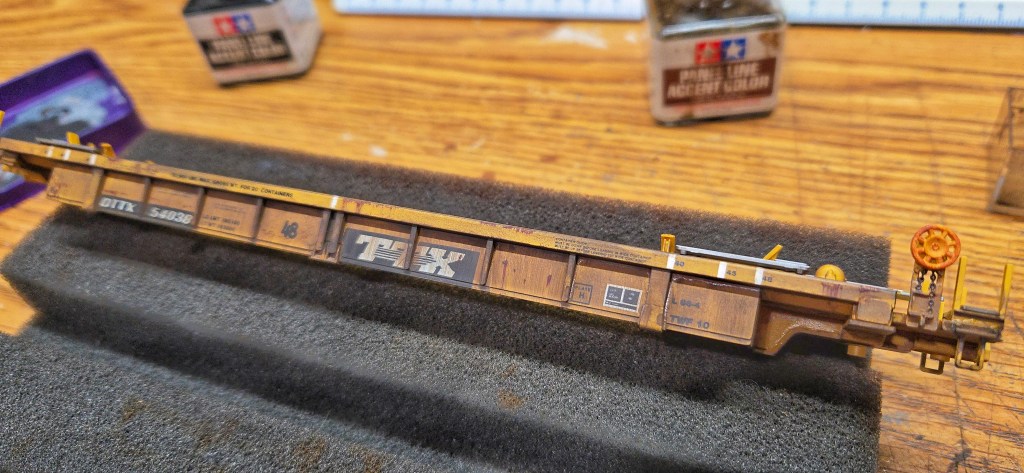
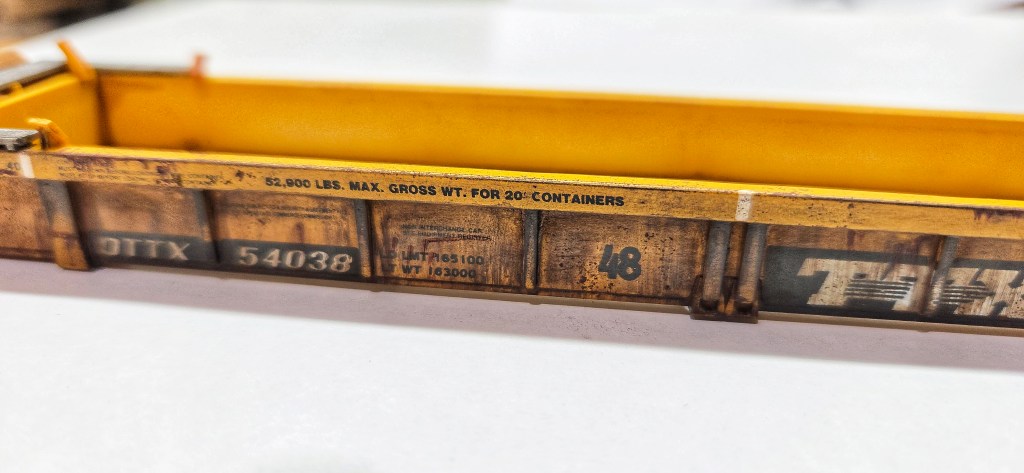
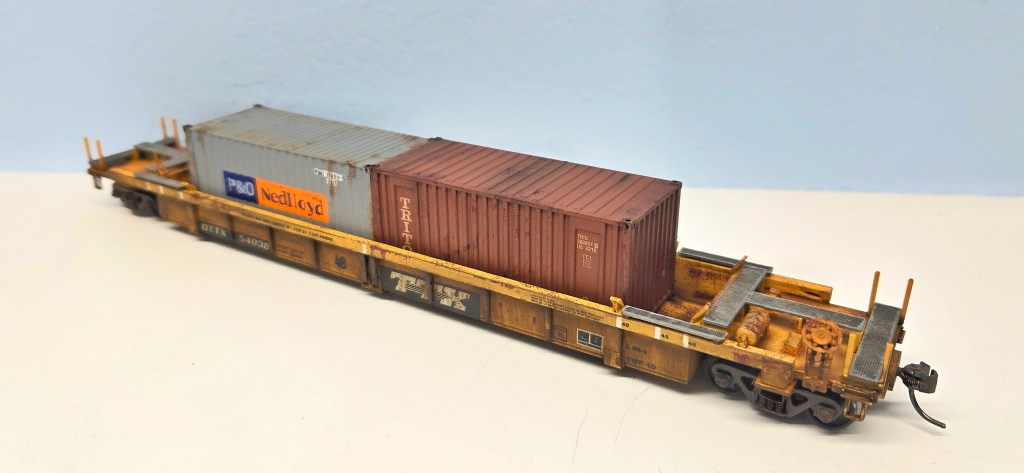
    I began this project to try something different. The subject is a new old stock HO scale Walthers well car kit from 1992. This is definitely different for me since I don’t model any intermodal traffic.

    MY PROCESS:

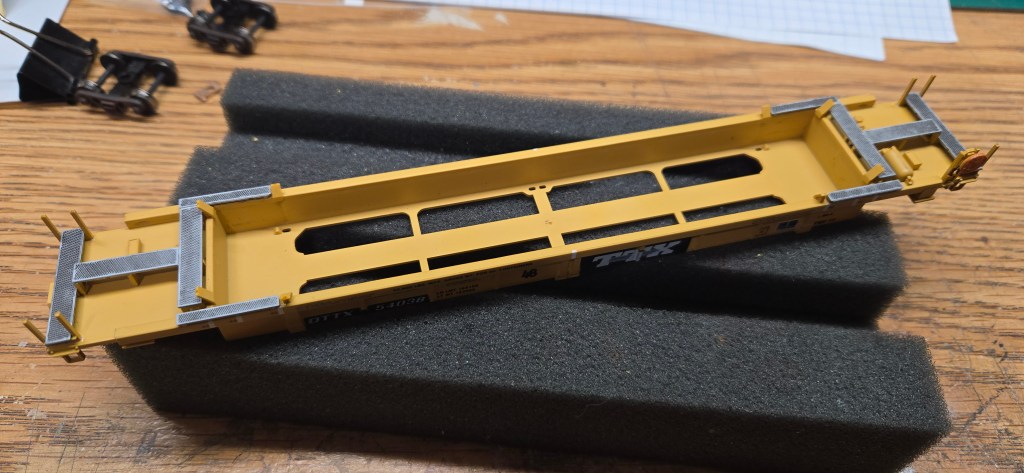
    I got this kit and started assessing it and how it should look based on prototype photos. When I had looked at a bunch of images (what felt like thousands) I began assembling it and taking time to let the plastic weld and CA cure fully before going too far and risking damaging a part.

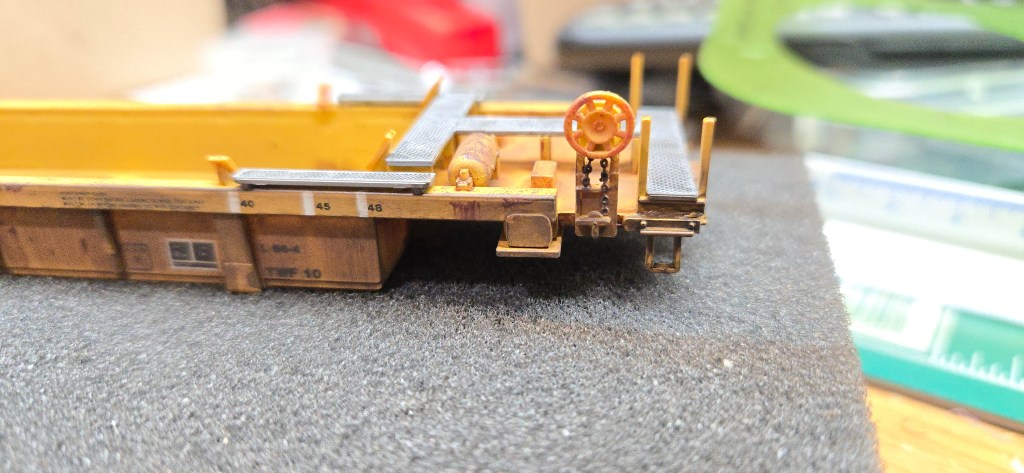
    I weathered the trucks and wheels first. Added just a touch of rusty iron paint to the molded springs for contrast and some black Tamiya panel line accent was added in the crevices to darken them. I also painted the molded brake chain with the same rusty iron color.

    Since the brake wheel on some of these was orange I mixed a faded orange color and dry brushed it to give the illusion of sun fade.

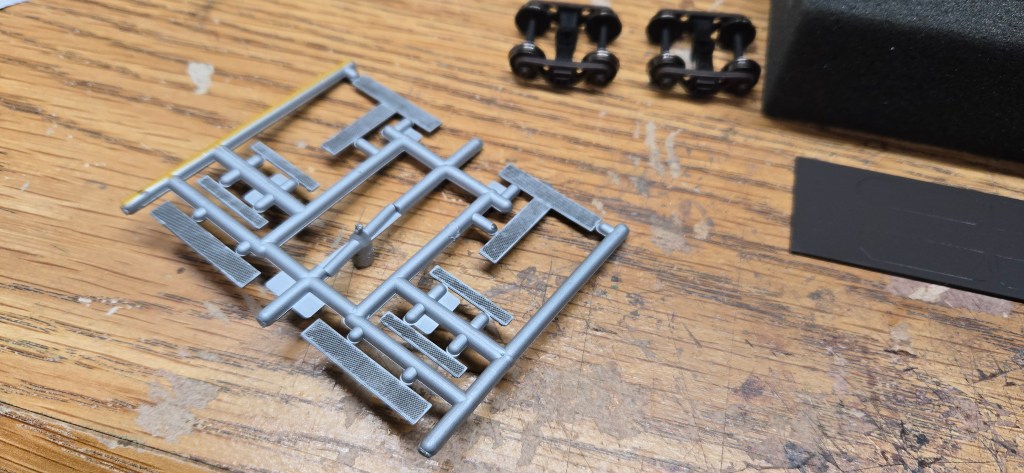
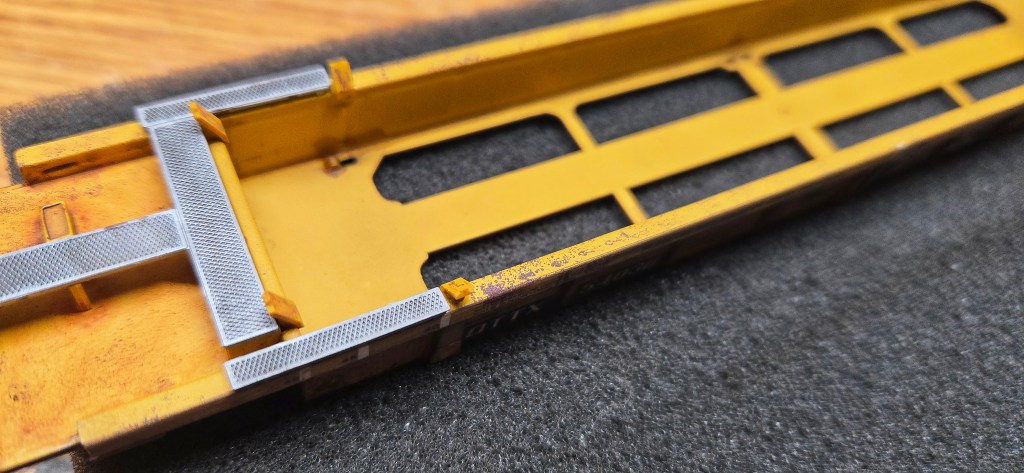
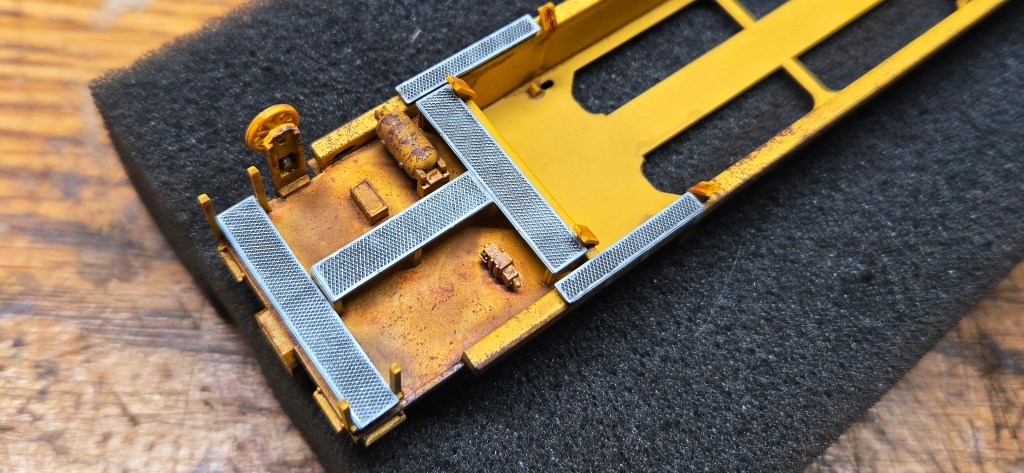
    While the walkways were on the sprue it was an opportune time to highlight them with Vallejo dark gray model wash. This really brought out the tread detail. A final application was be done prior to sealing everything with flat clear.

    WHEN PLANS CHANGE:

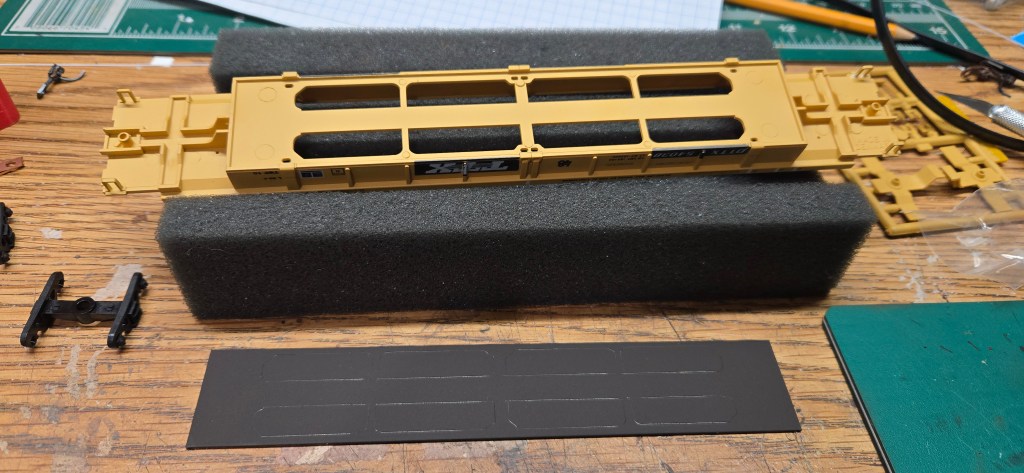
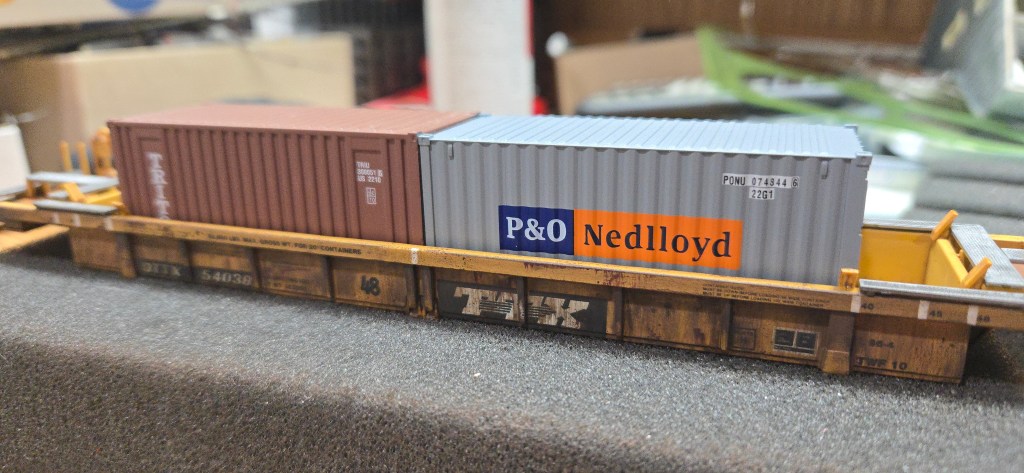
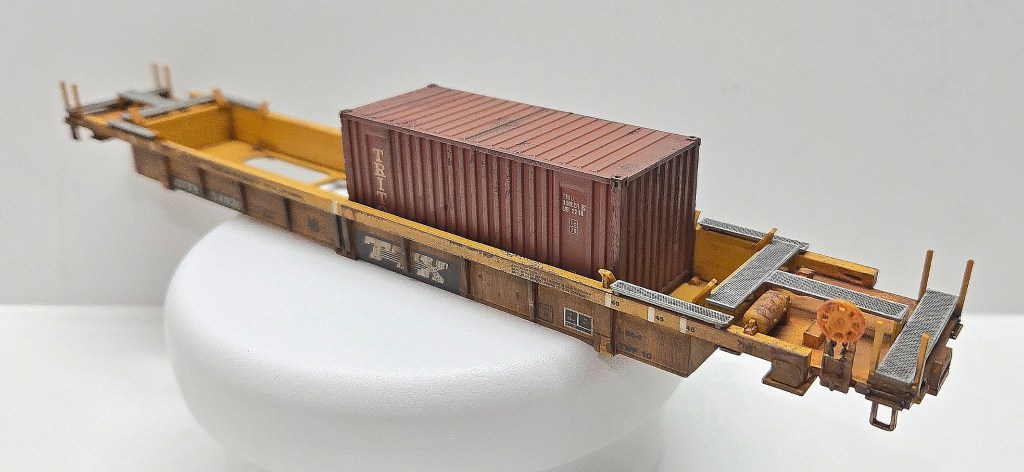
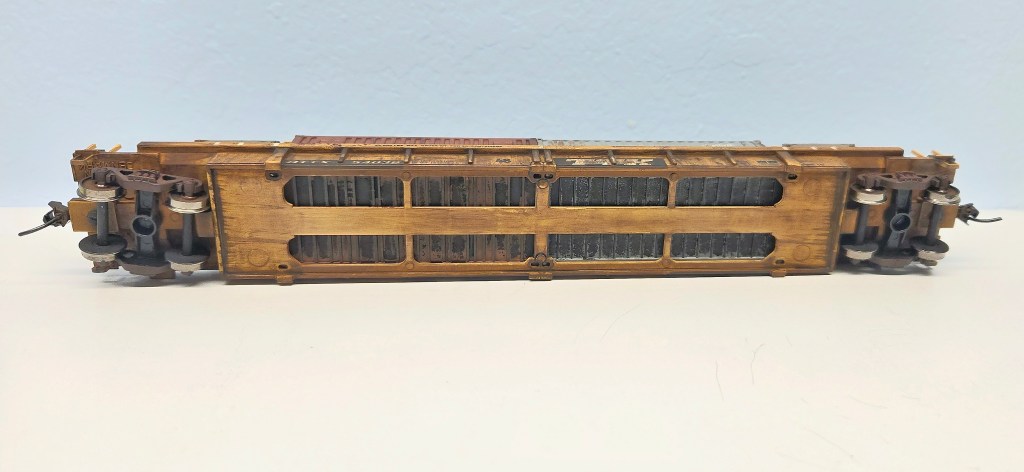
    I chose to begin on the car’s underside since I decided not to use the weight that came with the kit. This was not my original plan, and in the photo below I had sprayed the weight a dark flat brown and traced the car body out with an idea to cut the slots in the metal. The end goal changed to model a more prototypically accurate car with two 20′ containers, which is where plan to weigh the containers came into play and to maintain the see-through well.

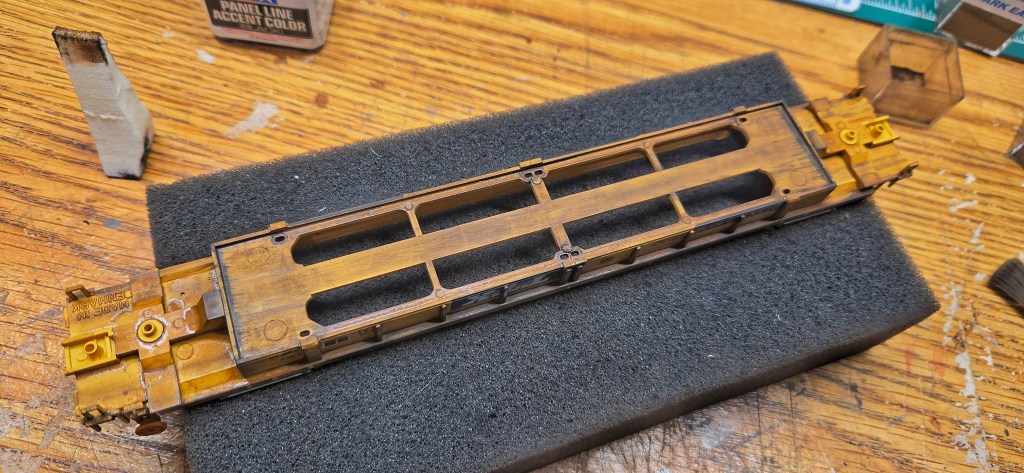
    I used AIM Dark Earth to darken everything and create a base layer of streaks. I followed up with Tamiya brown panel line accent and topped it off with a drop or two of black. Creating the streaks was straight forward, a clean cosmetic wedge was perfect to drag the grimy fluid across the surface leaving the horizontal streaks.

    MY PROCESS CONTINUED:

    Once the underside was dried (about 16 hours) I started by adding some small rusty spots on the air reservoir and added some dark rust spots on the ends, below the walkways. I left these as is for now and moved onto the brake wheel side.

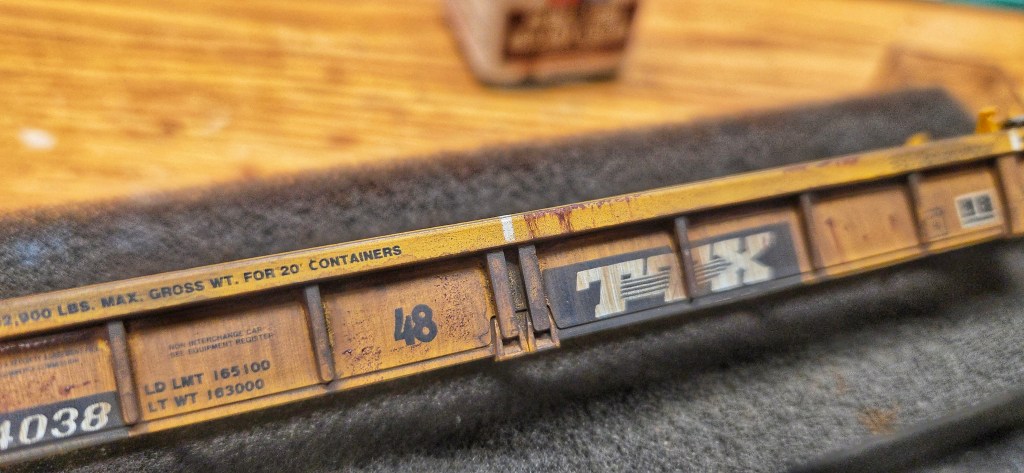
    I used Tamiya brown panel line accent along all the hard edges as a base color to blend into. When mostly dry I came back with a 1/2″ wide x 1/2″ long flat brush to apply some Dark Earth powder by AIM along the lower edge of the car side. Doing this helped blend in the underside.

    Working in an upwards motion I pulled the powder up the side. When the color looked right to me I took a cosmetic wedge with some of the brown panel line accent wash and drug the damp edge down to create the streaking effect.

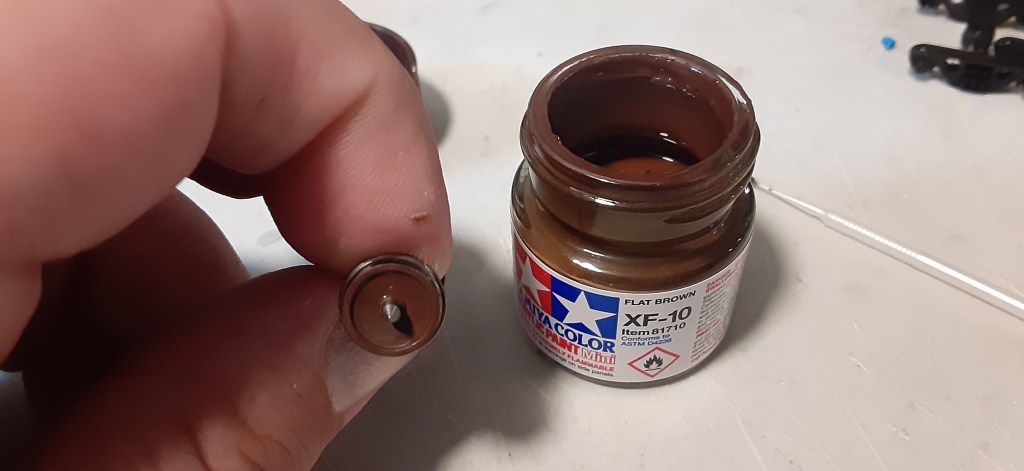
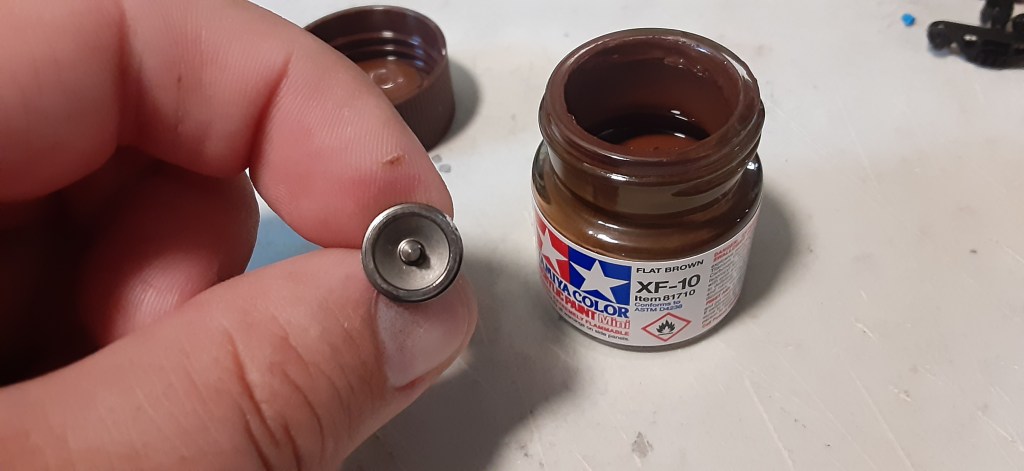
    I let this dry for about 4 hours and came back to apply some Tamiya XF-9 and  -10, Hull Red and Flat Brown respectfully. Using a Microbrush tip without bristles works well to apply small dots and smears of paint to the car as rust spots. I then use a clean cosmetic wedge or a clean, dry brush and gently pull the paint down to simulate the rust streaks.

    Layering Details:

    When the streaking is complete I add a small dot of Flat Brown to the spot to darken the spot being simulated. I typically do not pull this color down to create more streaking.

    Going along each of the car sides is an easy way to add the rust spots for me as I try not to over do the effect. It also appears more random as well.

    I continue onto the opposite side when the previous is complete, then came back to finish the ends under each walkway. The well interior will be last to get weathered, I wanted to wait until the containers were here before continuing.

    Starting on the opposite side of the car before work I wanted to have the base coat of grime ready when I was free in the evening.

    This side was done similarly to the other, I did add a few extra rust spots to the car side after the grimy streaks were dry. I also applied some rusty spots along both sides of the well and the start of scrapes on all eight of the guides. Doing this will ensure a nice layered base for a convincing oxidation effect.

    I let all the paint set and cure for a couple hours before starting on the walkway ends. The spots and scrapes were not something I wanted to try and do over.

    The technique I used is a one that I don’t typically use on smooth surfaces because it leaves a water spot look, but I got lucky here. The photos show a progression (of sorts) from being wet right after applying the fluid, then after it is dry and finally after I lightly brushed the AIM Dark Earth powder over the fully dried surface.

    The fluid I’ve mentioned is a mix of 91% iso. alcohol and some Bragdon dark rust powder. The color is a reddish color and the powder is suspended in the alcohol when shaken. I then apply it over the surface and when it evaporates, the powder is essentially left behind and looks pretty close to how rust shows up randomly on flat surfaces.

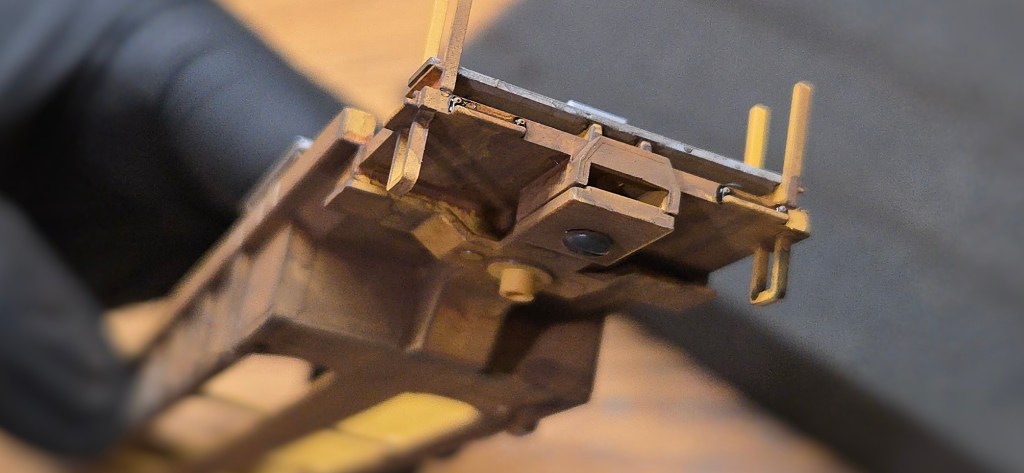
    When the alcohol had completely evaporated and the surface was dry, I went back over the area in some spots with a super soft brush and more AIM Dark Earth powder to blend some of the simulated grime across the surface. When I was satisfied with how that looked, I turned my attention to blending the underside up each end and around the coupler boxes.

    I wanted the next step to be the well interior with scrape marks and more rust spots, but couldn’t start there until I got the containers. That actually happened on a Friday afternoon and did the initial test fit and some minor trimming later that day.

    DETAILS MATTER:

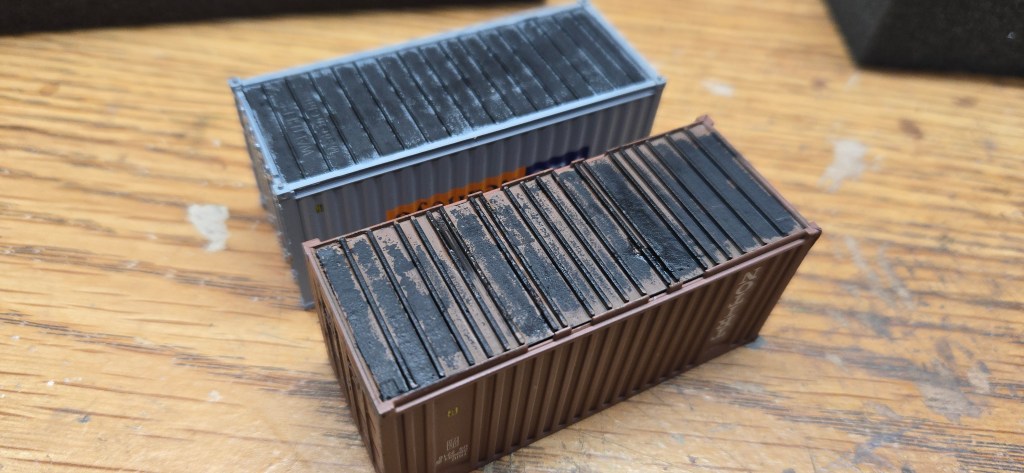
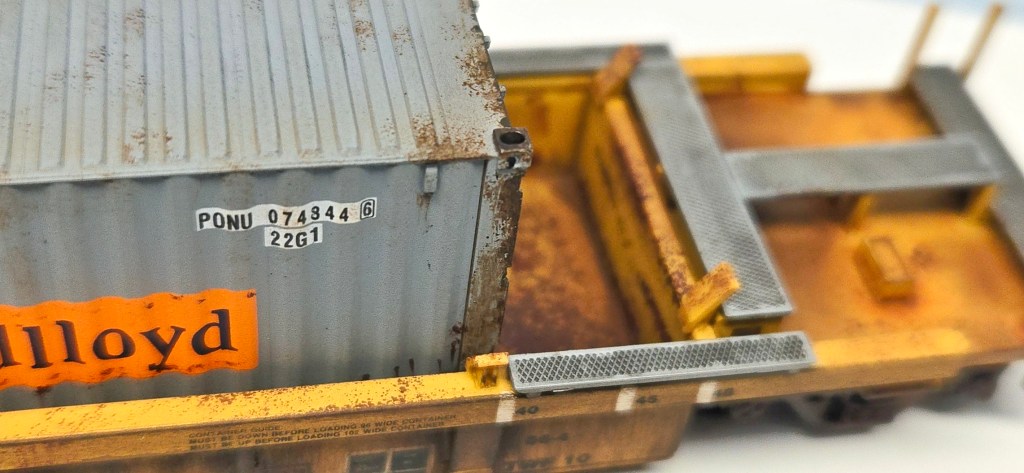
    A detail that I had not mentioned yet, was that each container was from a different manufacturer. One newer Walthers and one was a much older Athearn blue box. I chose to do this specifically for a slight variation in the looks of them. Because the Walthers container has sharper printing and finer details I chose it to be the one with doors facing outwards.

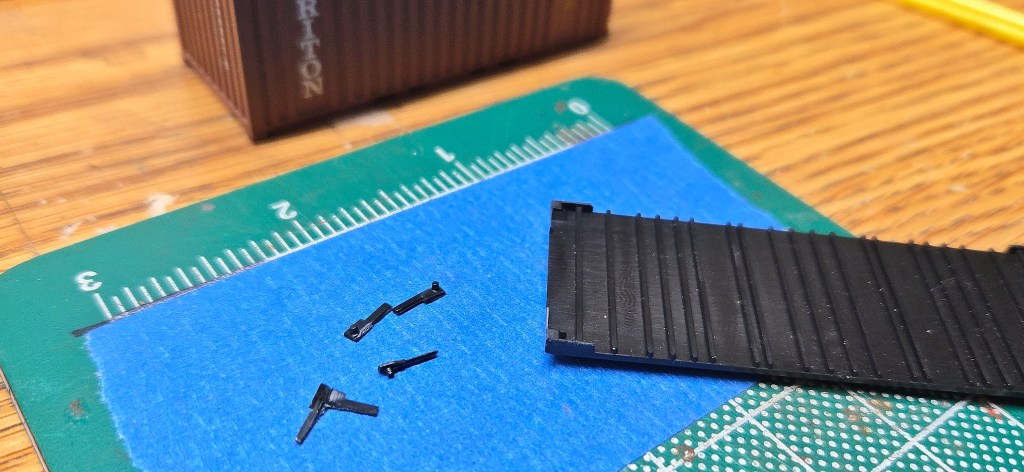
    To get the Athearn container to sit pretty it needed some minor trimming. I trimmed off the pegs and raised footings that were molded into the plastic floor. This brought the overall height to just a hair taller than the Walthers.

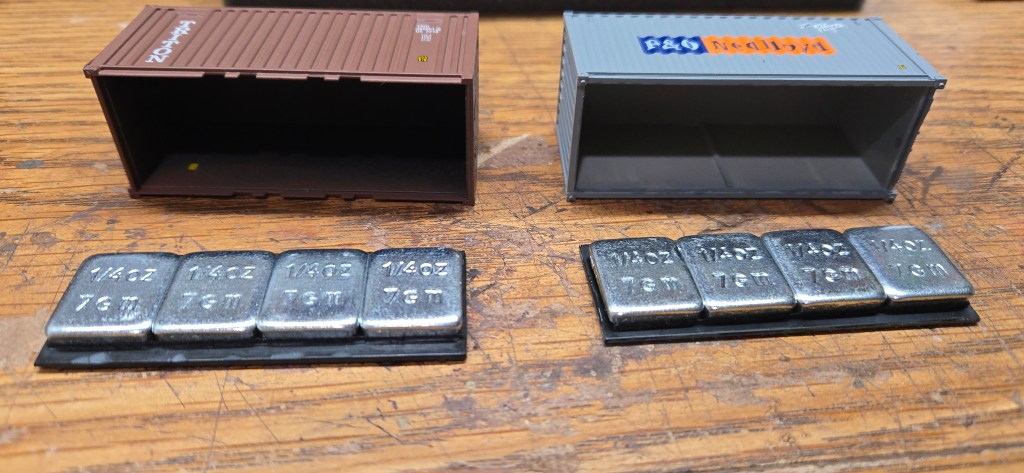
    While the floors were removed I used some self-stick wheel weights to weight both containers, 1 ounce per.

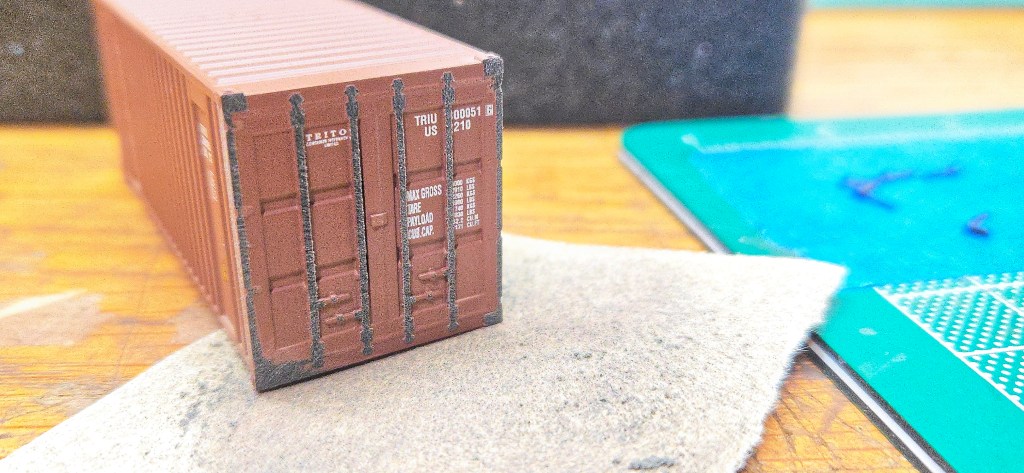
    To get the containers to fit between the molded alignment chocks in the car I needed to gently flatten all the oversized end door details on the Athearn container. I worked slowly and gradually sanded off the small amount that was needed for a better fit.

    I then snapped the floors back together and added a couple small drops of CA to keep them stuck in place. Focusing on the floors and undersides, the next step was to color match the undersides.

    MY PROCESS CONTINUES:

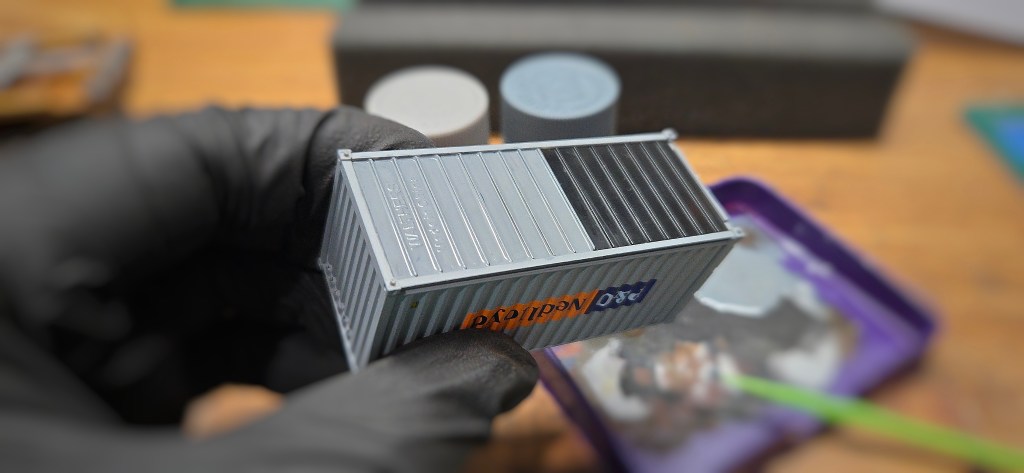
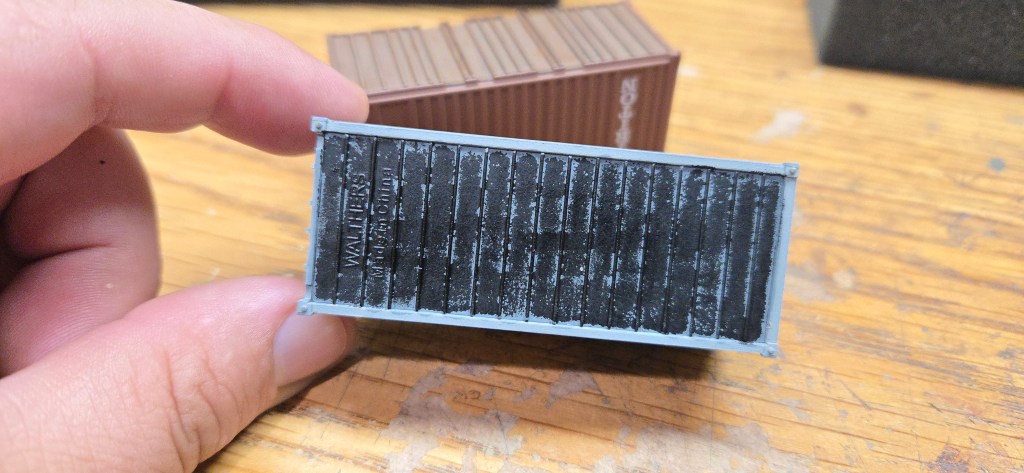
    While the undersides are typically black or grimy black/brown from road grit, painting them gave me a good base for weathering them. Once dry I came back with a sponge and blotted flat black paint over the painted surface. This resulted in a chipped and peeling effect that I wanted to have showing through the open underside of this car.

    The flat black dried and that allowed me to finish them up by dry brushing some flat dark earth brown paint across the molded ribs for a more layered effect. I do wish that step had been more noticeable.

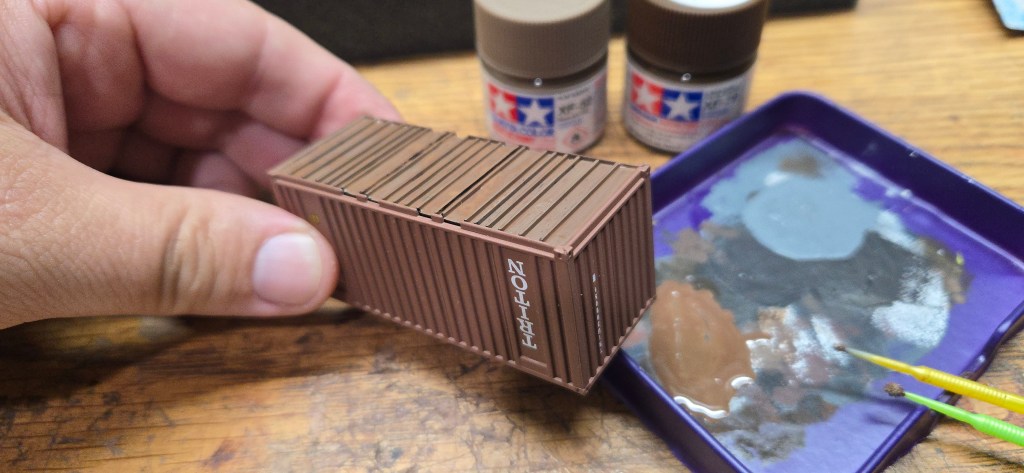
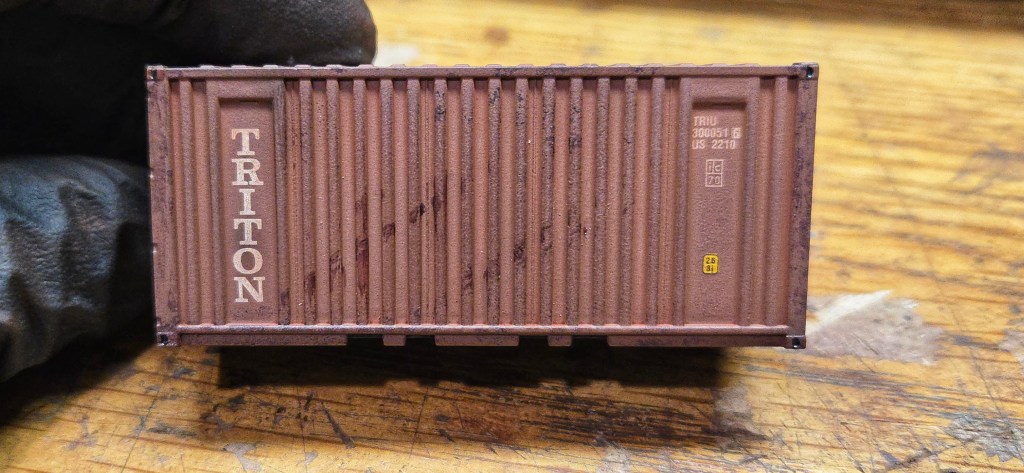
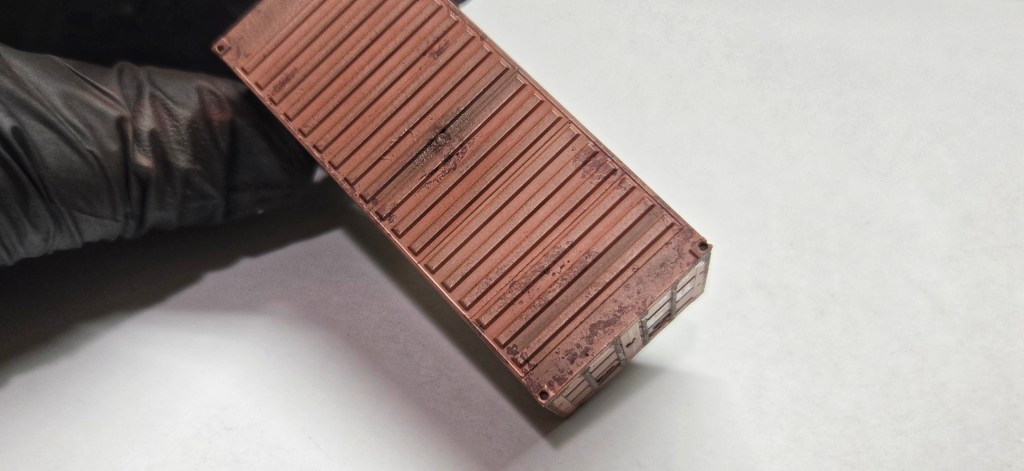
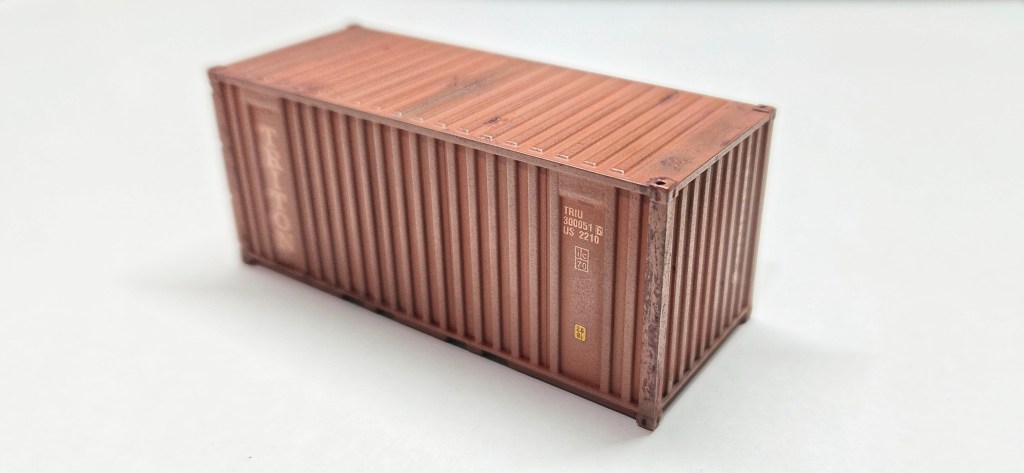
    Next, I turned to weathering both containers. After looking at prototype pictures of similar ones, I tried to duplicate the colors and apply rust spots similarly to the photos.

    For the small rust spots I dipped a plastic toothpick into an assortment of Tamiya Hull Red, Flat Brown and Linoleum Deck Brown. Randomly touching the container sides with the small tip of the toothpick, I did about 5-8 spots then blotted or wiped them down with a cosmetic wedge.

    On some spots this left a small void in the center of them, I went back later and filled the void with a contrasting rusty color to make them appear darker or more red.

    When the spots were done I turned to more blotchy patches of rust. To do these I used a combination of Vallejo’s Game Colors Rust and Corrosion. Both work very well to create a deep rust color that looks believable as a rust spot.

    I also used some Bragdon dark rust powder to fade the TRITON Lines container from dark brown to the more oxide red/brown color I had seen. Everything was sealed with Tamiya TS-80 flat clear.

    When everything had dried on the containers (overnight) I used some gel type CA to glue between the container ends and fit them in place so they would be properly aligned.

    Next step was to weather the interior of the car and to do so I used the now glued together containers as my guide to see where the various lengths would maybe scrape and cause chips/dings to the car’s body.

    I used a sharp edge of the cosmetic wedge dipped in a mix of hull red and flat brown with a small drop of flat black for darkness. I carefully and gently applied a few horizontal marks and clusters of spots with the edge and used a fine Microbrush to drag down the rust to simulate the scrape marks and natural streaking.

    To finish off the car interior I used a 1/2″ wide, 1/4″ long flat brush to lightly apply the same AIM Dark Earth powder that I used underneath to the interior corners and blend out the rusty spots. I then sealed the entire car with Tamiya TS-80 flat clear and let it sit.

    Last big step of the car was to glue the containers in place. I did this with more gel type CA and applying it sparingly to keep it from squeezing out from the ends or bottom. I came back a few hours later and used some Tamiya Extra Thin Cement to essentially plastic weld the four corners to the car bottom. This will ensure they stay in place, but also keeping the amount of glue at a minimum will allow for removal if that is ever needed.

    As a final touch I dry brushed both Kadee #5 couplers with a mix of Tamiya Flat Brown and Flat Earth paint to simulate the road grime I applied in powder form. The color is a close match.

    Just a note, I dry brushed the couplers to not hinder the knuckle movement and kept paint away from the spring.

    FINAL THOUGHTS:

    This was a fun project and allowed me to try some things that I had not tied previously. Overall this was a challenge not only because I tried something new, but because I had to exercise my patience. Typically this is not something I have to do, most of my weathering projects are done in a day or two as I do a lot of work ‘wet’.

    Hopefully you all enjoyed this more in-depth project.

  • Traction Action in Fort Collins

    Willmus, 2025.

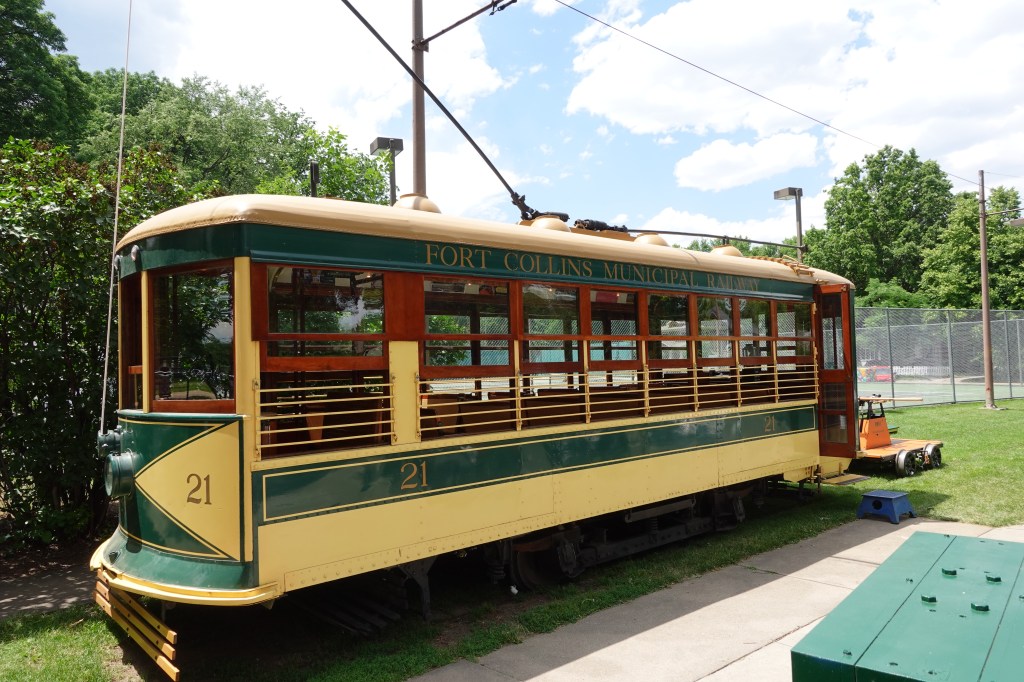
    One thing I often like to do on roadtrips is estimate the modeling potential of different areas. Scarcely a trip goes by where I come up short in finding something railroad related that is interesting, unique, and highly modelable!  On this latest summer road trip, we visited several places known for their railroad history and we ran across a few gems which will be the focus of their own articles.  Fort Collins, Colorado isn’t often considered to be a railroad town.  To be sure, Colorado is the capital of narrow gauge railroads in the western US and the state boasts rail lines that run through some of the most scenic areas in the United States. A local group in Colorado is reviving a bit of railroad history that’s unique in the 21st Century, streetcars!

    History

    1924, Miller Family Collection, Fort Collins, Colorado.

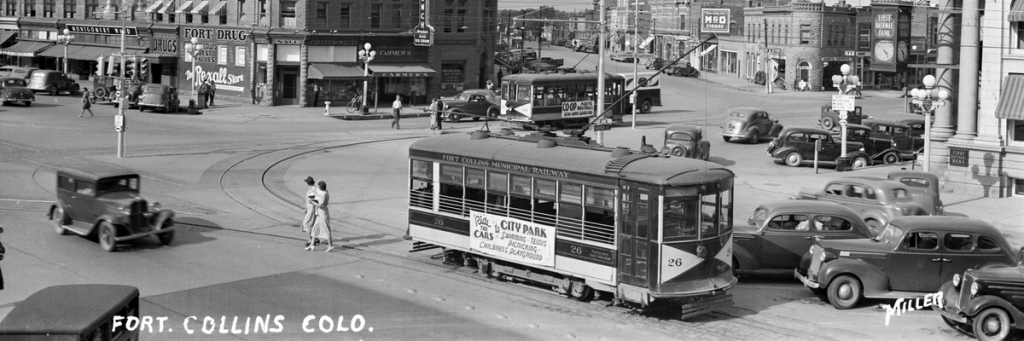
    Fort Collins, like many small cities in the western US, had a streetcar system at one point.  From the late 1890s until the Great Depression, cities such as Gillette, Wyoming and Missoula, Montana had small streetcar systems that made public transit fast and easy.  Electrification was perhaps the biggest sign that the old west full of cowboys and outlaws was giving way to a more “civilized” age of industry.  Fort Collins was no different in that respect. Founded originally as a military outpost in 1864, the old fort was constructed to protect the Overland Trail mail route in the area from bandits and natives.  What followed was typical of western cities.  The population grew and settlers brought agriculture and industry to the area, tearing up the high-plains and river valleys at the foot of the Rockies.  By 1900, Fort Collins had a population of 3,000 people.

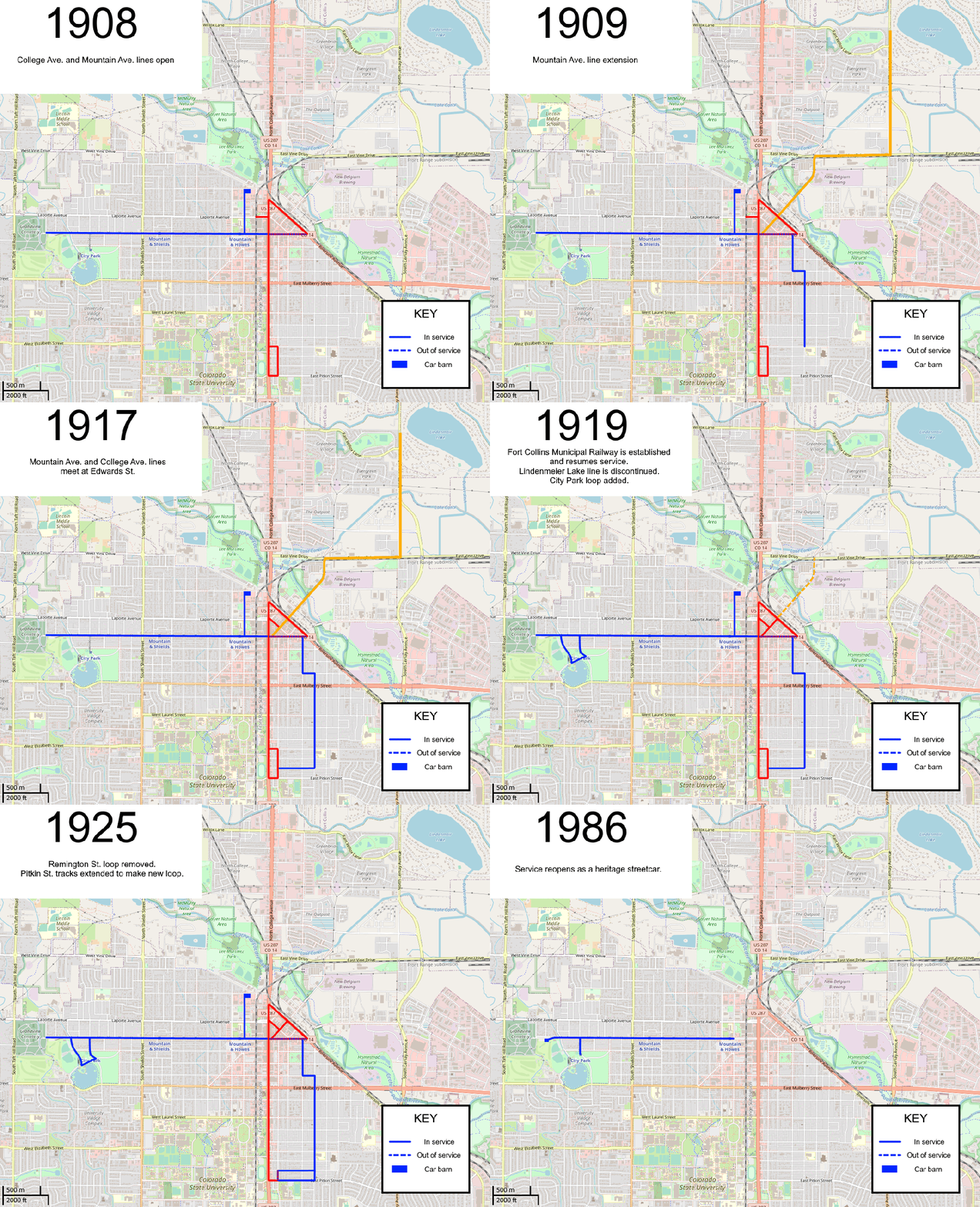
    Wikipedia, 2025. Fort Collins Municipal Railway Timelapse 1908-1986.

    In 1907, the Denver and Interurban Railroad, which itself was a subsidiary of the Colorado and Southern Railroad out of Golden, built the initial trolley system in Fort Collins as the railroad attempted to expand operations along the front range of the Rocky Mountains.  From 1907 until 1918, the Fort Collins system operated well but the automobile was eating into profits and the system closed at the end of 1918.

    In 1919, the city of Fort Collins purchased the streetcar system and revitalized it with some track upgrades and by purchasing small Birney streetcars which could be operated by a single person.  The system eventually expanded to include a total of nine Birney streetcars running on 6 miles of track that sprawled out in a 3-legged wye.  The backbone of the system was Mountain Ave, part of which is now reconstructed and in regular use.  The streetcar system would operate until 1951.  Here there is a small error on the organization’s website.  Fort Collins may well have been the last city to operate single truck Birney trolleys, but I happen to know that Minneapolis-St. Paul ran a streetcar system until 1954.  It’s a small detail, but an important one to consider for anyone wishing to model a streetcar system instead of the typical railroad.

    In any case, the Fort Collins streetcar network ceased operations in 1951.  In 1977 a small group of volunteers began restoring Car No. 21 which had been put on static display at a local museum.  These volunteers would go on to form the Fort Collins Municipal Railway Society in 1980.  The organization continued to grow and gain support before relaying track down a section of Mountain Ave in 1984.  This operation was met with resistance by citizens concerned about hazards, noise, and tearing down trees which had grown up in the street median over the years.   The line, which runs down part of West Mountain Avenue and has a short leg down South Roosevelt Avenue into the City Park, has been turned over to the city while the FCMR Society focuses its efforts on restoring streetcars and other pieces of equipment.  For a more comprehensive description of the streetcar system’s history, please visit the FCMR Society’s website.

    Riding the Fort Collins Trolley

    Willmus, 2025

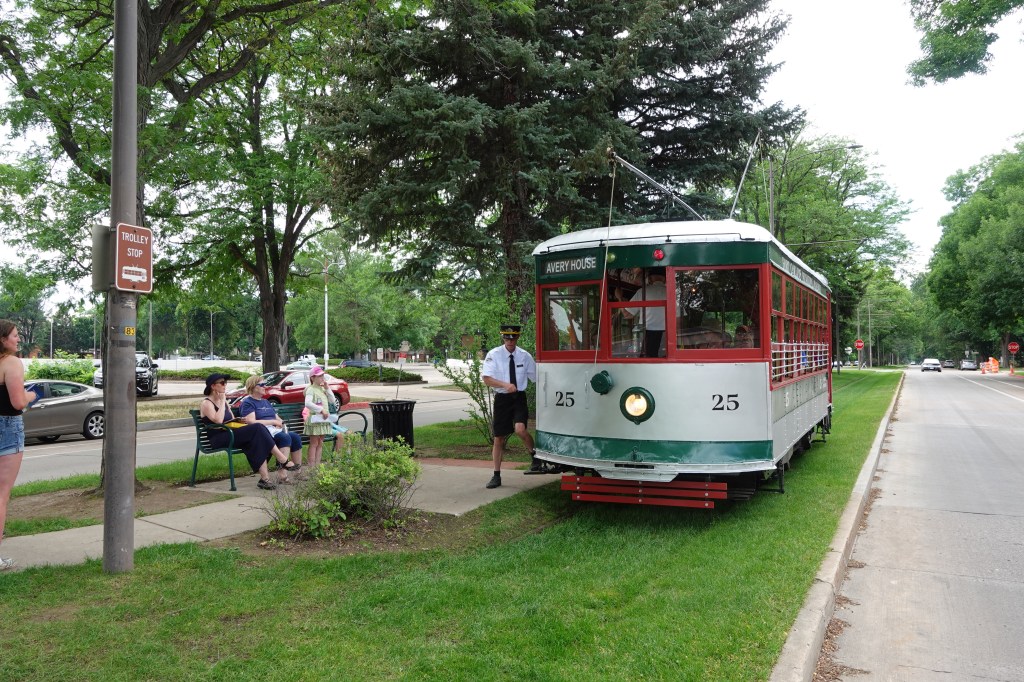
    There are many heritage railways in Colorado and many more across the United States.  Each one offers its own unique experience, but I think the Fort Collins Trolley is truly a one-of-a-kind. Since the 1950s, American public transit has shifted to a model that focuses around buses, carpool lanes, and larger cities boast light rail systems.  It is rare to find a heritage railway that has managed to relay track down the middle of a busy suburban street flanked on each side by houses that were built in the 1900s, 1910s, and 1920s.  That is precisely what the Fort Collins Trolley offers visitors.

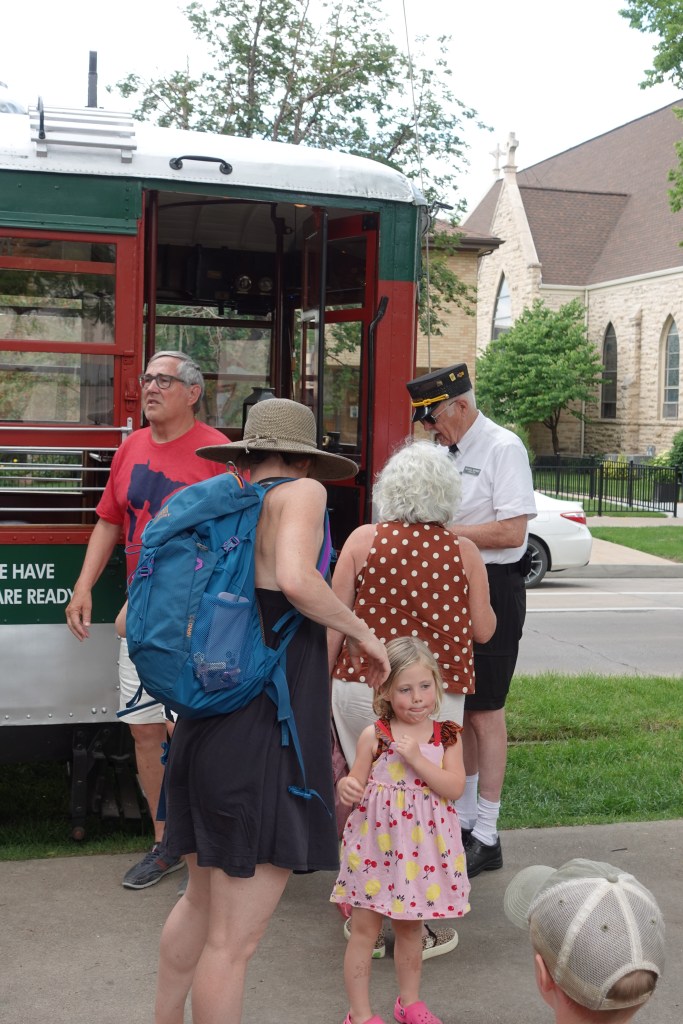
    As of this season, the trolley operates from May 3rd to September 28th every half hour from noon to 5pm on Saturdays, Sundays, and Holidays. The fare is all of $2 with reduced rates for seniors and children.  Toddlers are free to ride with an adult.

    Just like the original line, riding the modern rails is an odd experience.  When people think of railroads they usually picture machines that weigh hundreds of tons effortlessly gliding over glass-smooth track.  Trolleys are nothing like that, however. The streetcars are about as big and heavy as a small transit bus and the rails follow the path of a paved roadway.  That means the streetcars bob and weave as they roll down the track. The streetcars also stop at every intersection and slow down for curves but manage to maintain about a 12mph average.

    The sounds are unique as well.  Trolley poles maintain contact with overhead wire using small electrically-conductive wheels.  The pole itself is spring-loaded, which puts tension on the overhead wire.  As the trolley moves down the track, the sound of stretching metal can be heard up and down the line.  The closest I can liken the sound to is that of someone plucking a strand of barbed wire on a fence.  The vibration and noise travels down the wire rather than making a single percussive wave.  Besides the wire, the trolleys themselves are nearly as quiet as a car.  All that is heard is the hum of two electric motors which sound similar to modern electric cars.  The trolleys are equipped with a bell too.

    The streetcar system also operates a very unique railfanning experience.  Since the trolley runs  on a predictable schedule along a route that for all intents and purposes is a paved street, there is no need to hurry or break traffic laws.  I found it very easy to leapfrog the trolley about three times per run, the biggest hazard being the potential of being hit by a car while exiting my vehicle.  The grassy median and the sidewalks on each side of the street provided ample opportunities for photographs.  Indeed, this is one of the few times where I could go grab refreshments from a street vendor while waiting for the trolley to come back around!

    I found West Mountain Avenue to be the perfect backdrop for the trolley.  Large, mature trees lined the street, a steady mix of vehicles, bicyclists, skateboarders, and pedestrians kept things interesting.  Houses on each side of the street were all historic with some renovated in ways which compliments their history.  The corner of West Mountain Avenue and South Roosevelt Avenue was probably the best place to sit and wait.  The trolleys there have to slow down for the curve which brings with it yet another unique sound of wheels rubbing against rail.  Admittedly, that sound is less pleasant that some of the others one can hear trackside.  I happily spent three hours photographing and filming the streetcar as it rolled up and down the line.

    Modeling Potential

    Willmus, 2025.

    While I am a fan of traction railroads, the fact is streetcars appeal to a small minority of model railroaders.  It is understandable why this is.  First, old streetcar networks are close to falling out of living memory.  Streetcars are no longer culturally relevant in a modern, car-reliant society.  Most Americans also do not have much experience with any sort of rail-based public transit, so there isn’t much of a personal connection with streetcars for most people.  Operators may find streetcars to be boring as well if they enjoy picking up and setting out cars or moving whole trains over a main line.  Trolleys run the same routes on predictable schedules and usually do not handle freight or mail.  Some systems did have those services, but they were secondary to transporting people.

    Nonetheless, there are a couple of reasons why someone would consider modeling a traction line.  The first is that trolleys are unique pieces of railroad equipment.  To most people, diesel locomotives all look similar and the same can be said with steam locomotives.  The general population simply isn’t that familiar with trains.  However, streetcars have very unique designs and paint schemes that make each stand out.  People who watch a traction layout in action are easily able to pick up on the fact that there are different cars on the route.

    Another reason someone might want to model a traction railway is that it is possible, and perhaps even preferred, to automate such a model railroad.  Streetcars frequently stopped at random locations by being flagged down by riders and they made scheduled stops at the end-points and mid-points of their routes wherever two or more cars would cross paths.  With DCC, JMRI, solid state electronics, and all the modern technology we have today in the hobby it is possible to build a model railroad that essentially runs itself.

    Some streetcars are easy to purchase ready-to-run, especially the Birney streetcar. What is convenient about Birney streetcars is that they were mostly all the same design, meaning a paint job is all that’s required to customize the model. Bachmann made a Birney model up until about 2020 and they can be found used on auction sites and train shows frequently. TSG Multimedia did an excellent product review back in 2017 of this model and you can check it out below. I also recommend subscribing to the channel!
    TSG Multimedia, 2017

    Operators aren’t left out though because an operating session on a streetcar line would be a very unique experience.  Instead of picking up and setting out cars, streetcar operations revolve around keeping to specific schedules and adapting to things like traffic, pedestrians, and riders wanting to get picked up or dropped off in different locations.  Operators on the same track must also be aware of each other and communicate clearly to avoid accidents or making each other late.  If a typical freight railroad operating session is like a big game of chess, then I imagine an operating session on a traction layout would look like a choreographed dance.
    I think the biggest advantage of modeling a traction railway is that much of the focus is on modeling realistic city scenes that are often left out of layouts modeling freight railroads.  The modeling potential is less focused on trains and more focused on structures, figures, vehicles, and small scenes that make train layout feel realistic.  The trolleys themselves are unique pieces that often require kitbashing or scratchbuilding, but there are commercial products available as well.

    One advantage I see in modeling a traction railway is that a person doesn’t need a lot of space, even, in large scales.  O scale (1:48) is traditionally the size modelers gravitate towards for building traction layouts, but in HO scale a layout can be very small indeed!  Most streetcars were designed to navigate 50 foot turns with Birney trolleys able to navigate even tighter radii.  In HO scale that works out to 6.875 inches (175mm)!  A 16 inch deep shelf can easily accommodate a full turn back loop while a 12 inch shelf offers ample depth for structures and streets.

    Conclusion

    I suppose the conclusion of this article are two separate thoughts.  The first is that if you are in the Fort Collins area in the summer on a weekend afternoon, stop by the Fort Collins trolley and spend a couple bucks for a ride.  They have a little depot as well which is used as a ticket booth and gift shop.  Every little bit helps!  The second concluding thought is that if you are short on space and prioritize model building over switching operations, a traction layout is an awesome concept worth exploring!

  • Weather an Open Hopper

    OVERVIEW:

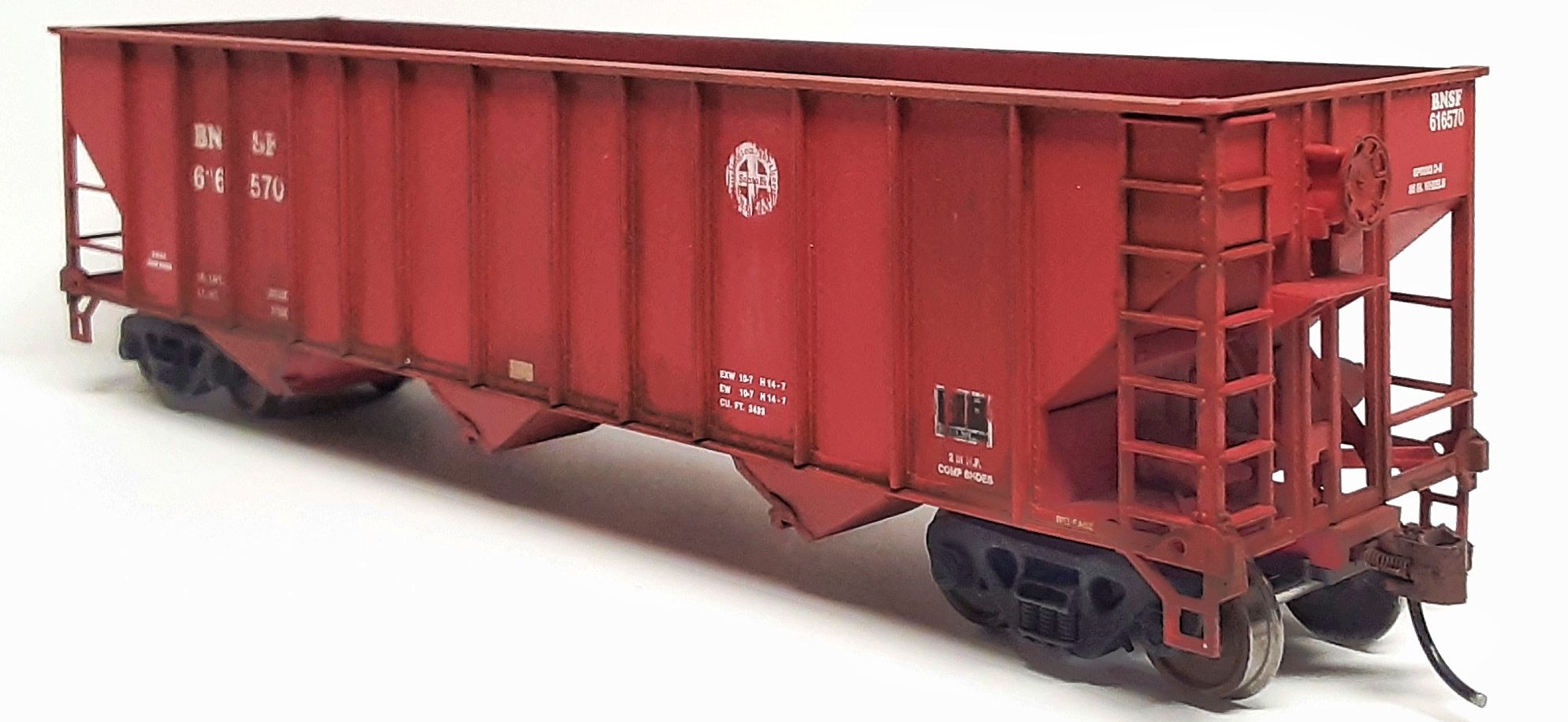
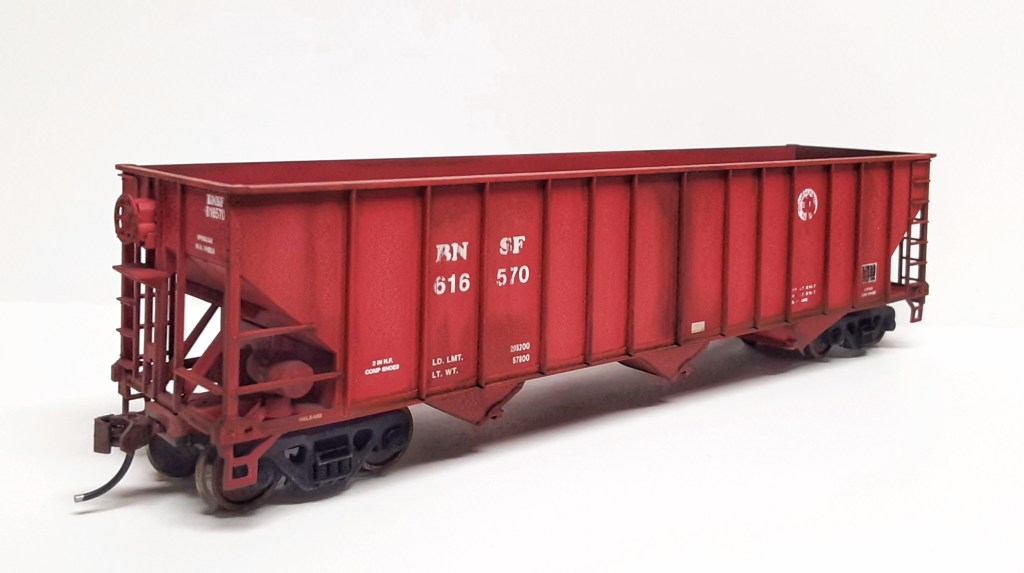
    Weathering rollingstock can be a challenge sometimes, and one of those challenges are open cars. This HO scale weathering project uses a Bowser 100-ton hopper as the subject for an open car.

    MY PROCESS:

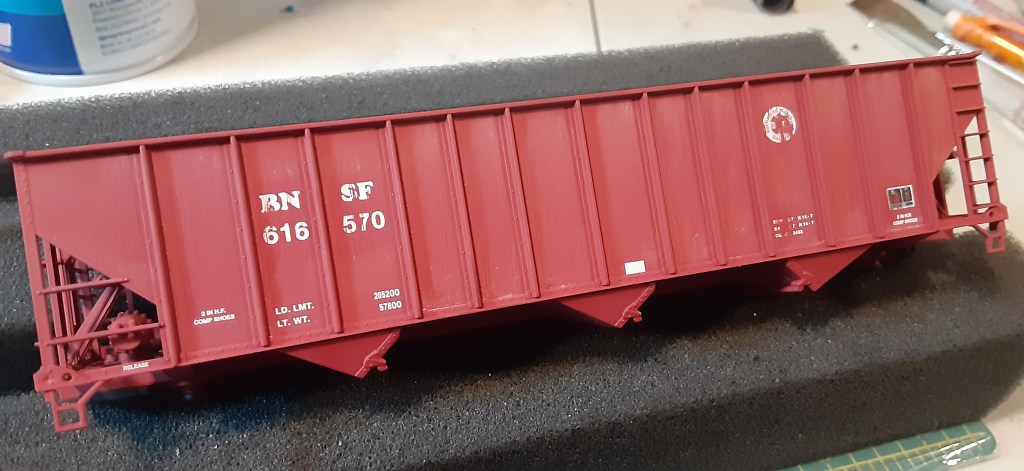
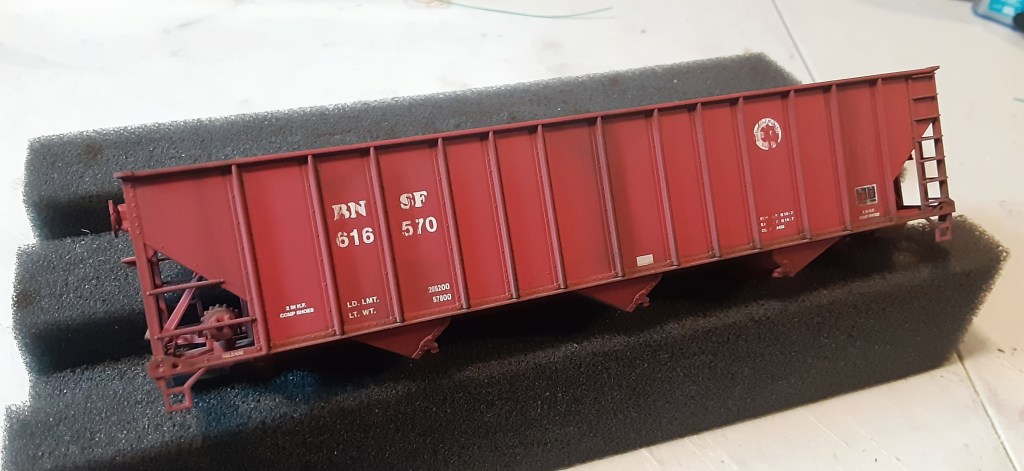
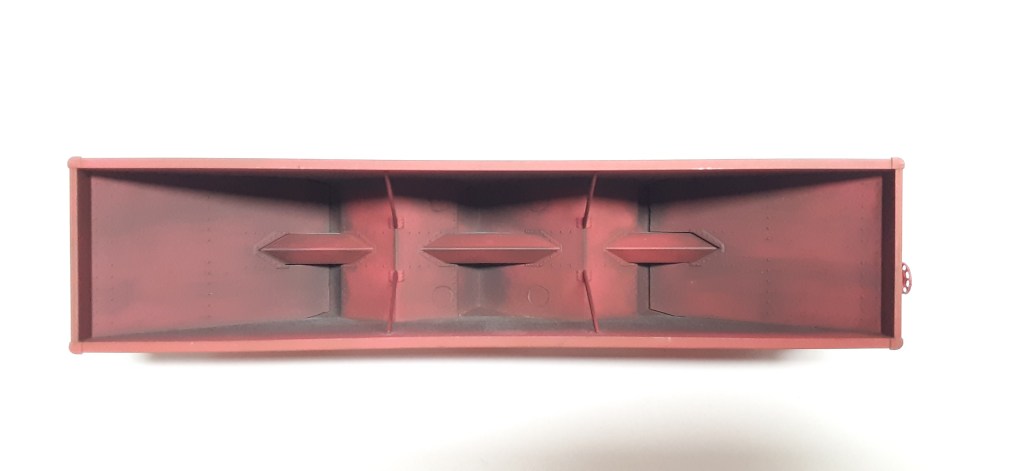
    To achieve the ultra flat and smudgy look of the BNSF oxide red paint I used a combination of Bragdon and AIM powders with Tamiya paint, panel wash and flat clear.

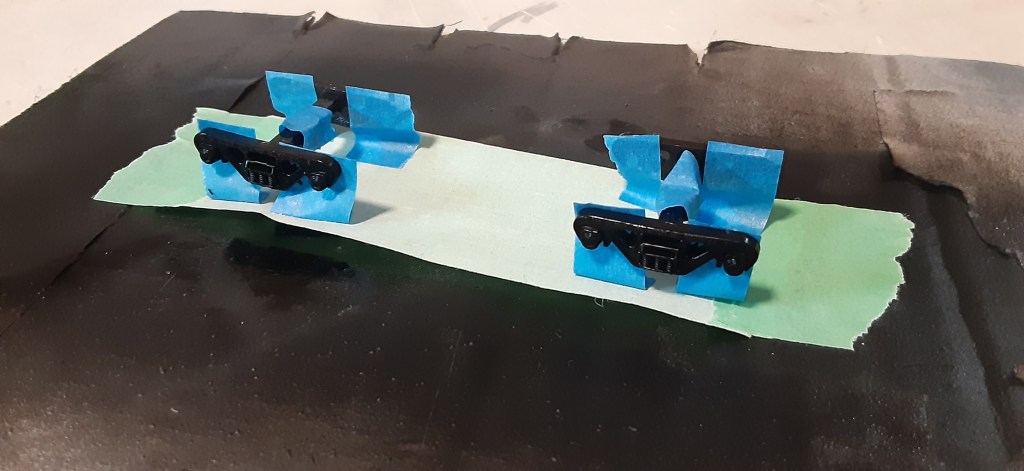
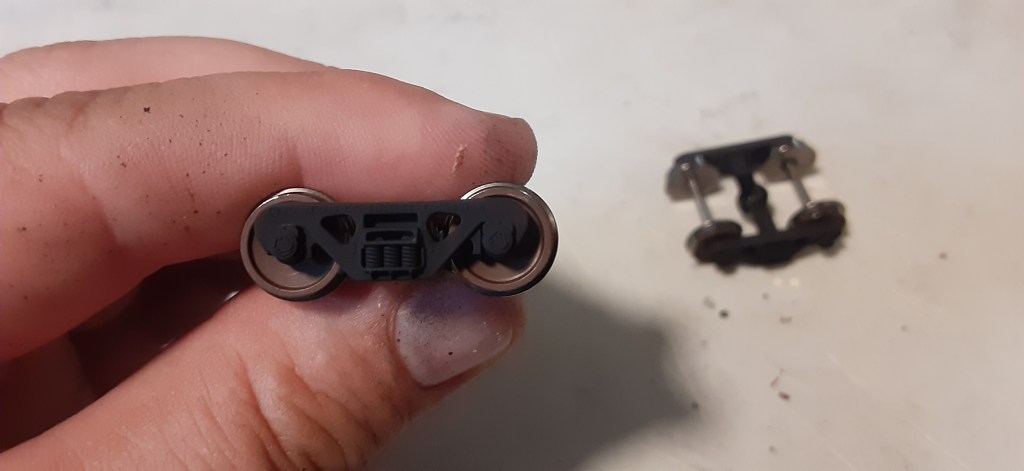
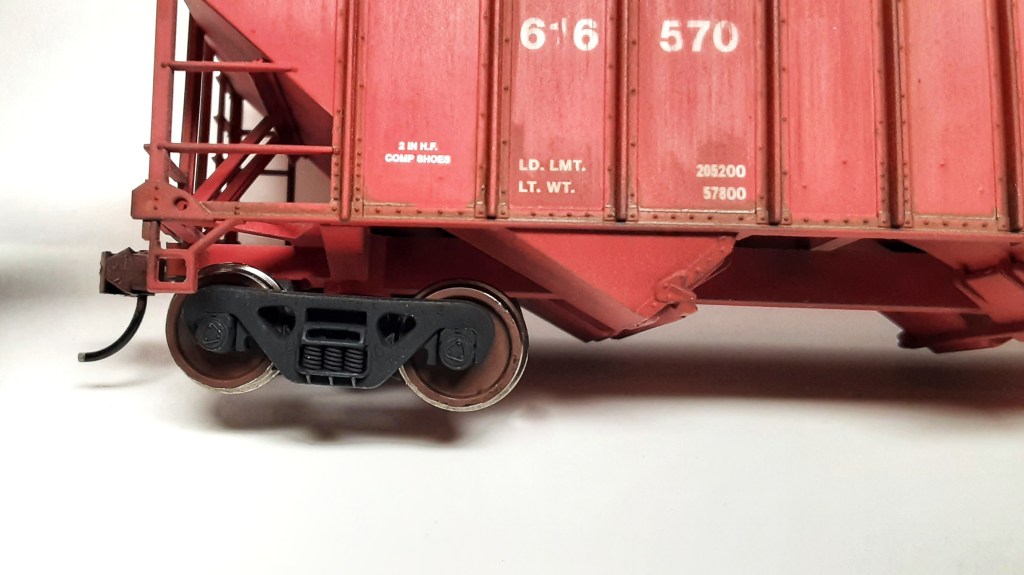
    Starting out, disassembling the car is the easiest route. Using a micro brush to paint the wheel faces with flat brown makes this process a little quicker. I then masked off the back of both trucks and sprayed them with RustOleum ultra flat black from the camouflage line. While these smaller parts were drying I sprayed the entire car body with Tamiya flat clear and let dry. This was just about the right amount of time for the trucks and wheels to dry, I reassembled them and set aside.

    Next step was to use 600 grit sandpaper over the reporting marks and herald. I prefer to do this after spraying the clear, it gives a slightly softer chalky appearance versus doing before.

    I followed the light sanding with brown panel line wash from Tamiya applied to both sides of each side rib and end braces as well. Once mostly dried, I highlighted the ribs by brushing dark earth powder by AIM horizontally across the car sides and ends to darken the ribs.

    I then used a soft blush brush to darken and highlight the car interior with AIM dark earth and grimy black. Flipping the car over I used the same brush to highlight the hard edges around the 3 bay doors. I sealed the car by using more Tamiya flat clear and setting it aside to dry.

    FINAL TOUCHES:

    The last step was to paint the couplers. To do this I mixed a few drops of Tamiya flat brown with TruColor oxide red, grabbed a super fine Microbrush and painted the coupler head and shank. I also used a silver Sharpie paint marker on the trip pin ends, simulating the glad hands.