Month: February 2025

  • What is HOn3 and How Do I Get Started?

    Introducing Narrow Gauge!

    Of all the different modeling scales that hobbyists can invest in, HO scale (1:87th) is by far the most popular.  An aggregate of different polls conducted over the years shows that while HO scale isn’t quite as dominant as it was twenty years ago, today 60-70% of model railroaders still choose HO scale as their primary modeling scale.  However, an increasing number of hobbyists are choosing N scale (1:160) to model in for a few reasons.  If you are having trouble choosing, I recently made such a post discussing the issue which you can find here.  But one thing I omitted from that article is that there is a third option available to hobbyists who prefer larger trains but don’t have a ton of room for a train layout.
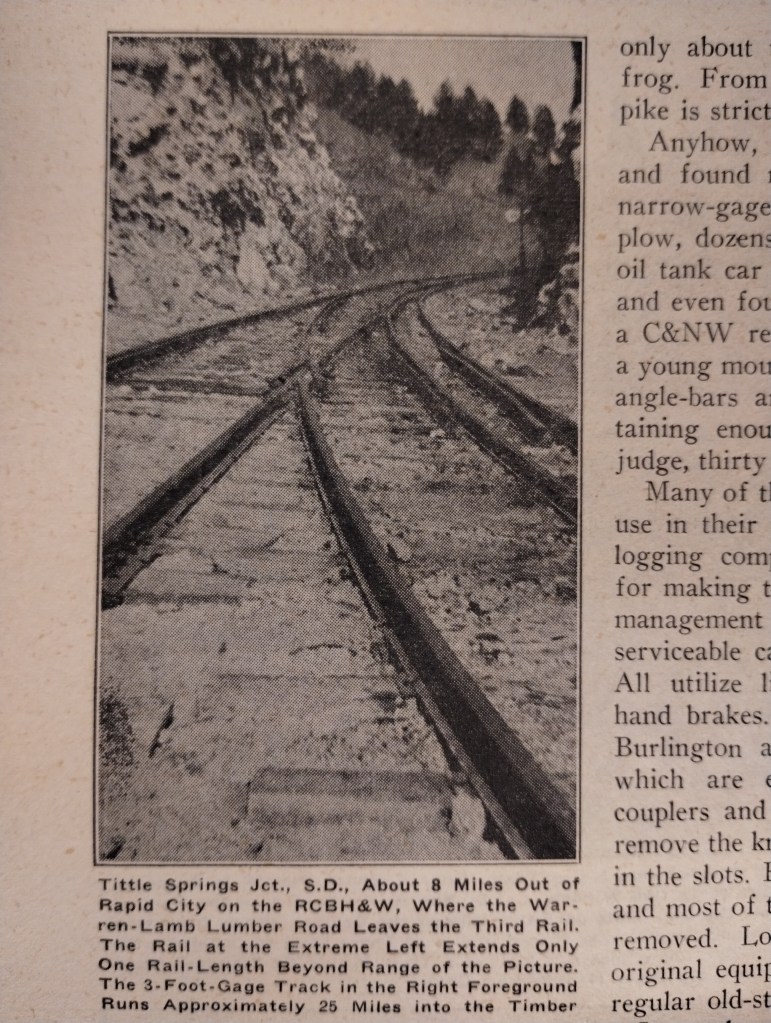
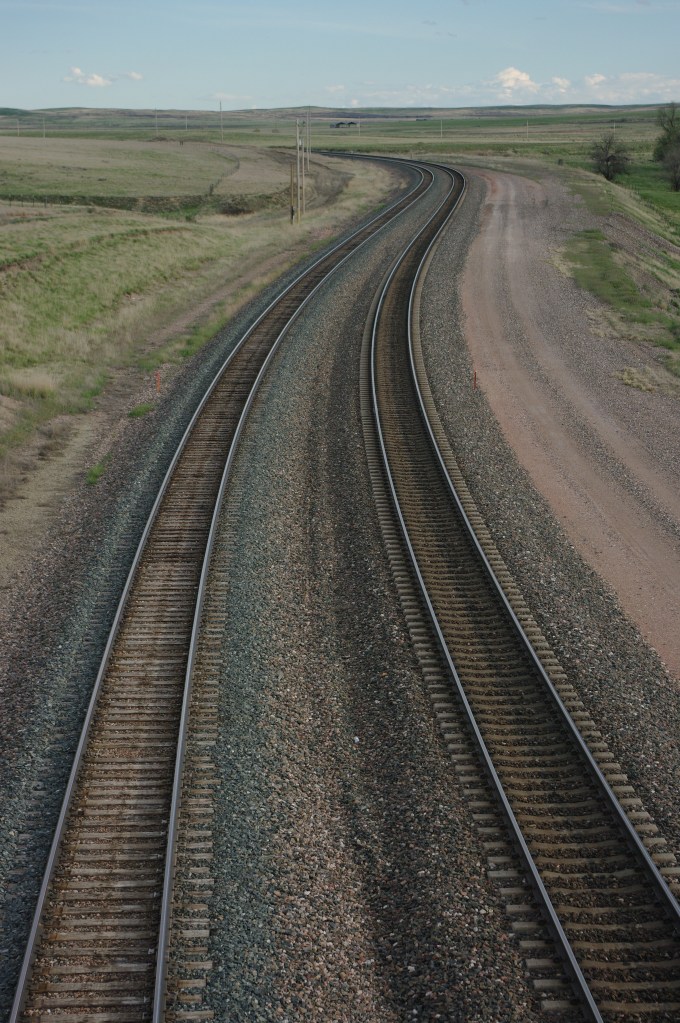
    “Three rail” track with both 3ft narrow gauge and 4ft 8.5in standard gauge.
    Modern standard gauge mainline near Edgemont, South Dakota.

    That option is called “HOn3” or HO scale trains running on tracks that are narrower than standard gauge.  In HO scale, standard gauge is 16.5mm, but HOn3 trains run on tracks that are a scale 3ft (914mm) apart at 10.5mm gauge. I left out this option because there are some caveats with modeling HOn3.  For one thing, modeling narrow gauge railroads is a niche market within the hobby.  Unless you are modeling Colorado narrow gauge, finding prototype information is more difficult, finding prototypical rolling stock and locomotives are harder still.  Most narrow-gauge railroads also ran in the 1880-1910 era which isn’t as popular as modeling the 1950s, 1970s, or even present day.  The learning curve is higher as well since many models are only available in kit-form or there may not be a commercially available product at all for certain locomotives or rollingstock.  This requires a high degree of model-building skill that a novice is unlikely to possess.  Nonetheless, HOn3 does have a few advantages.
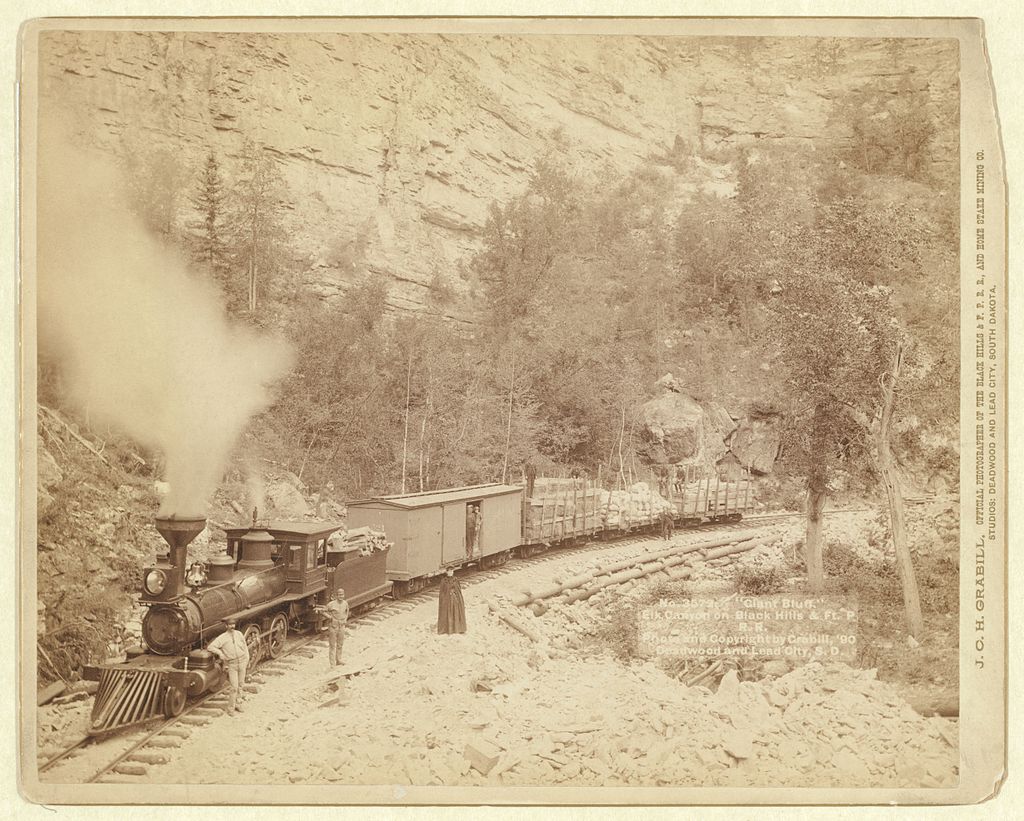
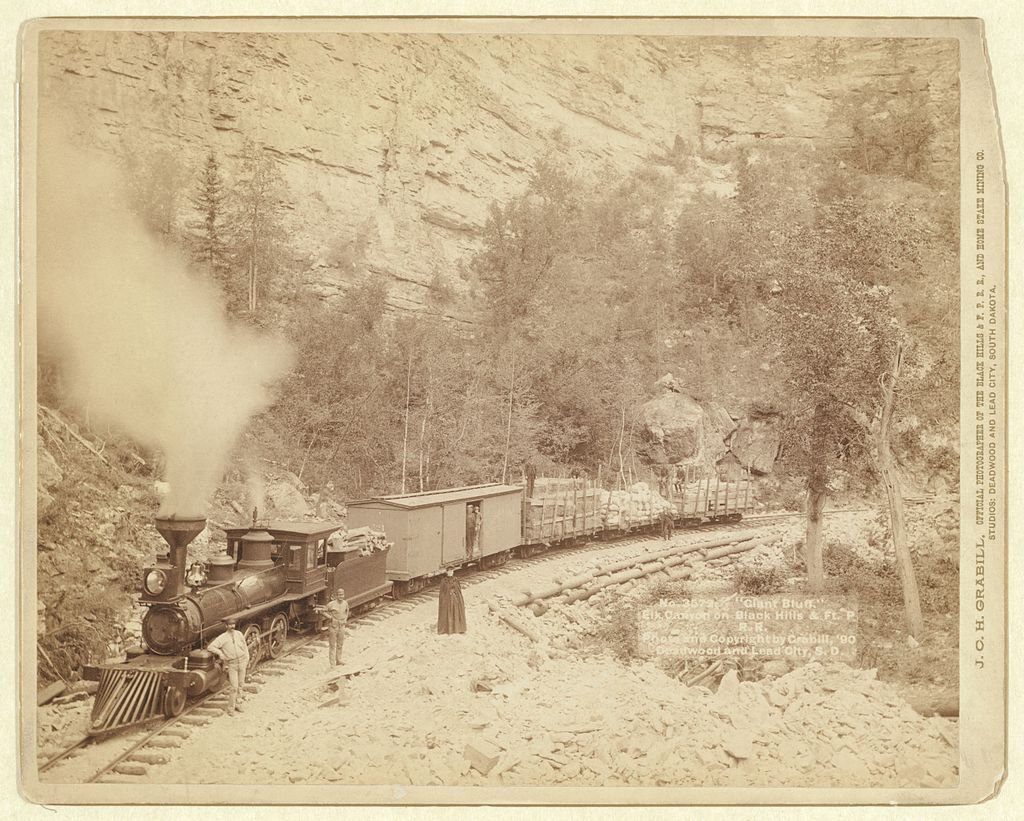
    Narrow gauge railroads were most common from the 1880s to the 1910s.

    Benefits of HOn3

    1. Saving Space

    HO scale is great for the high potential of detail fidelity found on model trains. Even budget-minded rolling stock and locomotives have a good amount of detail included which a lot of models in larger scales lack.  Not to mention that the latest generation of HO scale models have separately applied details that rival or exceed what scratch builders were doing two decades ago.  However, the size of the trains gets to be an issue when it comes to building train layouts.  Americans in particular have always been fond of building circuitous train layouts where the train can travel endlessly on a loop of some kind.  Only recently has there been a movement in the states to build train layouts that run point-to-point using as few turnouts as possible to serve all the industries along the route.  Authors such as Lance Mindheim have been promoting this design philosophy for years now and it has now begun to manifest itself in new layouts being built.
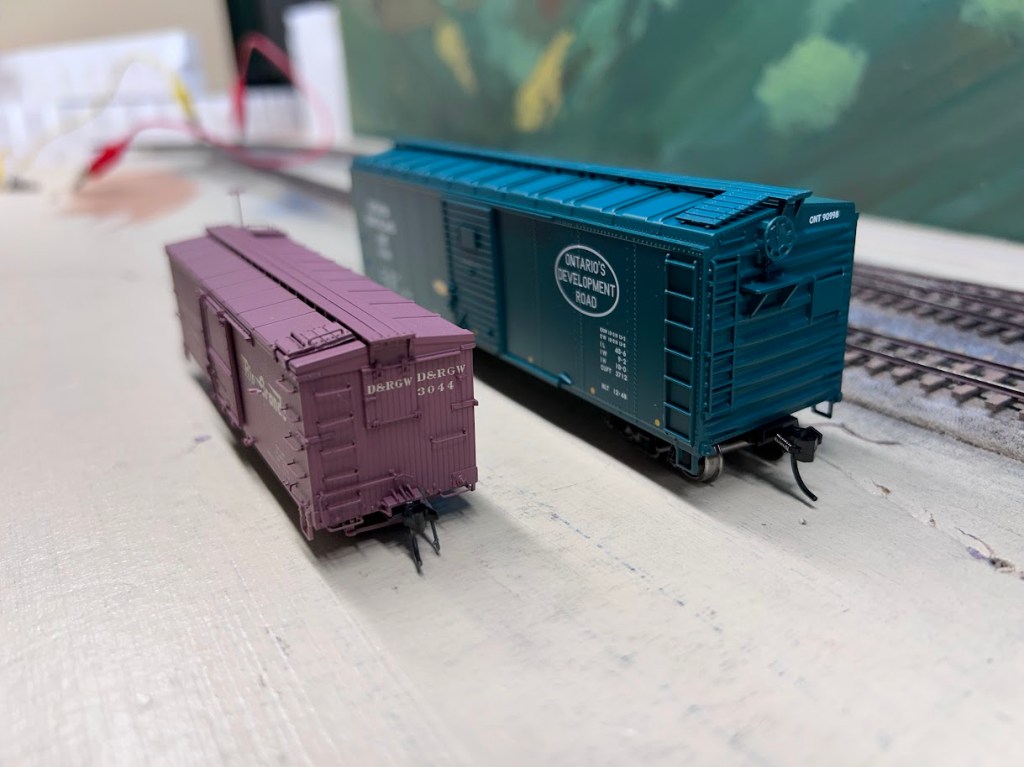
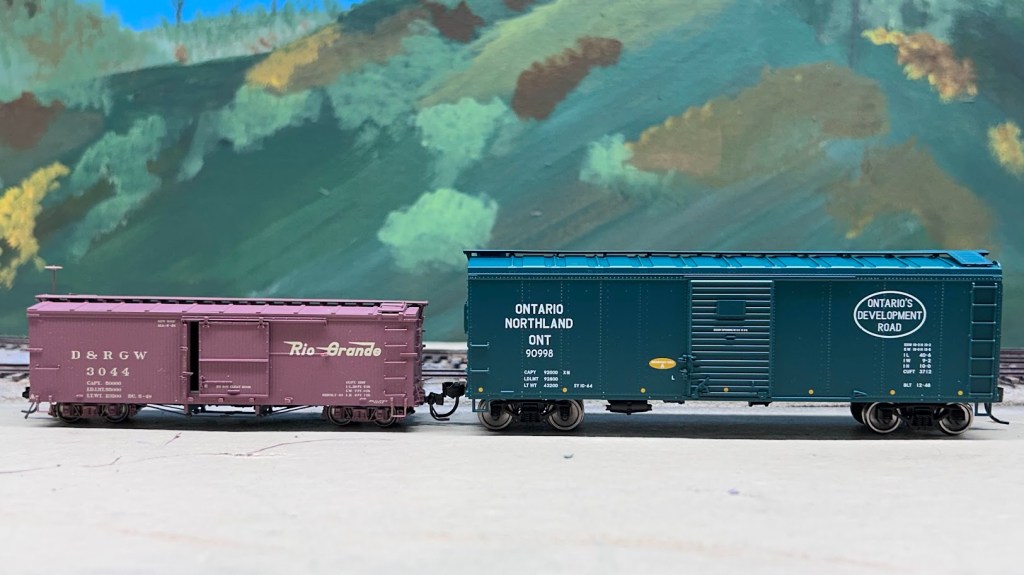
    Same scale, very different sizes! Above: On the left is a typical 3ft gauge boxcar while on the right is a standard gauge 40ft boxcar. The 40ft boxcar can hold approximately twice the volume of the narrow gauge car. Left: Narrow gauge tends to have narrower and shorter equipment that rides on smaller wheels that are 24-28 inches in diameter.

    Even so, turn radius is a problem.  Realistic curves in HO scale would be tens of feet in radius and the practical curves people end up using typically fall in a range of 20-30 inch radius.  Train length is also a problem. A cut of twenty 50-foot boxcars in HO scale takes up about twelve feet of space!  HOn3 on the other hand can comfortably use 18-20 inch radius curves and require much shorter sidings due to the shorter train lengths involved.  A long narrow-gauge train (DRGW not withstanding) might only be a dozen cars or so.  The Black Hills and Fort Pierre, which I model, had locomotives that could only pull about ten cars.  Obviously, structures are going to take up the same amount of space as will roads, but narrow-gauge railroads often operated in hilly or mountainous terrain that was decidedly rural.   That means fewer structures, fewer roads, and as much green scenery as you have room for!
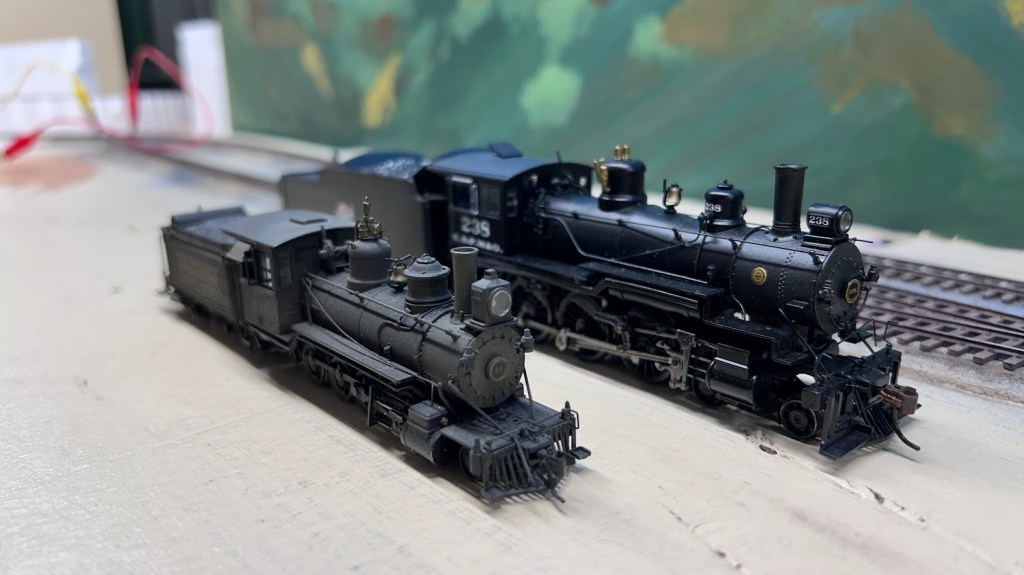
    Locomotives have the same effect as the rolling stock. The narrow gauge engine on the left is a 2-8-0 while the one on the right is a 4-6-0 “ten wheeler”. Both are considered mid-sized locomotives on 3ft gauge and standard gauge track, respectively.

    2. Unique Prototypes

    Perhaps it’s just a personal problem, but I’ve never had much interest in modeling railroads everyone else is already familiar with.  Modern class I’s like BNSF and Union Pacific as well as fallen flags like the New York Central or the Pennsylvania railroad just don’t appeal to me beyond a generic historical context.  You know what is fun?  Taking the path less-worn or even forging a new trail completely!  HOn3 has a lot of opportunities to explore prototypes that few people have ever even heard of.  Montana Southern?  Burlington and Northwestern? Oahu Railway and Land Company?  All three were narrow gauge railroads operating in the Pioneer Mountains of Montana, the cornfields of Iowa, and the Big Island of Hawaii respectively.  There are literally hundreds of narrow-gauge prototypes in North America and most of them were 3ft gauge.  Even the more popular railroads on the narrow-gauge scene like the Denver and Rio Grande Western or Westside Lumber Company have a much smaller fanbase than the standard gauge class I’s from the last sixty years or so.
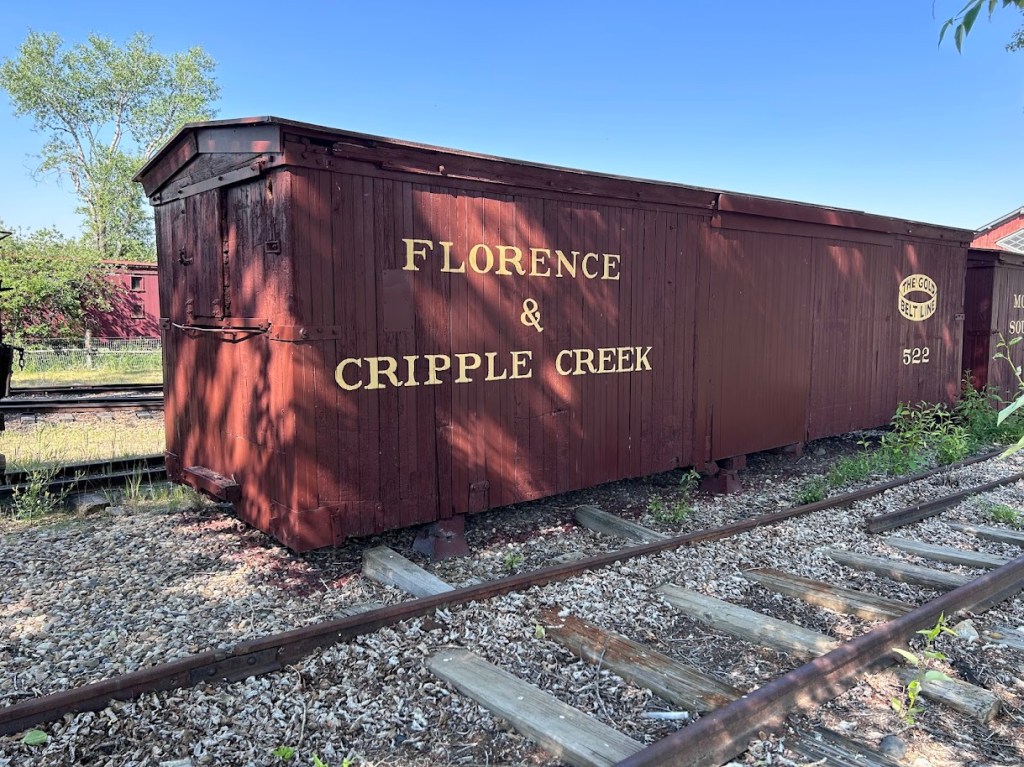
    F&CC boxcar that was once used on the Montana Southern Railway.
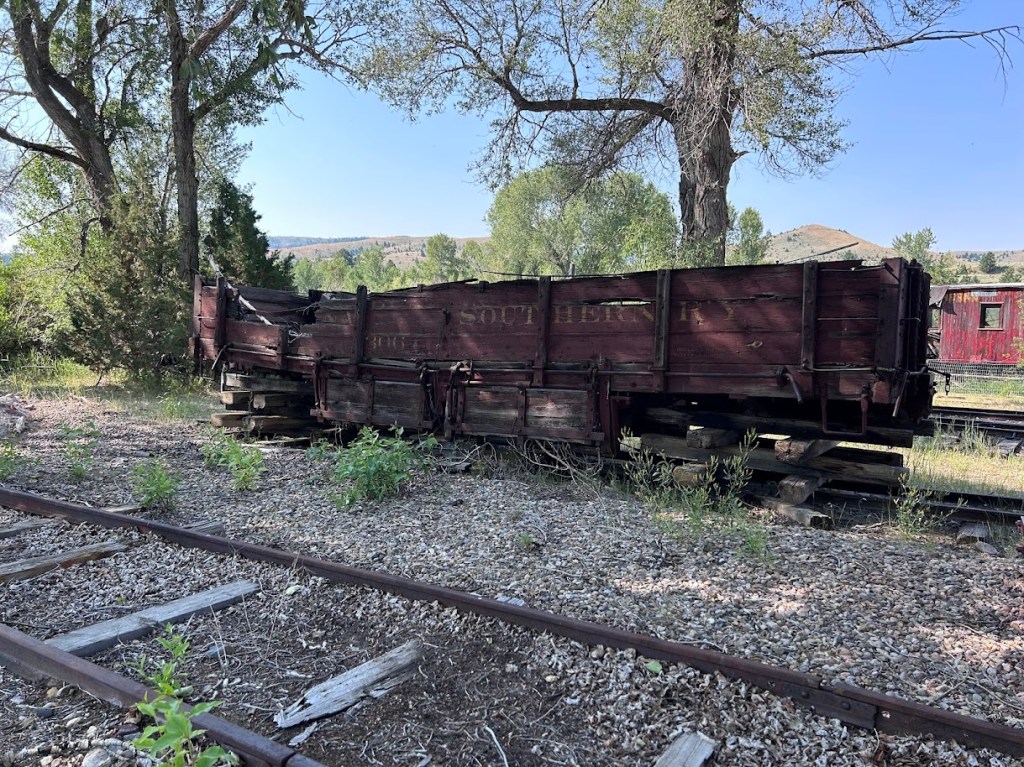
    Drop-bottom gondola still in Montana Southern lettering in Virginia City, MT.

    3. Art of Model Railroading

    Okay, now while it is possible to view standard gauge model railroads as being works of art (looking at you, George Sellios!), there is something about narrow gauge which challenges hobbyists to get more creative with the scenery and detailing.  Perhaps it’s the higher learning curve or maybe a side-effect of attracting people who want to physically make the most on their layout, but some of the finest model railroads to ever be created are HOn3.  A prime example is Harry Brunk’s famous Colorado & Southern model railroad that now sits on display in Cheyenne, Wyoming.  The layout was constructed over several decades by a master modeler and the end result is a model railroad like no other.  These days it is easy to purchase ready-to-run models right off the shelf and run diesel locomotives that perfectly match the prototype.  Heck, even recently Athearn admitted to making the egregious error of having the wrong light arrangement on one of their diesel models!  Fifty years ago people were happy just to have a model of a locomotive at all but now this is grounds for a recall.  That’s not a complaint, by the way.  I think it’s amazing that a company admits to such a mistake and does whatever it can to correct it, but I digress.  With HOn3, you have to make most things yourself or modify commercially available products.  Outside of a couple of manufacturers, you aren’t buying ready-to-run models.  Most people see that as a huge negative, in which case HO standard gauge is waiting with open arms.  But for those who want to create, HOn3 provides a lot of opportunity out of necessity.
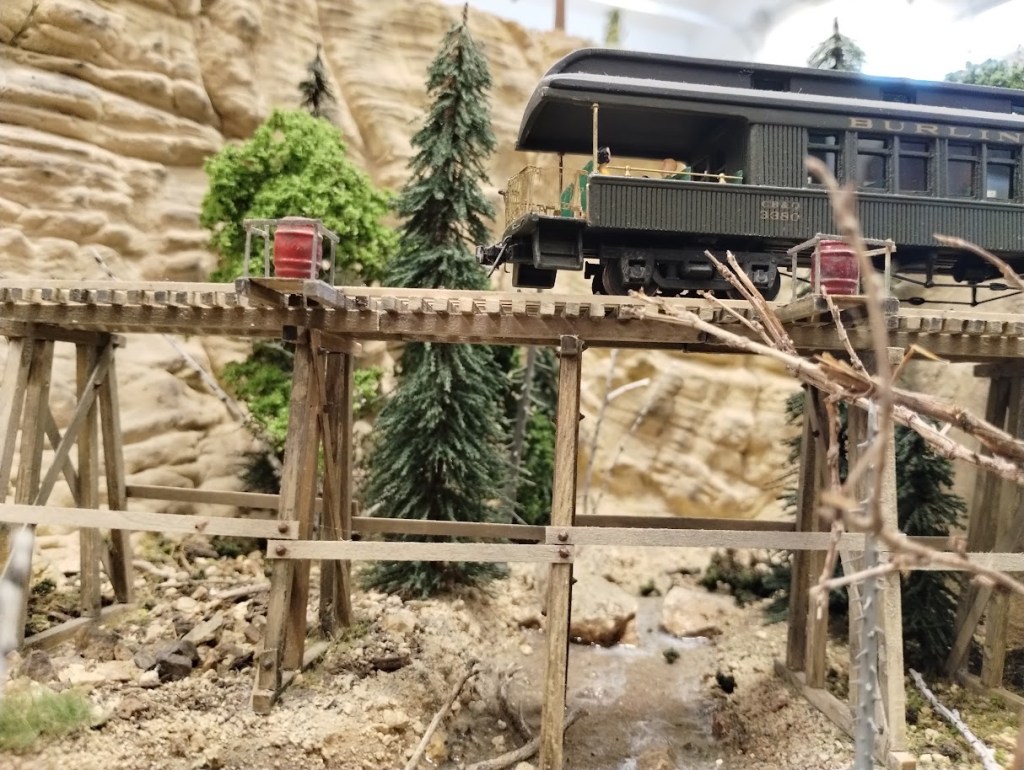
    Local model railroader, Jack Afinson, is an avid HOn3 modeler. This particular diorama is three-railed with both standard and narrow gauge track, but it also shows the work that Jack puts into his work. This diorama isn’t just a window to the past, it is a work of art on display at the South Dakota State Railroad Museum in Hill City, SD.

    So, how do I get started in HOn3?

    Now ain’t that the million-dollar question?  And yeah, that number isn’t as far off as you might think!  Getting started in HOn3 is no doubt more difficult than HO standard.  For one thing, the only ready-to-run locomotives out there with DCC and Sound are made by Blackstone.  Problem is that this company hasn’t really been making any new runs in the last several years and their product line is almost exclusively Colorado-based.  Ther companies like Micro Engineering make track and turnouts, but that too is sometimes hard to locate.  Micro Trains even did some rolling stock runs but haven’t made anything recently.  Are you noticing a theme yet?  If you want to get started in HOn3 model trains, you can’t just pop on over to the local hobby shop and get a train set.

    Unlike with HO standard gauge, the best place to get started with HOn3 is to begin reading about prototype railroads.  Train shows are a great place to find old books nice and cheap but Ebay, Amazon, and other digital marketplaces will have books about narrow gauge railroads as well. You can supplement your reading with videos on Youtube or from production companies like Green Frog videos.  Regardless of your medium of information, the goal is simply to find what you like.  The next step then is to figure out what products are available for your chosen prototype or for what matches the aesthetic you want to go for.  You’ll be able to quickly put together a list of models to be on the lookout for.
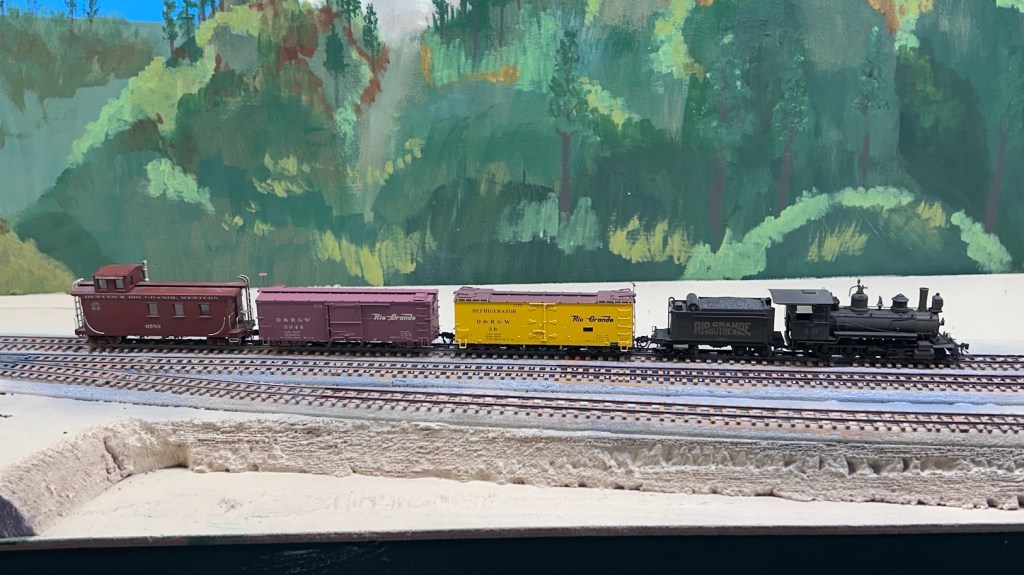
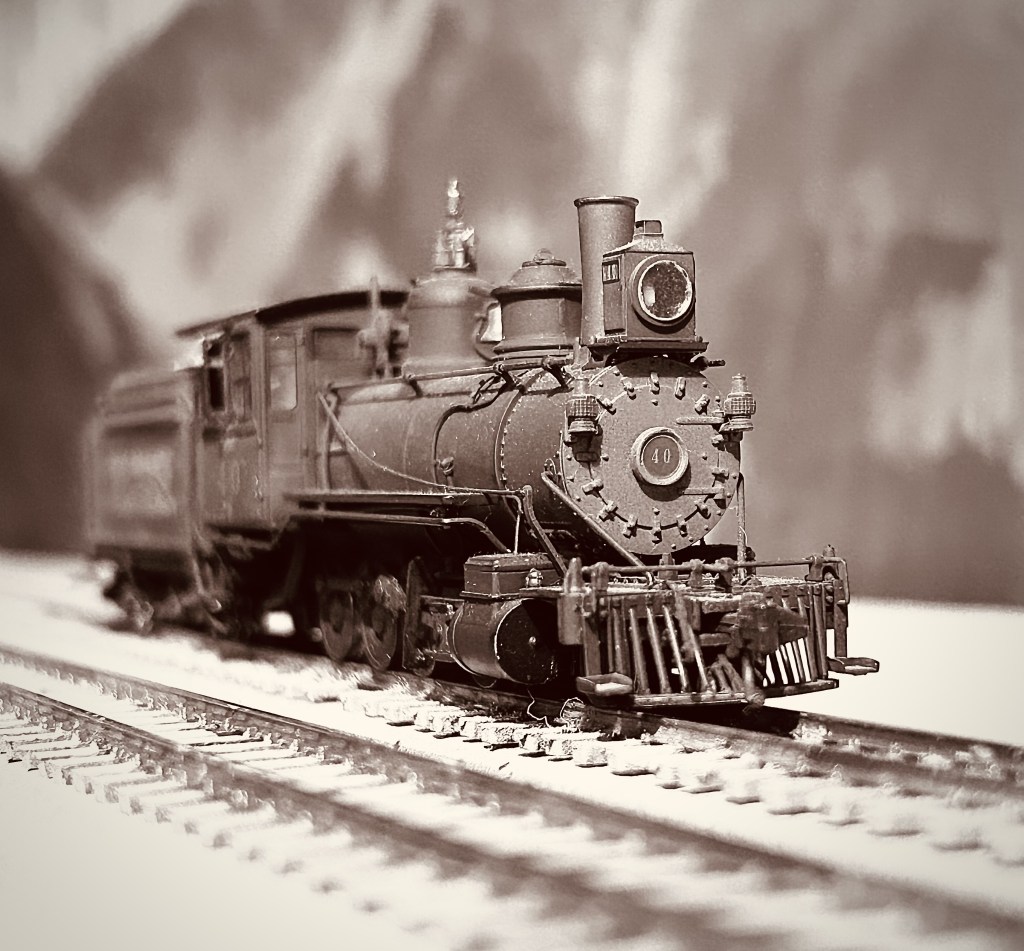
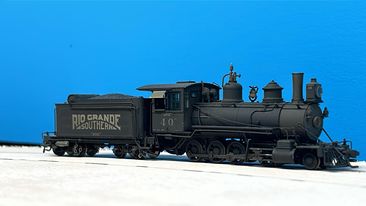
    This particular train cost… drum roll please… $800! Expensive, right? Except that’s about the same price as a BLI Big Boy direct from the factory. This consist is more useful in my opinion because now I have a smooth-running test train that is also quite photogenic. Included in the image are, from Blackstone; an RGS #40 C-16, a Rio Grande 28ft reefer, and a D&RGW 30ft boxcar, and a brass Westside Models D&RGW long caboose.

    After that, my next suggestion is to save a bit of money to purchase a bit of track plus a Blackstone locomotive and a few cars that are either commercially made or have been built for you already.  Throw in a DCC system as well. Why?  Because at least this way you’ll have a nice-looking and smooth-running train to run while you accelerate up that learning curve!  Now, the price tag for such a thing isn’t going to be cheap.  In today’s dollars, expect to spend somewhere between $1200 and $2000.  Yes, that’s quite the entry fee!  The good news is that relative to other scales, you really aren’t spending more money.  In fact, if you build most things yourself you’ll be coming out ahead in the long run because you need less equipment, less track, less buildings, and less space.  On my home layout, almost everything is going to be built from scratch or from kits.  Even my trio of brass 2-6-0’s only cost me an average of $250 each.  The issue is I need to invest another $400 apiece to get them running smoothly with a modern can motor along with DCC, Sound, painting, weathering, and custom decals.  The point is that you’ll be spending more time to save money after that initial plunge and in the end you’ll be a better modeler for it. To elaborate further and show my suggestions in action, I am actually planning a build series that focuses on this set-up as a starting point for someone new to HOn3.  A simple layout with a minimum of equipment at a budget that most people can afford if they save money for a few months or a year.

    Conclusion

    You might be a bit disappointed with my sales pitch for HOn3, but if I’m honest that is kind of the point.  There are advantages to HOn3, but several challenges as well.  You can’t just go to a train show and pick up a bunch of five-dollar freight cars out of the bargain bin. Even if you do manage to find such a score, they will all be old kits that you have to build, paint, and make run reliably.  Good engines are hard to come by, but when you find one you will cherish it and you’ll want to make the investment to make sure it runs better than anything a standard gauge modeler can get their hands on directly from a manufacturer. You’ll need to do some research as well, but this too will make you a better modeler and an amateur historian.  And to supplement these high-quality models you’ll be building, you’re going to want to construct a more detailed, museum-quality layout.  So really, HOn3 modeling and narrow-gauge modeling isn’t for the faint of heart.  It requires money, time, and dedication to improving your craft. I’d say that for most people, this will be what turns them back toward standard gauge modeling.  But for an intrepid few, HOn3 is a brand new canvas upon which they can create a masterpiece.
  • Layout Tour: The Black Hills and Fort Pierre in HOn3

    Home layout tours are one thing we love to do whenever the opportunity presents itself. Admittedly, this is a rather rough video filmed in a vlog style which I’m not a big fan of. However, over fourteen minutes I take the camera around my model railroad replicating small sections of the Black Hills and Fort Pierre that used to run in western South Dakota from 1880 to 1930. This layout runs HOn3 trains to represent the little 3-foot gauge “hogs” that climbed the steep hills and navigated the sharp curves of a railroad built by the Homestake Gold Mine out of Lead. If videos aren’t your thing, please see the photos below!

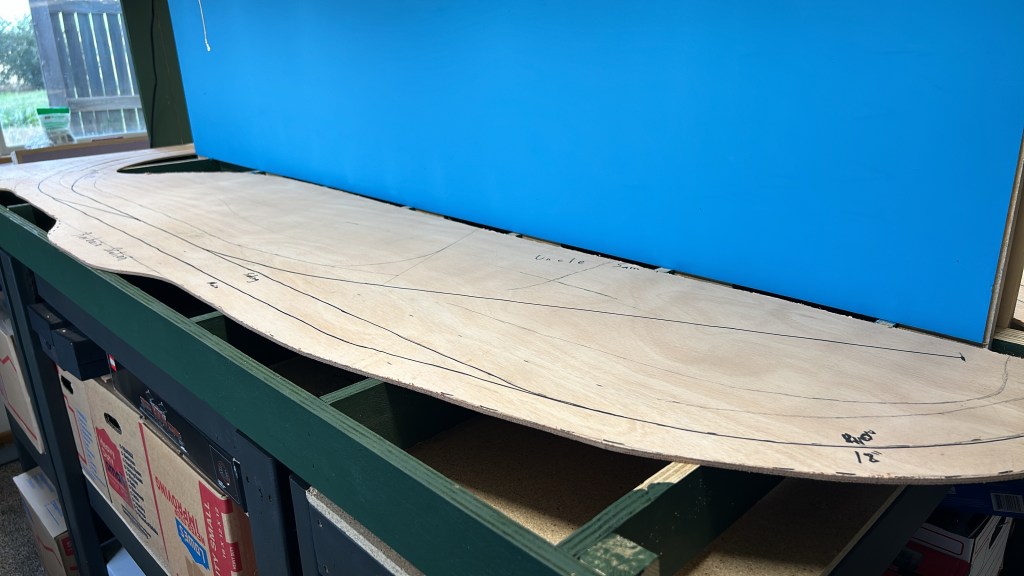
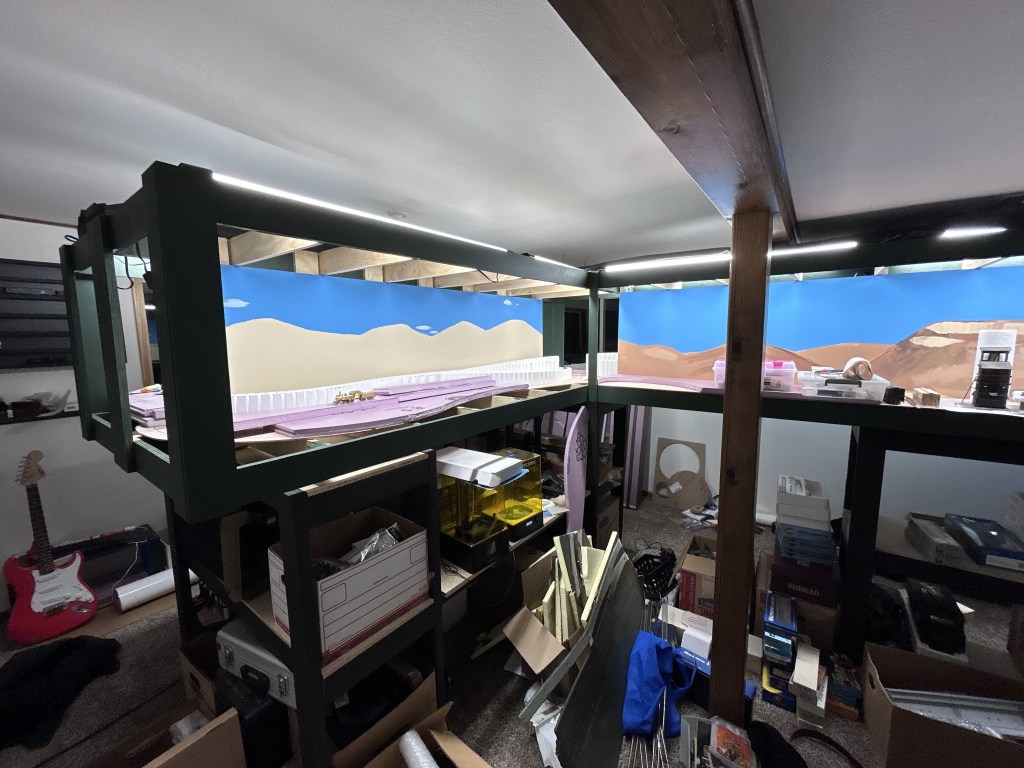
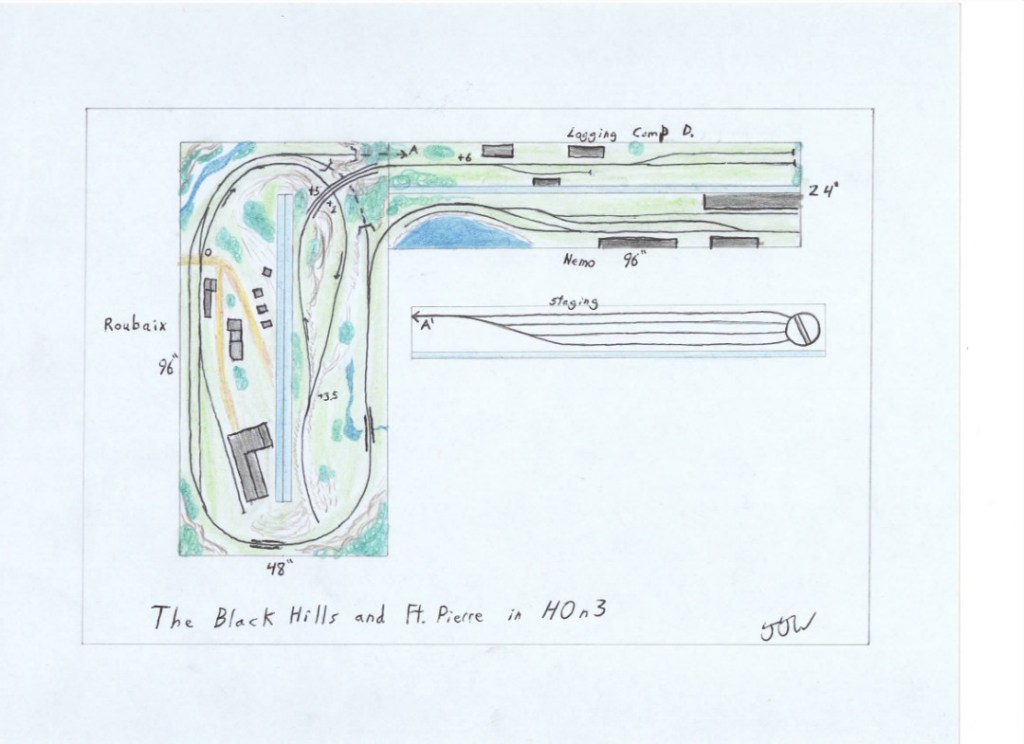
    First, every layout tour should start with a trackplan! This is a little outdated but is still about 95% accurate. The layout is built in three 2×8 foot sections which bolt together. Double-sided backdrops separate the layout into four distinct scenes plus a staging yard. Those scenes are a log landing, a meadow with a switchback running up the mountain side, the town of Roubaix, and the town of Nemo.

    After studying the track plan for a while, the remainder of this article consists of explaining the different scenes around the layout along with photos showing the progress on the railroad up to the date of this writing.

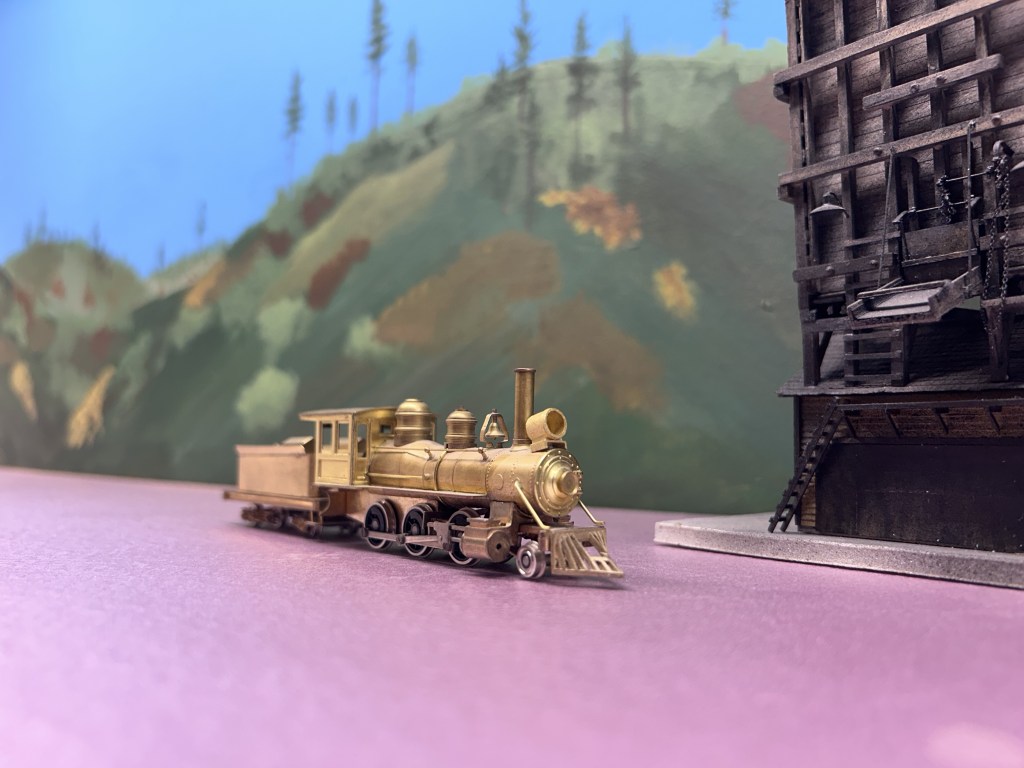
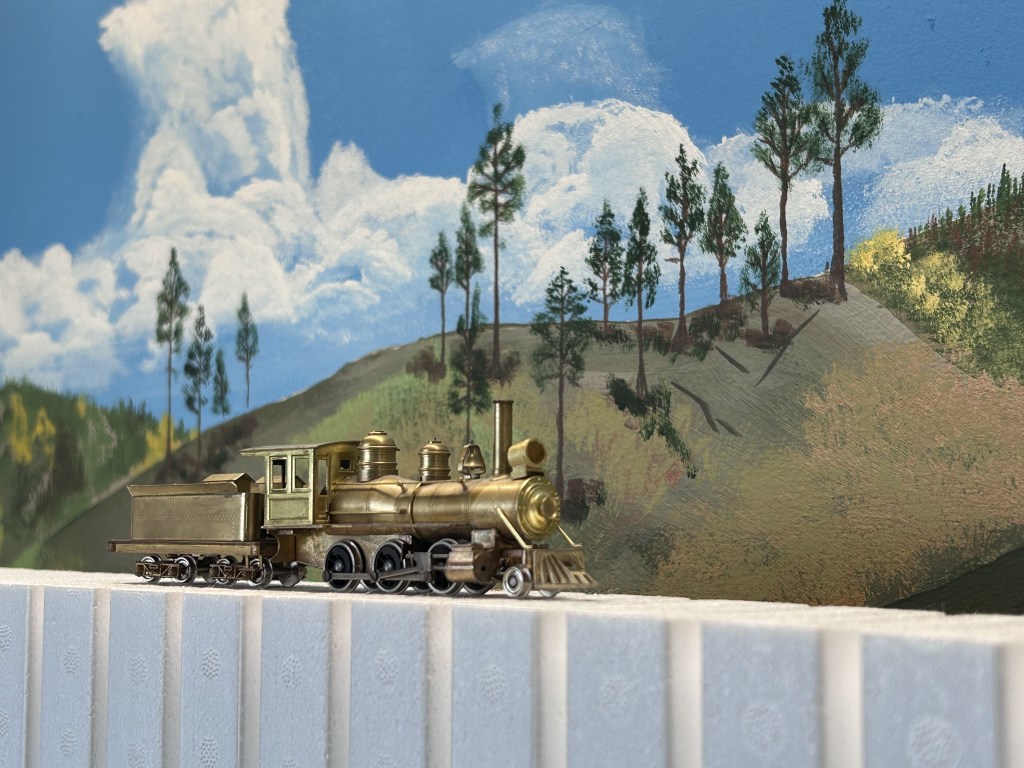
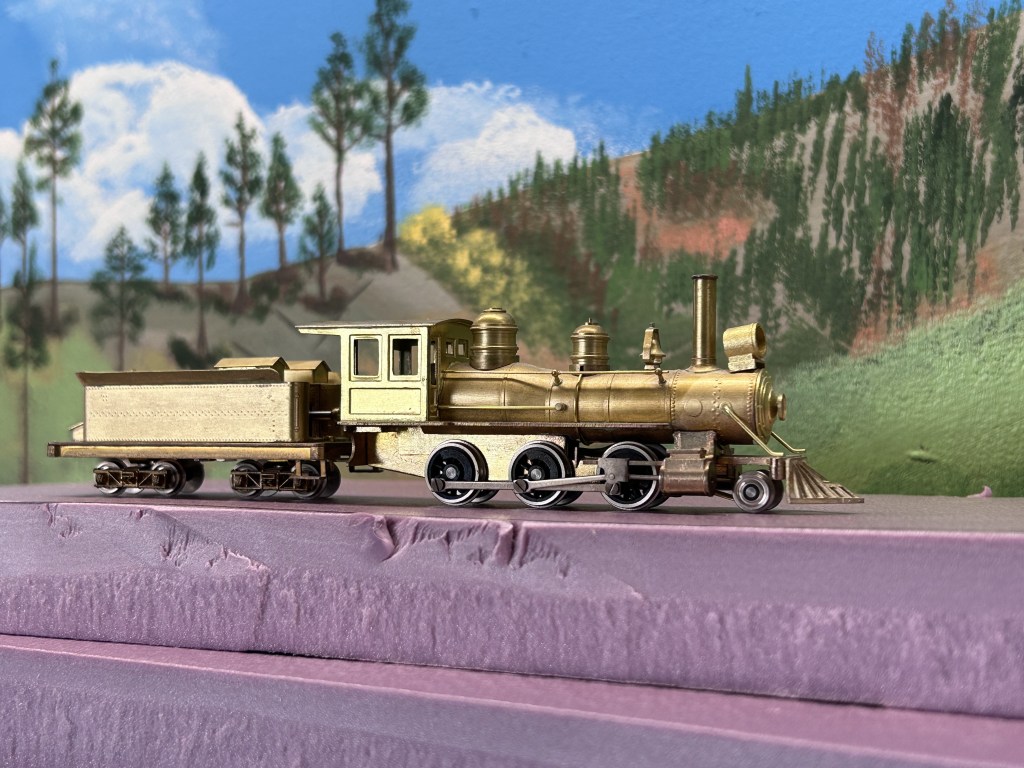
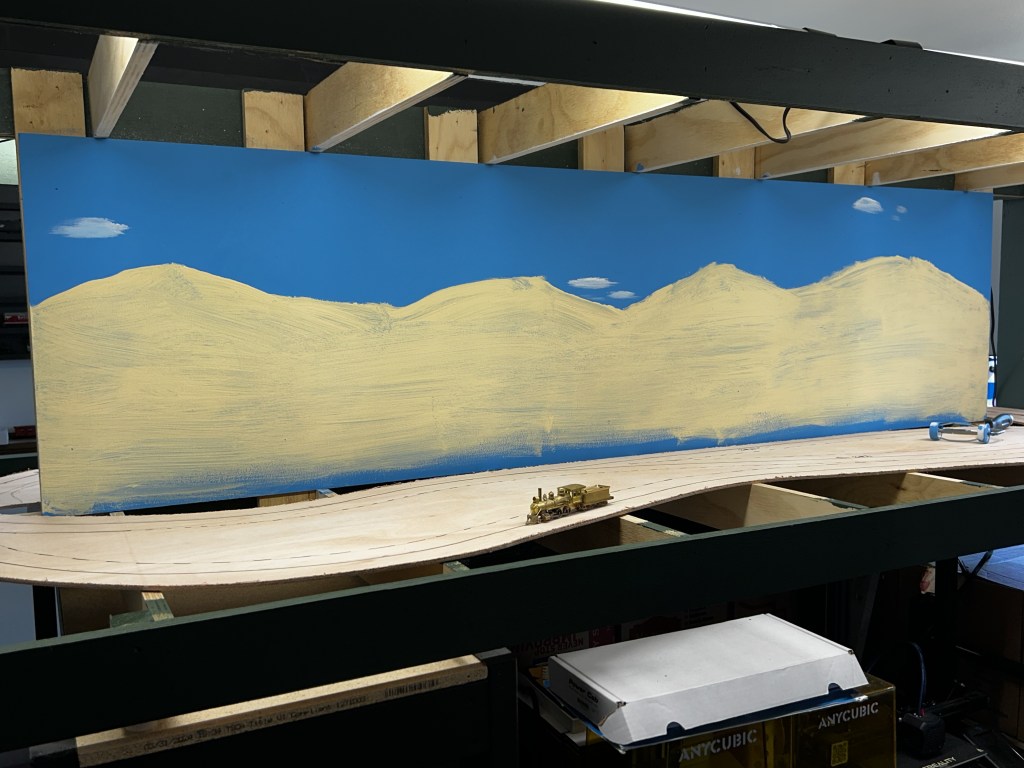
    The key motive power for this layout will be a trio little Spartan Series brass HOn3 locomotives. At the moment they don’t run particularly well but after extensive work they should prove to be very reliable, smooth engines.

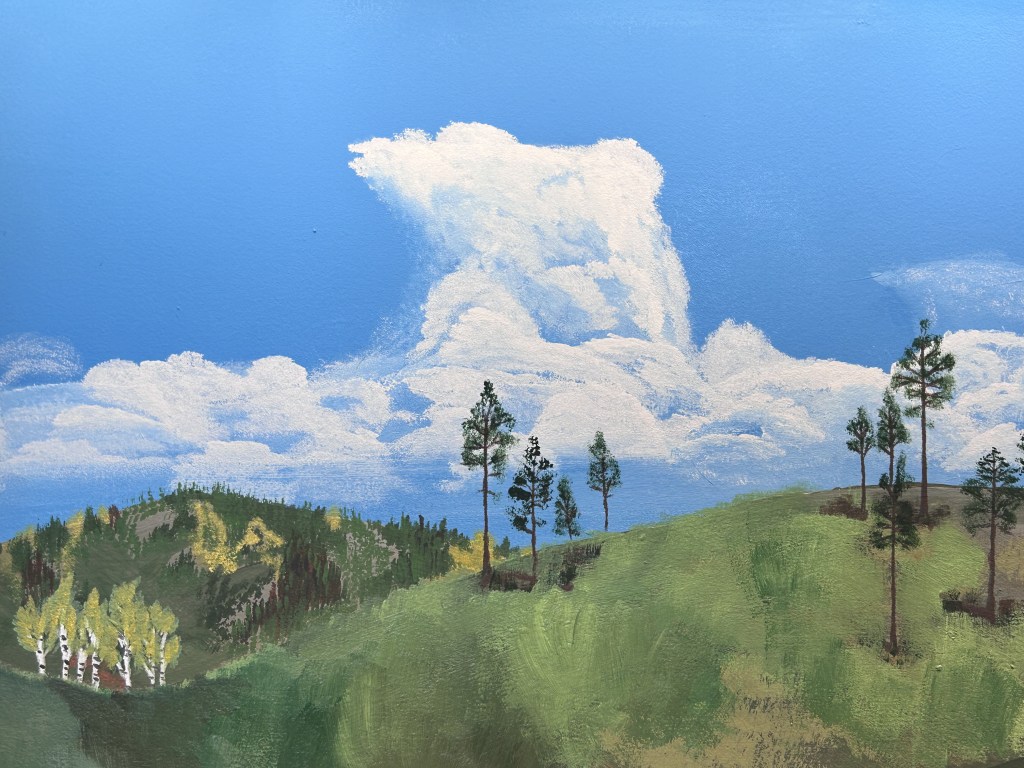
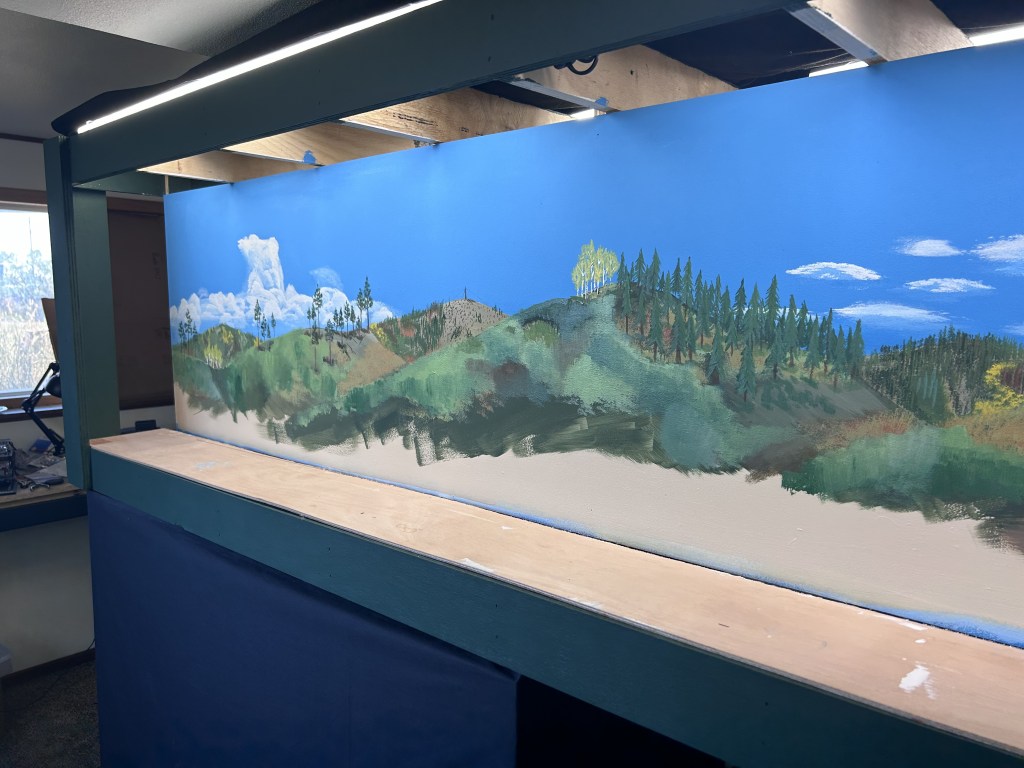
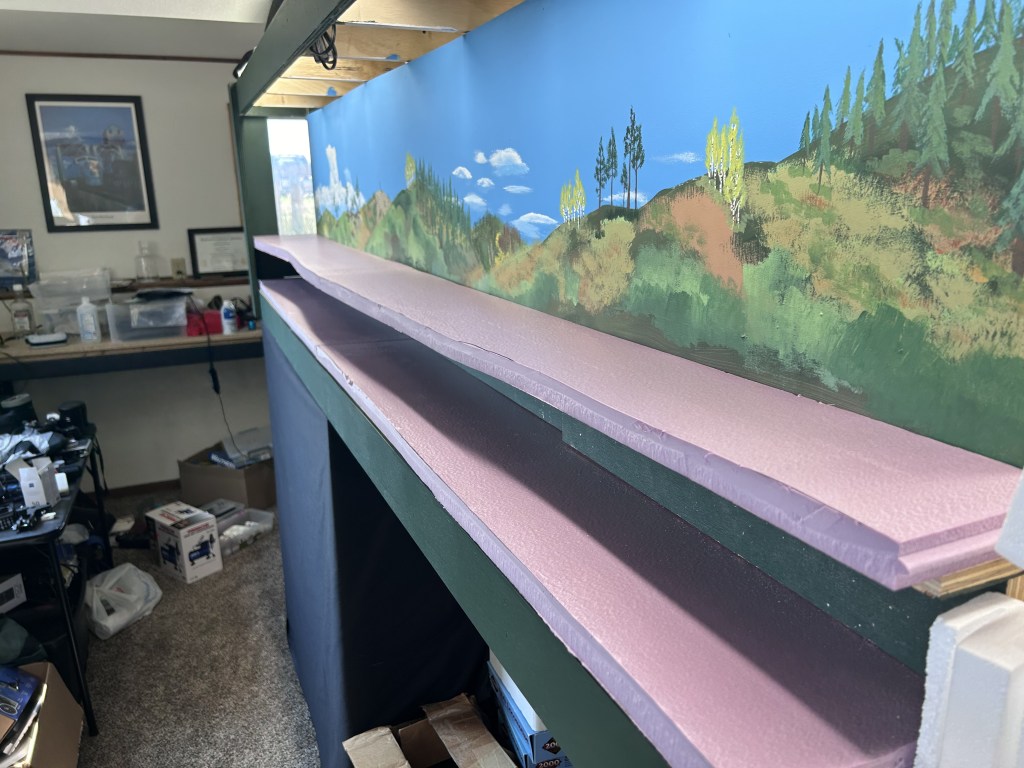
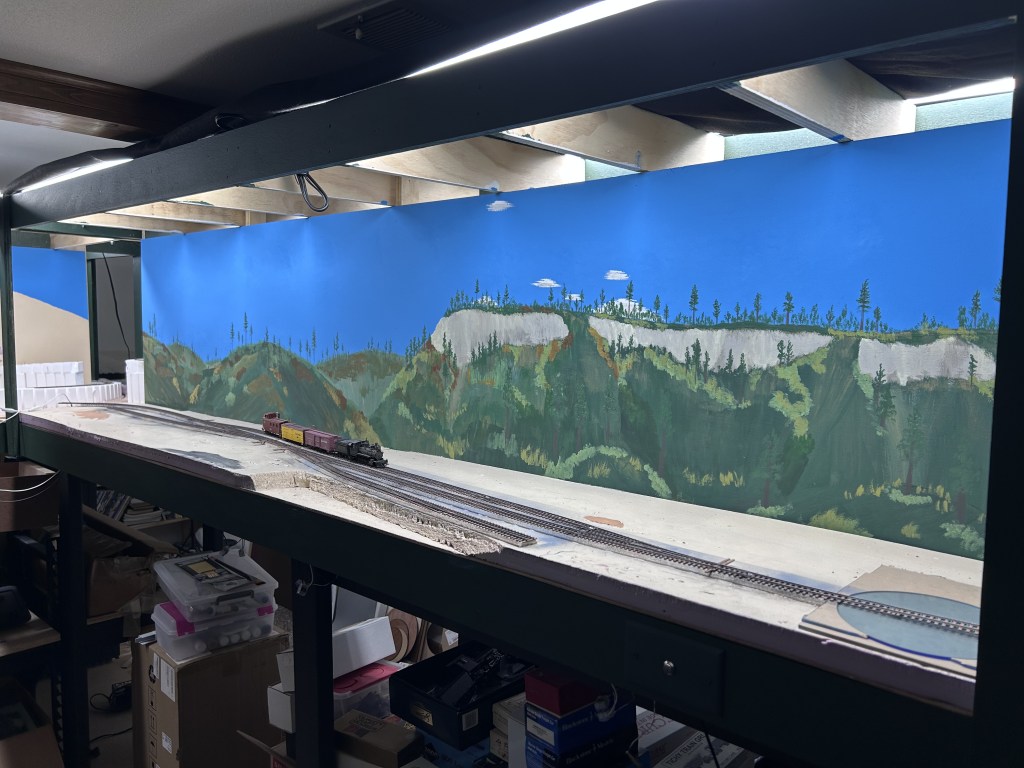
    The layout will feature hand painted backdrops which use cheap acrylic paints. This is an example of what I have done so far on the layout, depicting a late summer or early autumn mountainside in the northern Black Hills where a log landing will be located.

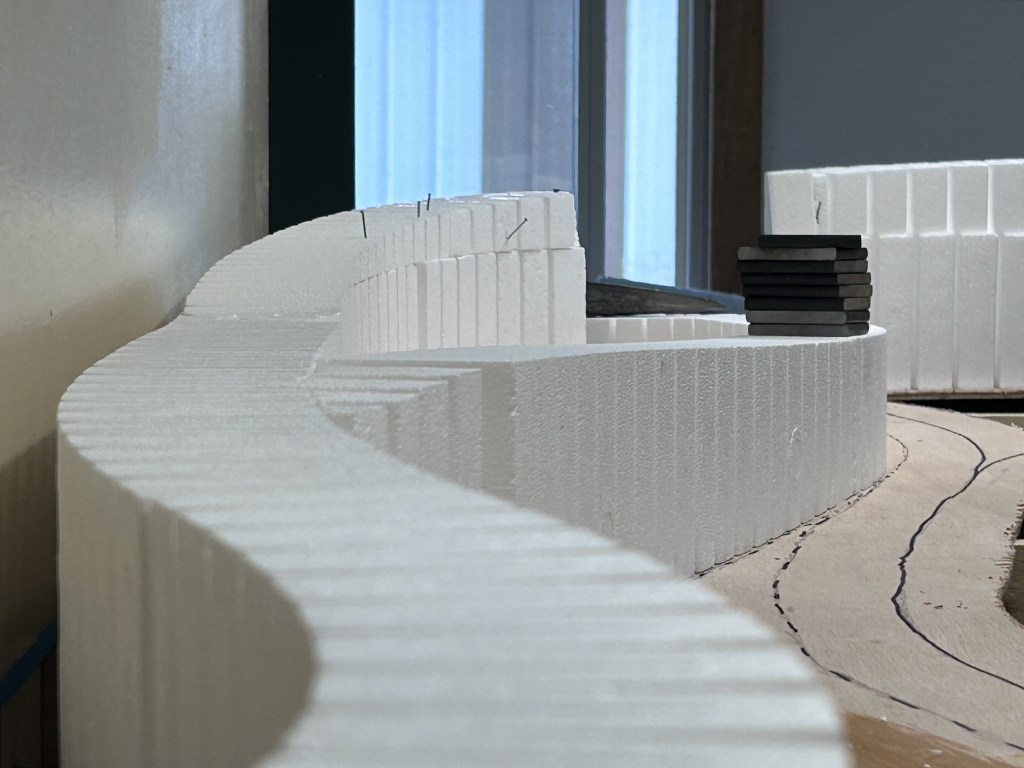
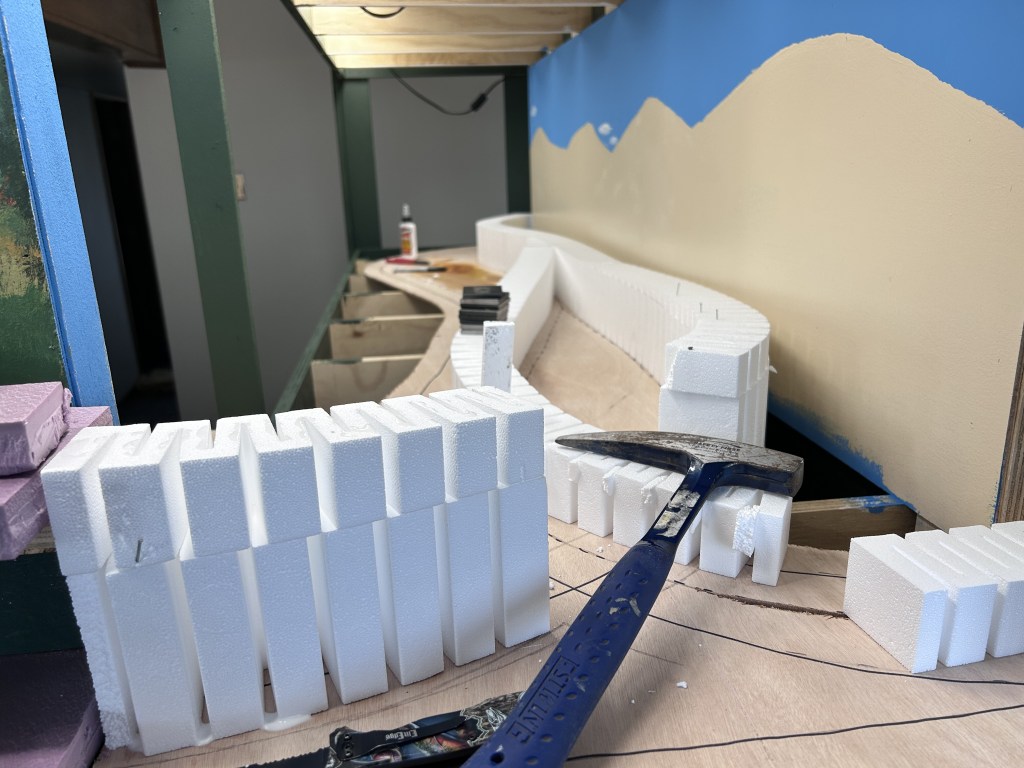
    On this section there will be two levels. The top level is a log landing which will feature a couple of spurs and HO scale logging equipment. This is a convenient location for the log landing because directly underneath is where the staging yard will go. Underneath both the staging yard and the log landing are a couple of shelves which will store rolling stock and locomotives. This will make swapping out entire cuts of cars simple.

    In order to get to the log landing, trains will have to rise about 5 inches in a small space. This requires the use of a switchback and a 4% grade. Yes, it is steep. It is also realistic for the Black Hills and Fort Pierre which regularly had grades surpassing 5%! In order to move trains up the hill, operators may need to “double” the hill. This is a technique where the train crew will drop half the train at the bottom of the hill and then haul what they can up to the next siding above the grade. Once the first half is over the hill, the crew will drop those cars and come back for the remainder of their train. It is a time consuming operation but also a regular spectacle on this little narrow gauge line.

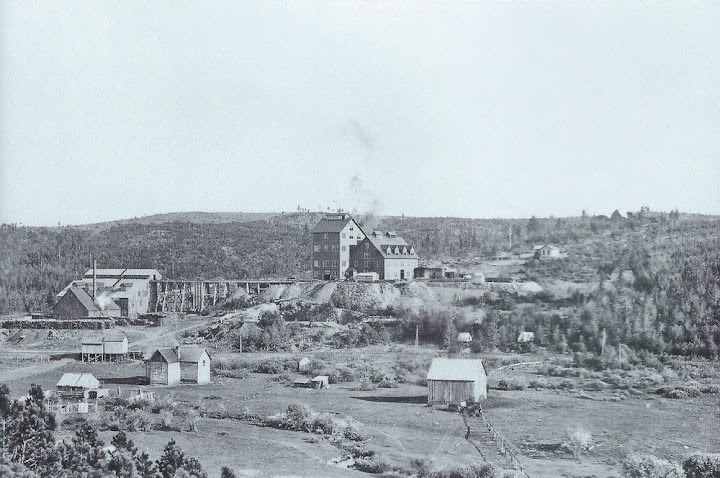
    The switchback leads down into the town of Roubaix which is now just a collection of residences. However, in its prime the little town boasted the large “Uncle Sam” mine and mill complex. I don’t have enough space to effectively model the entirety of the facility, so instead I will be watering down and simplifying things. A single spur track will provide space to drop cars for the mine and for the homes in the area. A couple of farm houses and a station platform will be included here. Roubaix was not a junction in real life, but on a small layout like mine there must be compromises, so the actual junction which existed as well as the switchbacks that also existed are all going to come together right here.

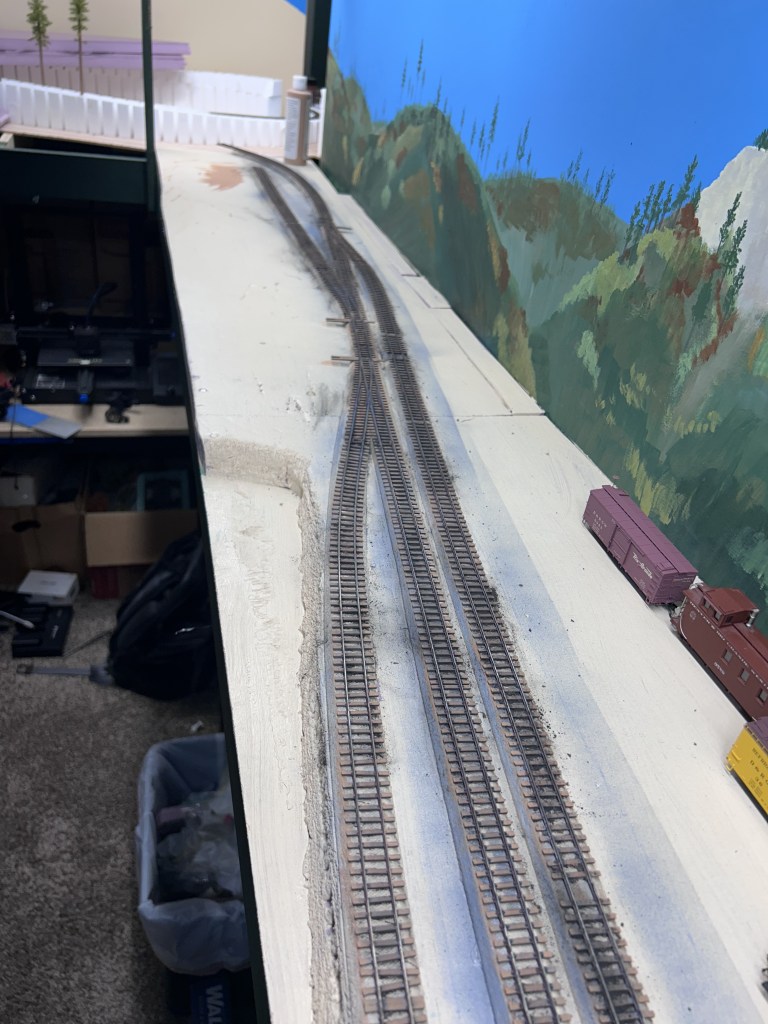
    Past Roubaix, the tracks wrap around again to the switchback area which violates one of the cardinal rules in modern layout design, allowing a train to pass through a scene twice. This is one of those necessary compromises in order to make the track plan work. The good news is that there is one area of the actual BH&FP which had three tracks stacked on top of each other. The railroad had a pair of switchbacks facing each other in order to leave the top end of a mountain valley. While this one won’t replicate the scene 100%, the three tracks in the same scene will still look correct. The mainline then splits with a short branch going into the town of Nemo.

    Nemo was originally a sawmill town and an important part of the Black Hills and Fort Pierre. This will be one of the signature scenes on the train layout and I’ve taken great pains to plan this out in a way that will be recognizable to locals. Two landmarks in particular will be included, the sawmill (with log pond) and the general store which took in everything from hardware and clothing to raw meat and produce. Miners and loggers in the area would travel to this store to get just about everything they could use. All of these materials were delivered by train. One other important structure will be the Nemo depot. I don’t yet have a photo of the depot, but it is described as being a converted boxcar propped up on a wooden foundation with a small platform attached to it.

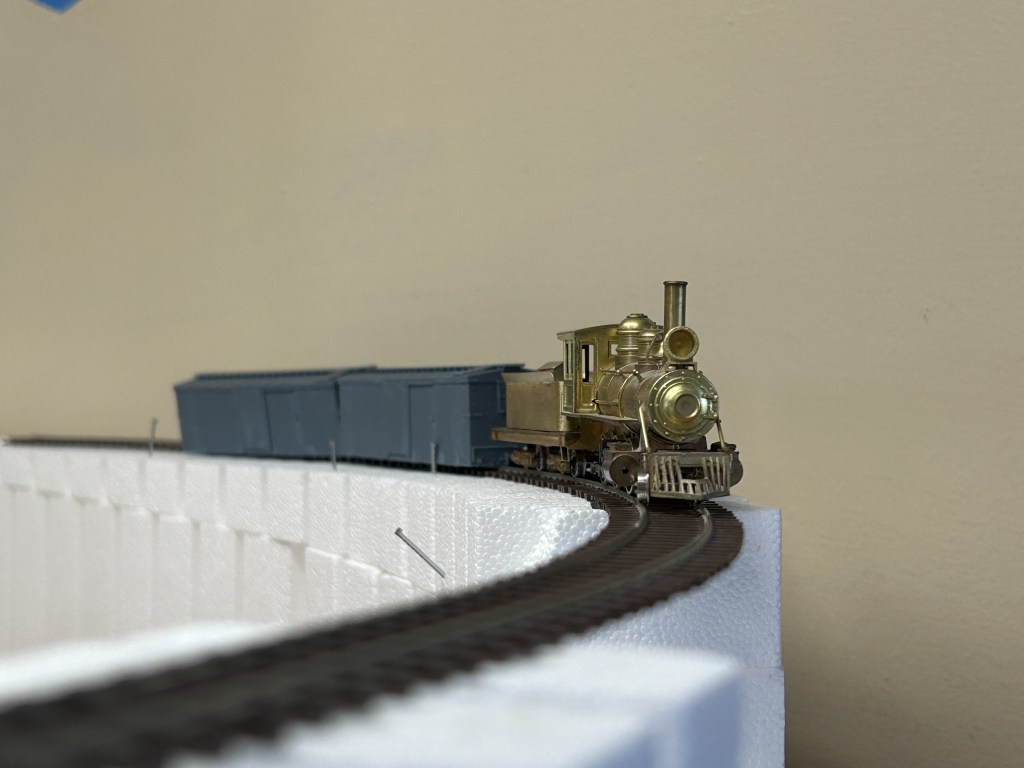
    Lastly, one landmark is no longer with us but is culturally relevant to the area. One locomotive on the BH&FP roster was a copy of a C-16 2-8-0. It served the railroad well and lasted right up until the tracks were tore up in the 1930s, but it was always stored in Nemo where it spent its days collecting and distributing log cars between area sawmills and running trains out to the east end of the railroad at Piemont where it interchanged with the standard gauge Chicago and Northwestern. At the moment this Blackstone engine is a stand-in for that locomotive, but I have plans to kitbash a replica of #538 from photos using a brass C-16 in the future.

    Anyway, that’s a tour of my layout for now! I am hoping to do another post like this in a few months or a year from now once track and trains are up and running. Until then, take care and please check out some of the other excellent content DMG’s authors have been publishing!

  • Weather and Patch a Basic Hopper

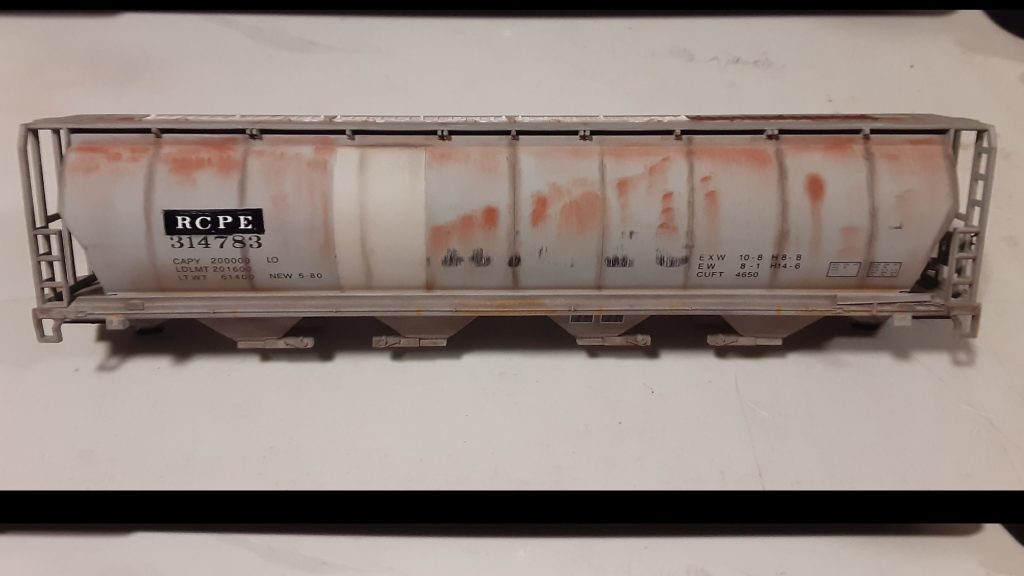
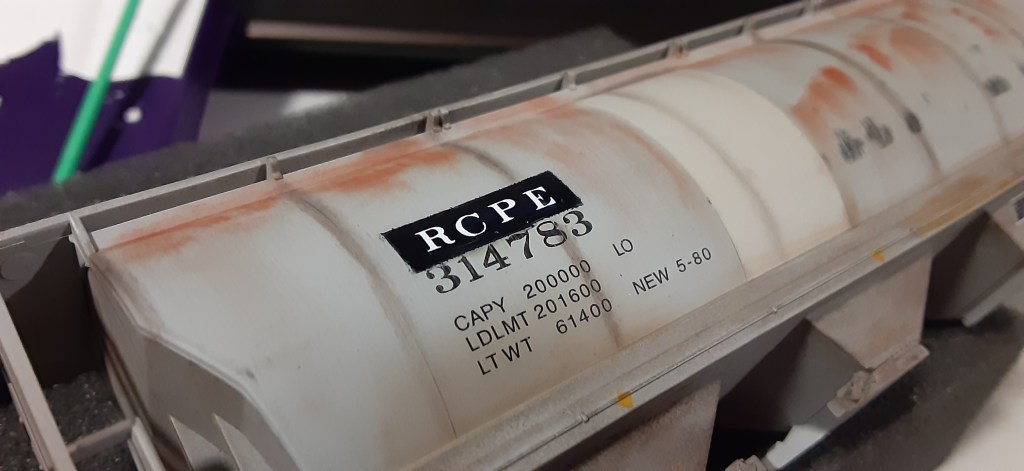
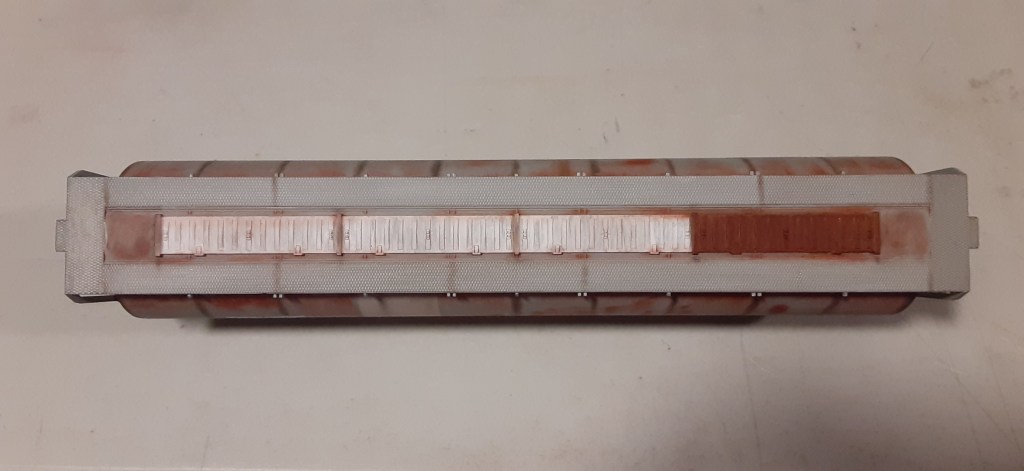
    Here’s an overview of how I weathered and patched a basic Bachmann cylindrical 4 bay hopper as a local RCPE (Rapid City, Pierre & Eastern) road car for my club’s HO scale layout.

    TOOLS AND MEDIUMS:

    While not everyone likes powders, I think they can be some of the best products for weathering. I choose powders because I personally don’t like using airbrushes. This is mostly due to the associated cleaning and the need for a dedicated booth or area which I do not have.

    My powder assortment includes products from A.I.M. (now Monroe Models), Bragdon Enterprises and Tamiya. I also use an assortment of Tamiya X and XF line paints, Humbrol and basic craft paints for highlights, patches and tagging. I have been using Tamiya spray paints and their TS-80 flat clear almost exclusively with excellent results for the past few years now. The TS-80 flat clear is lacquer based but does not wash out the powders like Testors dullcote or others I’ve used previously. Model Master lusterless clear used to be my go-to.

    I also use an assortment of brushes from Hobby Lobby or Michael’s Crafts, specifically the Royal & Langnickel brand with a cushion above the bristles. I have also acquired a few ELF brand cosmetic brushes such as their concealer and foundation brushes. I use micro brushes of various sizes in conjunction with the cosmetic brushes to create varying effects on the car body.

    FIRST STEPS:

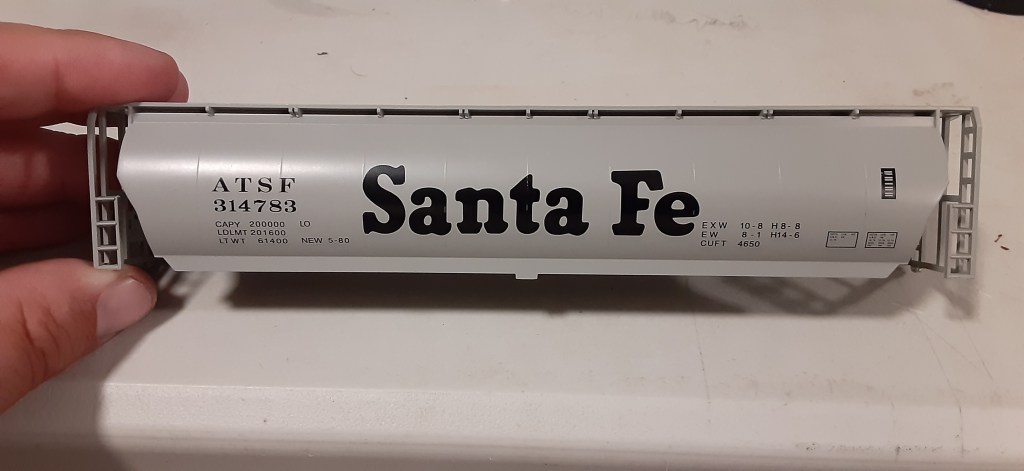
    Before doing anything, I found a few cars that were close to what I had in mind. I decided to drive the 3 miles over to the RCPE yard in town for more inspiration. The local road has a large fleet of these ex-Santa Fe cars but there weren’t any exact. I ended up spotting a few cars close enough and went home. I also use images found on rrpicturearchives, where there is typically an assortment of angles.

    My first step on this and nearly all my projects is to disassemble the car as much as possible. If doing a locomotive, the disassembly is subjective to how much I plan to weather it. This specific Bachmann car took me a bit of time to take it apart without damage. The end ladders are also stuck into the car floor and are tricky to remove.

    Getting to the disassembly, I try to make a plan before starting to weather. This helps determine how much I need to disassemble the model or not. As mentioned above, locomotives are more finicky for a variety of reasons. If I can weather a locomotive with the handrails on even better.

    PREP FOR WEATHERING:

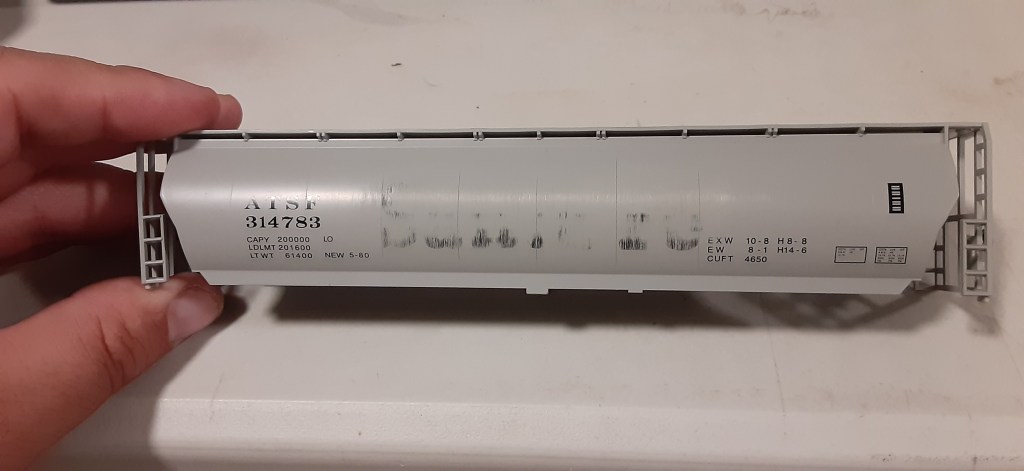
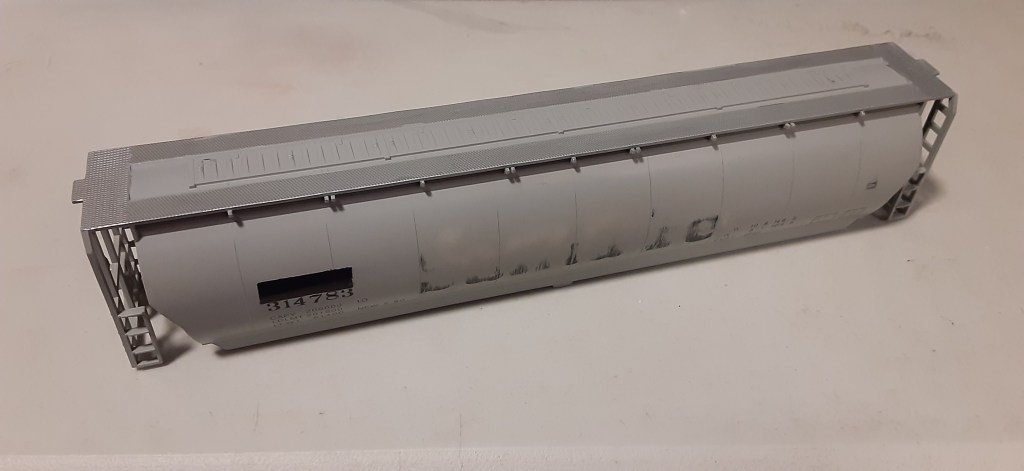
    I started by using 800 grit sandpaper to sand down the large Santa Fe lettering. It didn’t take long to get through the lettering as Bachmann’s printing on their cars is thin. Working from the top down, I sanded off most of the lettering and in some areas went through the gray base paint which left random patches of the raw plastic car body in an off-whiteish color.

    Once I was happy with the fade and a few other areas that were faded, I masked off the car and left a single panel exposed. Many of these cars have had a panel or two repaired/replaced and I wanted to create that look. To emulate the look, I selected a shade of gray spray paint just a touch lighter than the car body. I sprayed the panel by slowly building up the color over 4 light passes then let it dry overnight.

    Once dry, I unmasked the car side and gently sanded the edges of the panel to knock down the thickness and keep powders from accenting the hard edge.

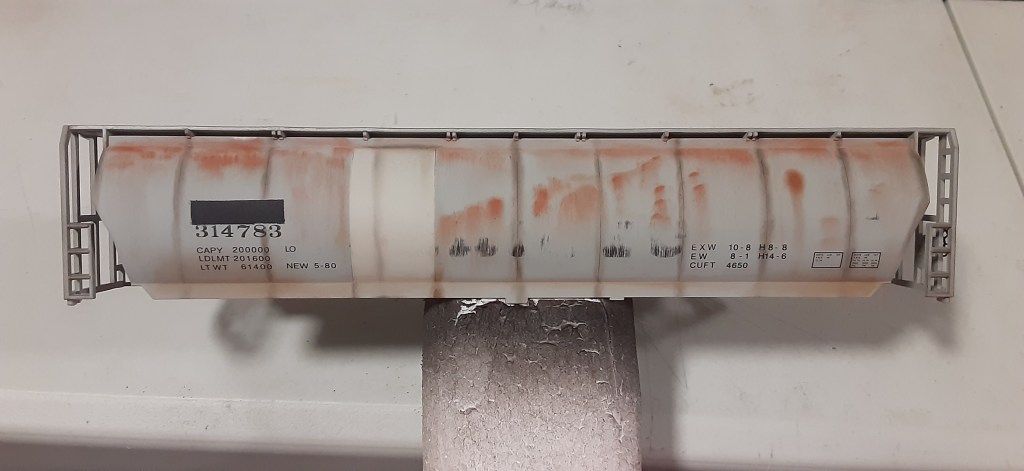
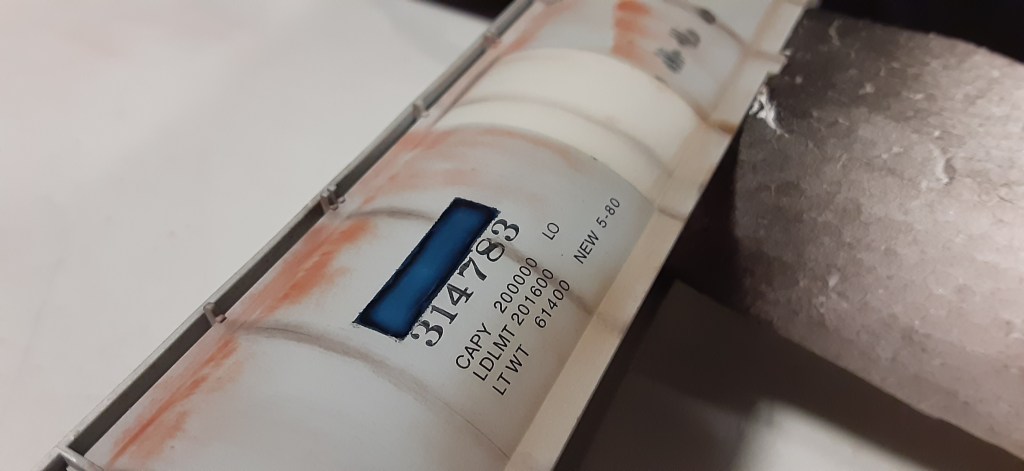
    For the reporting mark patch, I sanded off the factory printing and using scraps of 3M blue painters’ tape, I masked around the original ATSF markings. A basic black Sharpie was all I needed to color the area and fill the inside of the small mask. This creates a faded paint appearance without additional work, I did the same for both sides.

    The final step to prepare the car for applying powders was to spray the entire body with Tamiya TS-80 flat clear. Doing a base coat of flat clear provides tooth for powders to grab, it also helped blend in the previously sprayed panel. I wait about 30 minutes at a minimum before applying any powder or wash.

    WEATHERING:

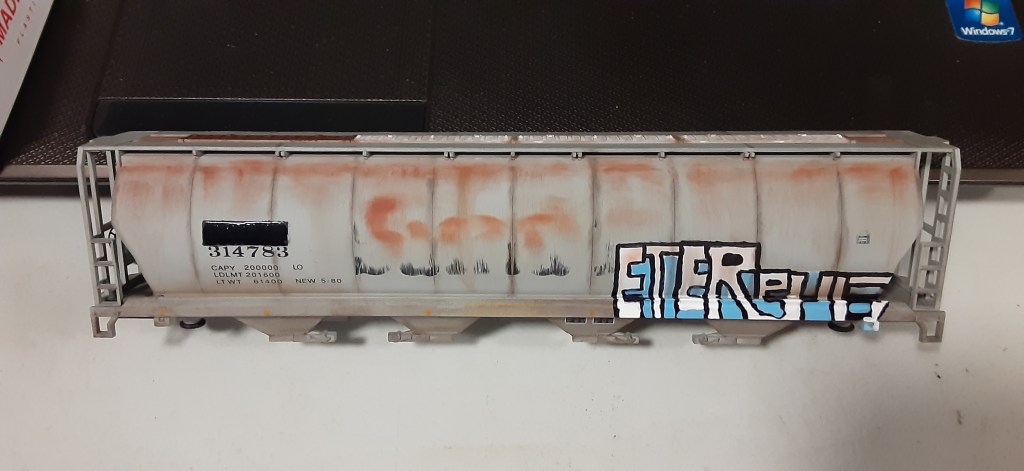
    I mostly used Bragdon medium rust and a touch of dark rust on this car. The rust was applied with the ELF cosmetics concealer brush in a soft side-to-side motion while dragging downwards to create a random look. I built up the color in 3 layers with the top third being darkest and fading lighter to the bottom third.

    The panel lines, lower sill and underside got a gentle dusting of A.I.M. dark earth powder. I used a regular size microbrush on the panel lines to keep the lines thin. I also chose a ¾” standard brush to dust the underside and afterward dusted the sill.

    I hand painted the graffiti, while not based on any prototype image it’s just a basic arrangement of random large block letters. I used a pencil to draw an outline, traced the outline with an ultra-fine black Sharpie and filled them in with white craft paint on a fine microbrush. I used a sky-blue chalk marker to accent the letters. After about 20 minutes everything was dry enough to clean up the black Sharpie outline. I used the same ¾” brush to dust over the graffiti and soften the colors some.

    PATCHING:

    For the new reporting marks, I brushed Micro Gloss over both black patches and let it dry for around 12 hours. Using individual Microscale white letters I applied the RCPE reporting marks. This step offered an opportunity to more closely match the prototype where the stenciling is not square. Once the decals were placed and blotted, I brushed them with Solvaset and let the area cure for about 24 hours. I sealed the new lettering by brushing them over with a light coat of Micro Gloss then let dry for another 12 hours.

    FINAL TOUCHES:

    The hatches were painted with a brush using white craft paint. I kept one clean and painted it with matte Humbrol signal red colored over with non-metallic gold to duplicate the oxidized red look other Santa Fe cars have. Before these paints were completely dry, I used a ¾” standard brush to dust them and obtain a grimy effect. I also touched up the walkways with some to accent them as well.

    Making the trucks blend in was straight forward on this car. I masked the bolster top flange and backs of each truck where the wheels fit. I then sprayed them with RustOleum ultra flat black and highlighted the faces with light gray powder from A.I.M.

    To complete the project, I sprayed all parts with 2 light coats of Tamiya TS-80 flat clear to seal everything, waited overnight then reassembled the car adding metal wheels and Kadee #5s.

    Michael ‘Mike’ Thoreson